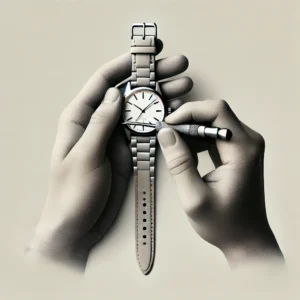
Detailed Guide on How to Change a Leather Watch Strap

Strumenti necessari per cambiare il cinturino di un orologio

Introduction: This guide will show you how to effectively change your watch’s leather strap, providing practical advice and step-by-step instructions.


Step 1: Prepare the Necessary Tools

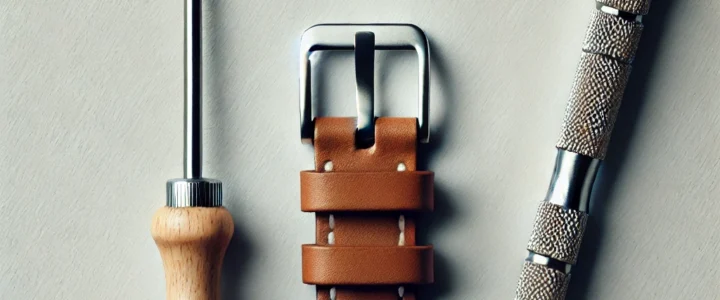
Gather the necessary tools: a small screwdriver, a spring bar tool, and the new leather strap.


Step 2: Remove the Existing Strap

Using the screwdriver or spring bar tool, remove the spring bars that hold the current strap to the watch. Remove the old strap and set it aside.


Step 3: Prepare the New Strap

Ensure the new strap is compatible with the watch in terms of width and lug attachment. Make sure you have the corresponding spring bars ready for installation.


Step 4: Install the New Strap

Insert the spring bars into the ends of the new strap. Align the spring bars with the lugs on the watch and push them into place using the spring bar tool or screwdriver. Ensure the spring bars are securely inserted to prevent the strap from coming off accidentally.


Step 5: Adjustment and Finishing

Wear the watch with the new strap to check its fit and comfort.


Conclusion: Replacing a leather watch strap is a relatively simple task you can do yourself by following the steps above. Follow the instructions carefully and enjoy the new strap that will give your watch a fresh and renewed look. Always remember to buy a strap compatible with your watch to ensure proper installation.

Vostok Codes: A Complete Guide

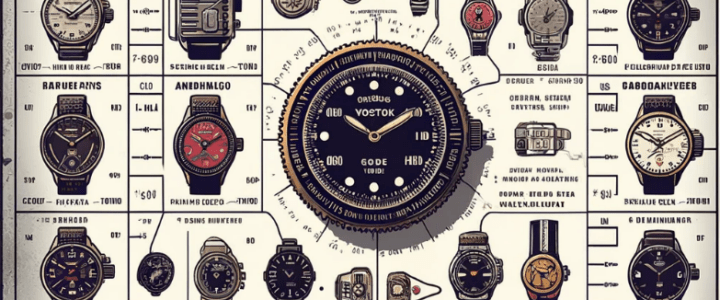
Tabella identificativa dei codici degli orologi Vostok con modelli Amphibia e Komandirskie, diverse forme di casse e materiali, e elementi di sfondo dell'era sovietica e militare.

Vostok watches, produced in Russia, are icons of reliability and robustness in the watchmaking world. Known for their ability to withstand extreme conditions, these watches are cherished by both collectors and enthusiasts. Their history dates back to the Soviet era, during which they were developed to meet the needs of both the military and civilians. In this article, we will explore in detail the identification codes used to describe the movements and cases of Vostok watches. For convenience, the notation ABCDE/FGHIJKH is taken from the site: netgrafik.ch.

Understanding Vostok Watch Codes

Russian/Soviet movement and case codes follow a specific format: ABCDE/FGHIJKH.

ABCDE

  • AB: Movement diameter in mm.
  • CD, CDE: Soviet movement specification. For more details, refer to the table at the bottom of the page.

FGH

  • FGH: Case variation. Each combination of numbers represents a different case design or style.

I

  • I: Case material. Here are some examples from Vostok models:
    • 0: Stainless steel and other metals without plating.
    • 1: Chrome plated.
    • 2: Gold plated.
    • 3: Gilded (at least 5 microns).
    • 4: Colour coated.
    • 5: Synthetic, polymer, rubber.
    • 7: Titanium alloy.
    • 9: Glass, crystal, ceramics, marble.

JKH

  • JKH: Handset. Each combination represents a specific type of hands used on the watch.

Classification of Vostok Cases

The table below categorises the different cases used in Vostok watch models. The information is organised by case code (FGH), case material (I), watch model, and case shape.

Vostok Case Table

Case Code FGHMaterial IHandset Code JKHModelCase MaterialCase Shape
350XXXAmphibiaStainless steelTonneau
1190XXXAmphibiaStainless steelOctagonal
710XXXAmphibiaStainless steelOctagonal
470XXXAmphibiaStainless steelCarre
320XXXAmphibiaStainless steelTonneau
9370XXXAmphibiaStainless steelRound
960XXXAmphibiaStainless steelBig Lug
250XXXAmphibiaStainless steelMinistry
020XXXAmphibiaStainless steelRound
420XXXAmphibiaStainless steelRound
627XXXAmphibiaTitanium alloyTonneau
381XXXKomandirskieChrome platedRound
383XXXKomandirskieGold platedRound
781XXXKomandirskieChrome platedRound
783XXXKomandirskieGold platedRound
441XXXKomandirskieChrome platedCarre
443XXXKomandirskieGold platedCarre
791XXXKomandirskieChrome platedRound
793XXXKomandirskieGold platedRound
1391XXXKomandirskieChrome platedRound
1393XXXKomandirskieGold platedRound
291XXXKomandirskieChrome platedRound
293XXXKomandirskieGold platedRound
341XXXKomandirskieChrome platedCarre
349XXXKomandirskieTiNCarre
331XXXKomandirskieChrome platedTonneau
339XXXKomandirskieTiNTonneau
091XXXGeneralskieChrome platedRound

Case Materials

Vostok watch cases are made from various materials, each with its own durability and aesthetic characteristics:

  • Stainless Steel (0): Offers exceptional resistance to corrosion and long durability. It is the predominant material for Amphibia models, known for their robustness.
  • Chrome Plated (1): Primarily used in Komandirskie models, providing a shiny finish and good corrosion resistance.
  • Gold Plated (3): Found in some Komandirskie models, giving a luxurious and refined appearance.
  • Titanium Alloy (7): Lightweight and highly resistant, used in models like the Amphibia for increased durability.
  • TiN (Titanium Nitride) (9): Known for its extreme hardness and scratch resistance, providing a distinctive golden finish.

Case Shapes

Vostok watch cases come in various shapes, each with a unique design to suit different tastes and aesthetic preferences:

  • Tonneau: An elegant, barrel-shaped design.
  • Octagonal: An eight-sided design often associated with robustness.
  • Carre: A square or rectangular shape offering a classic look.
  • Round: The most common and versatile shape, suitable for any style.

Main Models

  • Amphibia: Famous for their water resistance and robust construction, these watches feature cases in stainless steel or titanium alloy. Originally designed for the Soviet naval forces, they have become popular among divers and adventurers.
  • Komandirskie: Inspired by military style, these watches, though not officially used by the military, are available in chrome plated, gold plated, and TiN versions. They are known for their classic design and reliability.
  • Generalskie: These watches also feature a military-inspired style but lack evidence of official military use. They often include models with chrome plated cases.

Conclusion

Vostok watches perfectly combine history, engineering, and design. The diversity of cases, in terms of materials, models, and shapes, offers enthusiasts a wide range of choices. Whether you are a collector or simply a watch lover, Vostok models with their unique characteristics and reliability make an excellent choice. Their history and continuous evolution make them a fascinating topic for anyone interested in horology.

Vremia Watches: Soviet Charm and European Quality

swiss watch Vremia Chrono black

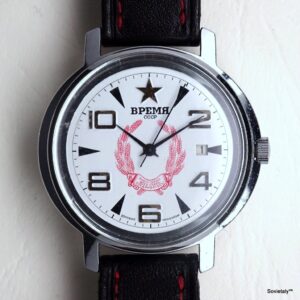
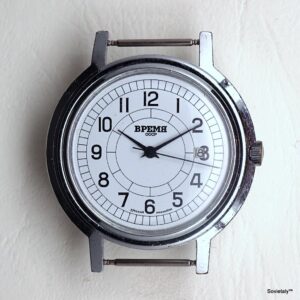
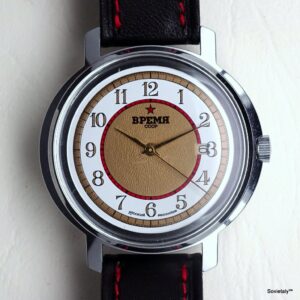
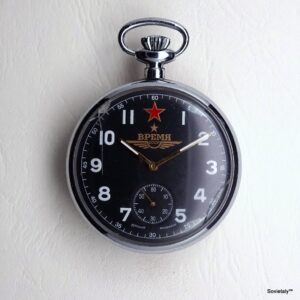
Vremia watches, also known as Vremja (in Cyrillic время), are a fascinating example of how international collaboration can create unique and high-quality products. These watches were created in the late 1980s, thanks to the Italian company Binda, with the aim of capitalising on the growing popularity of Soviet culture in the West.

The Birth of the Vremia Brand

The BPEMR (BPEMA) CCCP brand was officially registered on 24 March 1989, during a period of commercial opening in the USSR under Gorbachev’s leadership. This opening allowed for the export of various Soviet products to Western markets, where they were enthusiastically received thanks to their exotic charm and robust quality.

russian watch Vremia B&W
Vremia B&W

Features of Vremia Watches

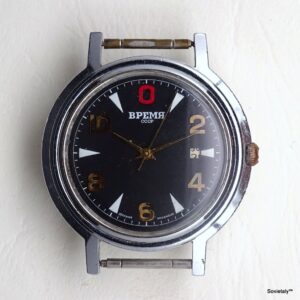
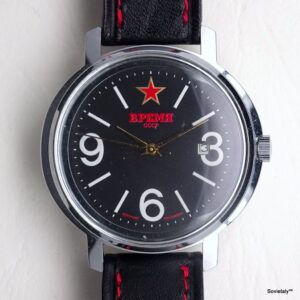
Vremia watches are distinguished by a range of models with reliable mechanical movements such as the Slava 2414, Poljot 2612.1, and Poljot 3133. Their dials, essential and clean, embody the Soviet style of the era. Some models feature distinctive symbols like the Red Star, while others are more subtle, with a small “cccp” inscription in the centre of the dial.

swiss watch Vremia Gold
Vremia Gold

Binda: The Italian Heart of Vremia Watches

Founded in 1906 by Innocente Binda, the Binda company has played a crucial role in the watch sector for over a century. Under the leadership of his grandsons, Simone and Marcello Binda, the company continues to produce and distribute high-quality watches. Binda Italia is known for its ability to combine innovative design and advanced technologies, offering a variety of products ranging from fashion models to more classic and technical watches, including “Swiss Made” timepieces.

swiss russian watch Vremia Pocket
Vremia Pocket watch

The Uniqueness of Vremia Watches

Vremia watches represent a perfect fusion of Russian tradition and Western craftsmanship. The “zerone rosso” model is an emblematic example of this mix, with a design that could easily have been produced by Poljot. Even the time-only and alarm clock models are highly appreciated for their quality and design.

These watches are a true hybrid: Italian construction with Russian mechanics. While they are adapted to the Italian market, they retain a unique charm that distinguishes them from traditional Russian watches. Despite the criticisms of purists, Vremia watches offer exceptional value, with accessible prices ranging from 100 to 150 euros.

swiss russian watch vremia
Vremia Red Zero

Unique Details on the Case Back

A distinctive detail of Vremia watches is the inscription on the case back, which reads:

“Часы собранные в Швейцарии, двигатель механический подлинный русского производства. Mechanical movement originally produced in Russia, watch assembled in Switzerland.”

This inscription highlights the combination of Russian mechanics and Swiss assembly, ensuring the authenticity and high quality of these watches.

swiss watch Vremia Red Star black dial
Vremia Red Star black dial

Conclusion

Vremia watches are a fascinating chapter in the history of watchmaking, characterised by a unique mix of Soviet aesthetics and European quality. Thanks to Binda’s initiative, these watches reflect the best of both worlds, combining attractive design with high standards of quality. A true treasure for watch enthusiasts looking for something unique and meaningful.

Poljot History: Soviet Watchmaking Excellence

soviet watch Sturmanskie Type 2

The Poljot brand represents one of the most significant symbols of the Russian watchmaking industry, with a history rich in technical successes and space adventures. Since its founding, Poljot has embodied the Soviet ambition to achieve technological self-sufficiency and establish itself as a world leader in watch production.

The Origins: From the United States to the Soviet Union

In the late 1920s, the Soviet Union relied heavily on imported watches, a necessity that cost the government precious gold. To end this dependency, it was decided in 1927 to start domestic watch production. In 1929, through the Amtorg Trading Corporation, the Soviet government purchased the facilities of two bankrupt American factories: the Ansonia Clock Company and the Dueber-Hampden Watch Company. Twenty-one former Dueber-Hampden employees moved to Moscow to train local workers, marking the beginning of the First Soviet Watch Factory.

Initially, the factory produced four main models: a 15-jewel pocket watch for the Ministry of Communications, a 7-jewel wristwatch for the Red Army, a 7-jewel civilian pocket watch, and a 15-jewel ladies’ wristwatch. Thanks to the training received, local workers soon managed production autonomously.

The War Period and Innovation

With the German invasion during World War II, the factory was relocated to Zlatoust and returned to Moscow in 1943. During this period, the factory also began producing ammunition. In 1946, the K26 Pobeda model was launched, followed in 1949 by the Sturmanskie model, designed exclusively for military aviation. This watch became famous when Yuri Gagarin probably wore it during the first human space flight on April 12, 1961.

In the 1950s, the factory continued to innovate, introducing the first automatic watch under the Rodina brand in 1956 and special models for unique missions, such as the Soviet Antarctic expedition in 1957. That same year, to celebrate the success of the Sputnik mission, commemorative watches were produced, remaining in production for only one year.

The Establishment of the Poljot Brand

In 1960, the first models bearing the Poljot name, which means “flight” in Russian, were launched. The brand became synonymous with quality and precision, exporting watches worldwide. The Strela chronograph, inspired by the Swiss Venus 150, was used by Alexei Leonov during the first spacewalk in 1965.

With the introduction of the Poljot brand in 1964, the factory consolidated all its models under a single label. The 1970s saw a renewal of available movements and the acquisition of production lines from the Swiss Valjoux, leading to the creation of the 3133 movement, a chronograph used for both military and civilian purposes.

The Post-Soviet Era and Revival

After the dissolution of the Soviet Union in 1992, Poljot was named the official supplier to the President of the Russian Federation. The company ceased quartz watch production to focus on a niche market, introducing new lines based on modified 3133 movements. However, the company had to downsize and sell machinery to other companies, leading to the founding of Volmax by some former Poljot employees.

Despite the challenges, in 2003, Poljot adopted the name First Moscow Watch Factory, continuing production for the international market. Today, the Poljot brand is recognized for its tradition of precision and reliability, keeping alive a history inseparably linked to aviation and space adventures.

Curiosities and Iconic Models

Among the most famous Poljot models are the “Sturmanskie” worn by Gagarin and the “Strela” chronograph, symbols of Russian space exploration. Poljot watches are handcrafted by skilled artisans, giving them a distinctive and unique character. Limited editions and the “Aviator” collection are particularly appreciated by collectors for their bold design and cockpit readability.

Insights into Poljot’s History

The 1930s: The Birth of the Soviet Watch Industry

In 1930, with the construction of the factory in Moscow, watch production began at a brisk pace. The first watches produced still bore the Dueber-Hampden brand, but soon Soviet technicians managed to develop entirely new models. The First Soviet Watch Factory, renamed in 1935 in honor of Sergei Kirov, achieved notable success, producing millions of pocket and wristwatches.

The 1940s: War and Reconstruction

During World War II, the factory was evacuated to Zlatoust to avoid capture by the Germans. During this period, besides producing watches, the factory contributed to the war effort by manufacturing ammunition and other military materials. After the war, in 1946, the factory launched the famous Pobeda model, a symbol of Soviet victory.

The 1950s and 1960s: The Space Era

In the 1950s, Poljot began producing watches for military aviation and Soviet cosmonauts. The Sturmanskie model, worn by Gagarin during his historic space flight, became an icon. With the launch of the first artificial satellite Sputnik in 1957, Poljot celebrated the event with a commemorative watch. Producing automatic watches and chronographs became a priority, leading to the creation of models such as Rodina and Strela.

The 1970s and 1980s: Innovation and Expansion

During the 1970s, Poljot continued to innovate, introducing advanced movements such as the 3133 chronograph. The factory acquired production lines from the Swiss Valjoux, enabling the production of high-quality watches for both military and civilian markets. The 1980s saw an increase in exports, with Poljot becoming an internationally recognized brand.

The Foundation of Volmax and the End of 3133 Production

In the late 1990s, Poljot ceased quartz watch production to focus on high-quality mechanical movements. However, economic difficulties led to the sale of movement production machinery to other companies, including Vostok. In 2002, some discontented employees left Poljot to found Volmax, a company that continues to produce watches under the Aviator, Buran, and Sturmanskie brands.

In 2003, Poljot adopted the name First Moscow Watch Factory, limiting the Poljot brand to the domestic market. Production of the 3133 chronograph movement, a milestone in Poljot’s history, ceased definitively in 2011, marking the end of an era.

Vostok Tambov Watch: A Tribute to the Tambov Higher Military Aviation Engineering School

russian watch Vostok Komandirskie Tambov Higher Military Aviation Engineering School
Vostok Komandirskie Tambov Higher Military Aviation Engineering School

A unique collector’s item for watch enthusiasts and Russian military history buffs

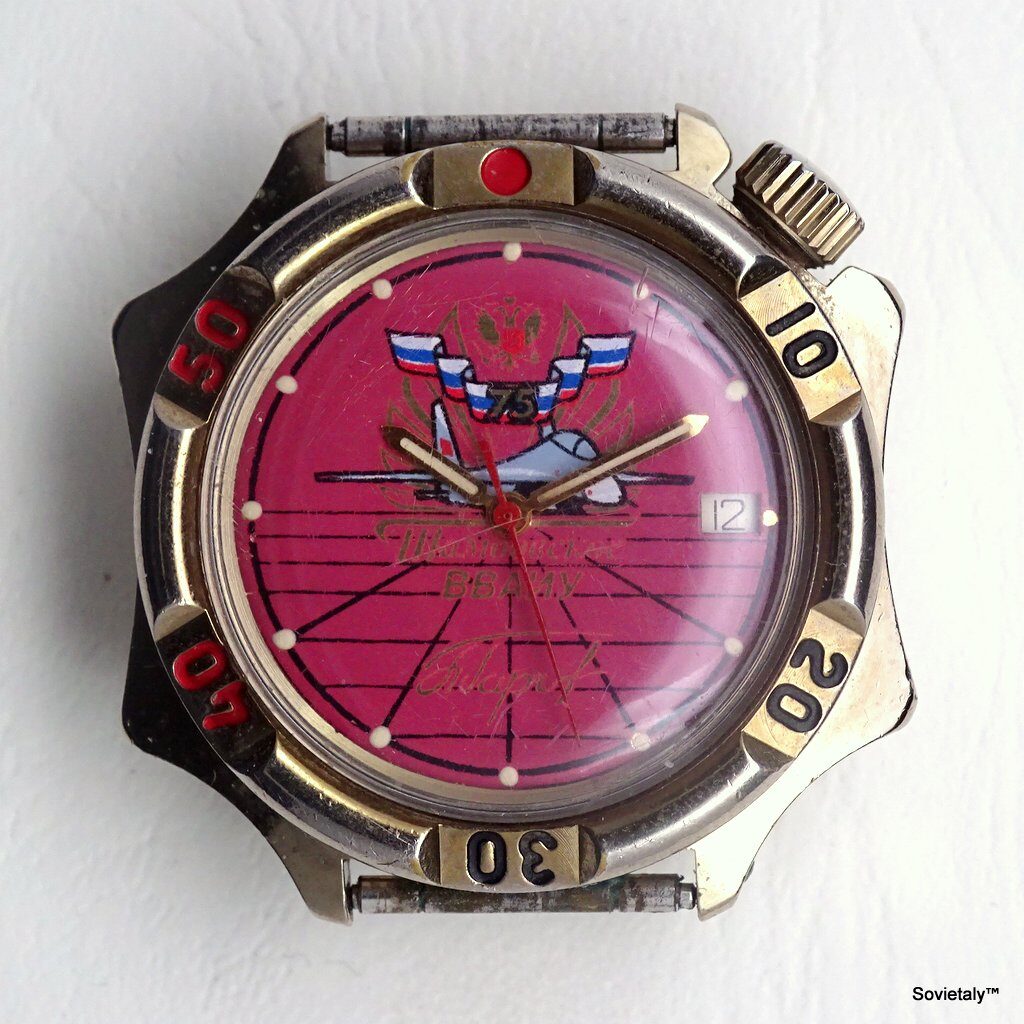
This Vostok Tambov watch represents a truly special collector’s piece, not only for its captivating design but also for its significant history. Crafted as a tribute to the graduates of the Tambov Higher Military Aviation Engineering School (ТВВАИУ) in 1994, on the occasion of the 75th anniversary of its foundation, this watch encapsulates a legacy of excellence and dedication in the field of Russian military aviation.

A Historical Institution with an Illustrious Past

The Tambov Higher Military Aviation Engineering School, founded in 1919 as the Aerial Photographic School of the Red Air Fleet, played a pivotal role in training highly qualified personnel for the Soviet and then Russian Air Force. Over the years, the school underwent several name changes, but it was always known as “СВЯЗЬ” (Communication) by its students and staff. Recognized as one of the most prestigious educational institutions in the country, the ТВВАИУ prepared generations of aeronautical engineers who contributed to the success of Russian aviation.

A Unique Design Celebrating Russian Aviation

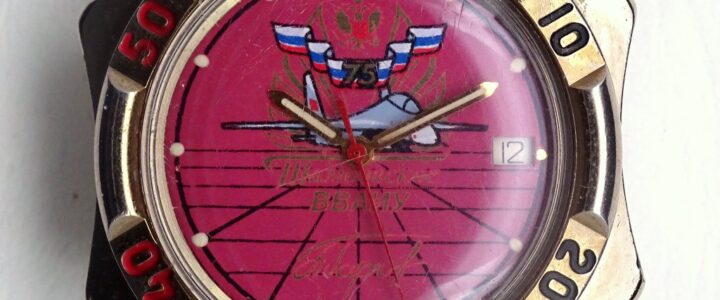
The Vostok Tambov watch stands out for its distinctive design, which pays homage to the legacy of the ТВВАИУ and Russian aviation. The dark pink dial serves as the backdrop for a stylized image of a MiG-29, one of the most iconic fighters in Russian aviation. Gold lettering and a black grid complete the design, creating an elegant and refined aesthetic.

Unique Details that Tell a Story

At twelve o’clock, the double-headed eagle, the symbol of Russia, and a ribbon with the colors of the Russian flag and the inscription “75°” commemorate the anniversary of the founding of the ТВВАИУ. In the center of the dial, the spread golden wings and the image of a MiG-29 represent the strength and power of Russian aviation. The Cyrillic inscription “Тамбовское ВВАИУ” (Tambov Military Aviation Engineering School) completes the design, emphasizing the watch’s connection to the school.

A Collector’s Item for Enthusiasts

The Vostok Tambov watch is an unmissable collector’s item for watch enthusiasts and Russian military history buffs. Its unique design, significant history, and rarity make it a valuable object for anyone who appreciates Russian aviation and its rich tradition.

The Second Volume of Russian Collectible Watches: A Journey Through Time

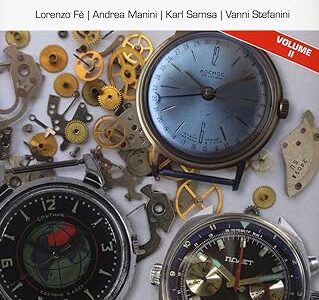
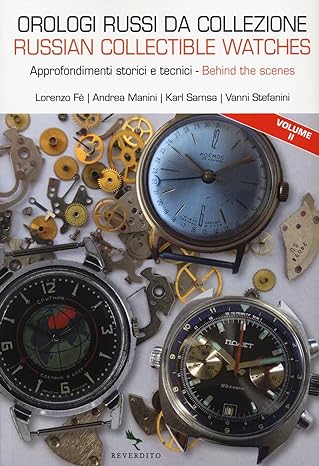
Copertina del libro "Orologi Russi da Collezione" con immagini di orologi e componenti meccanici

Behind the scenes

June 17, 2024, marks an important date for all enthusiasts of Russian collectible watches: the second volume of “Russian Collectible Watches” has been published. This 192-page book is a bilingual work in Italian and English, published by Reverdito. Its dimensions are 16.3 x 1.8 x 24 cm, making it a substantial yet manageable volume. The authors Lorenzo Fe, Andrea Manini, Karl Samsa, and Vanni Stefanini guide us on a fascinating journey through time and the history of Russian watchmaking.

Introduction to the Book

“Russian Collectible Watches – Volume 2” is a natural expansion of the first volume, which has already captured the attention of Soviet and Russian watch enthusiasts. This second book further delves into the vast and fascinating world of Russian watches, exploring over 150 models covering a time span of more than 100 years, from the first watches donated by the Imperial Romanov family to modern watches produced in the same factories that once belonged to the First Moscow Watch Factory.

A Journey Through Models and Stories

The over 300 high-quality photographs in the book reveal details that tell epic stories and the heroes of an era. Not only the watches, but also political and religious figures of the time find space in these pages. The space race, with its triumphs and challenges, is a central theme, and the images transport us to the crucial moments of this human adventure. The Perestroika, already mentioned in the first book, becomes a real fashion phenomenon, especially in Italy, with the “Red Army watches” flooding the market.
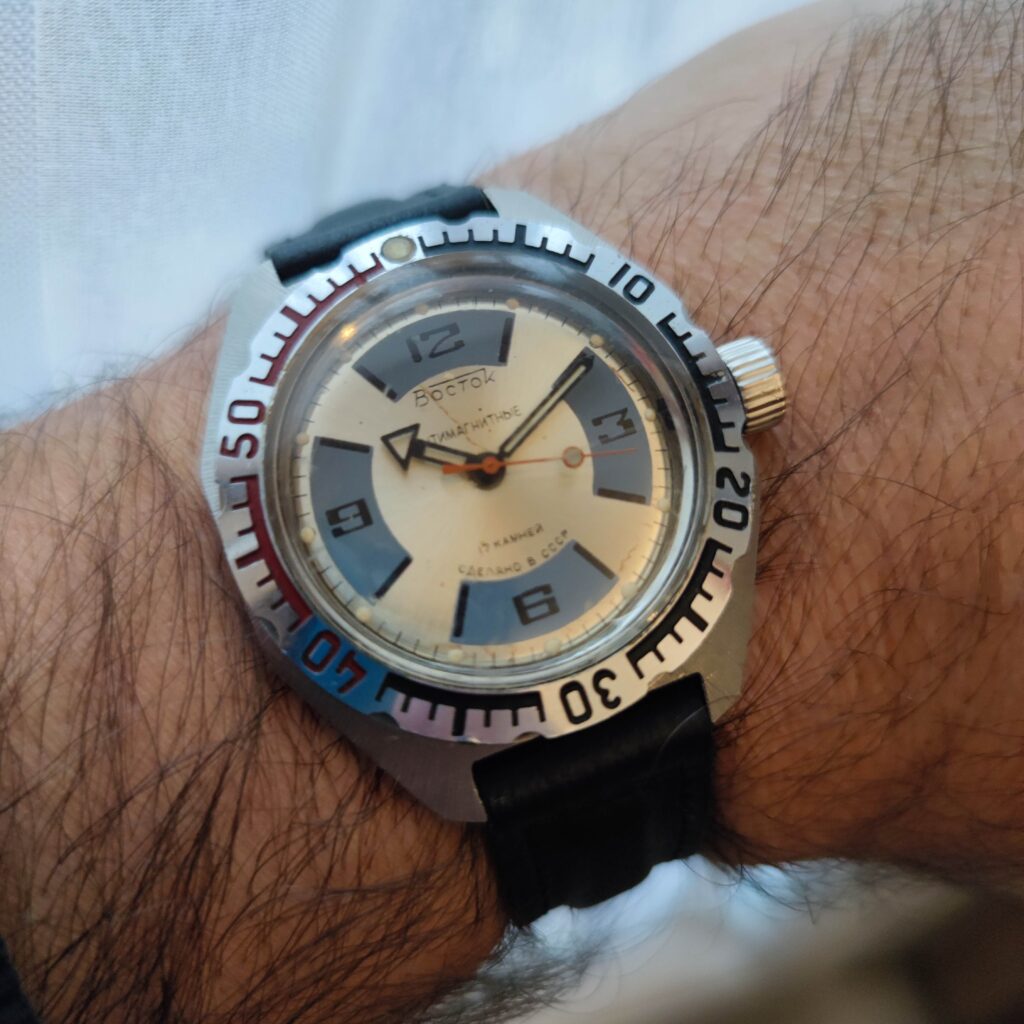
Technical Details and Innovations

Soviet engineers achieved extraordinary successes with ultra-thin, electromechanical, and quartz movements, remaining at the forefront of their time. This book not only explores these technical details but also contextualizes them within broader historical and cultural innovations.

Book Details

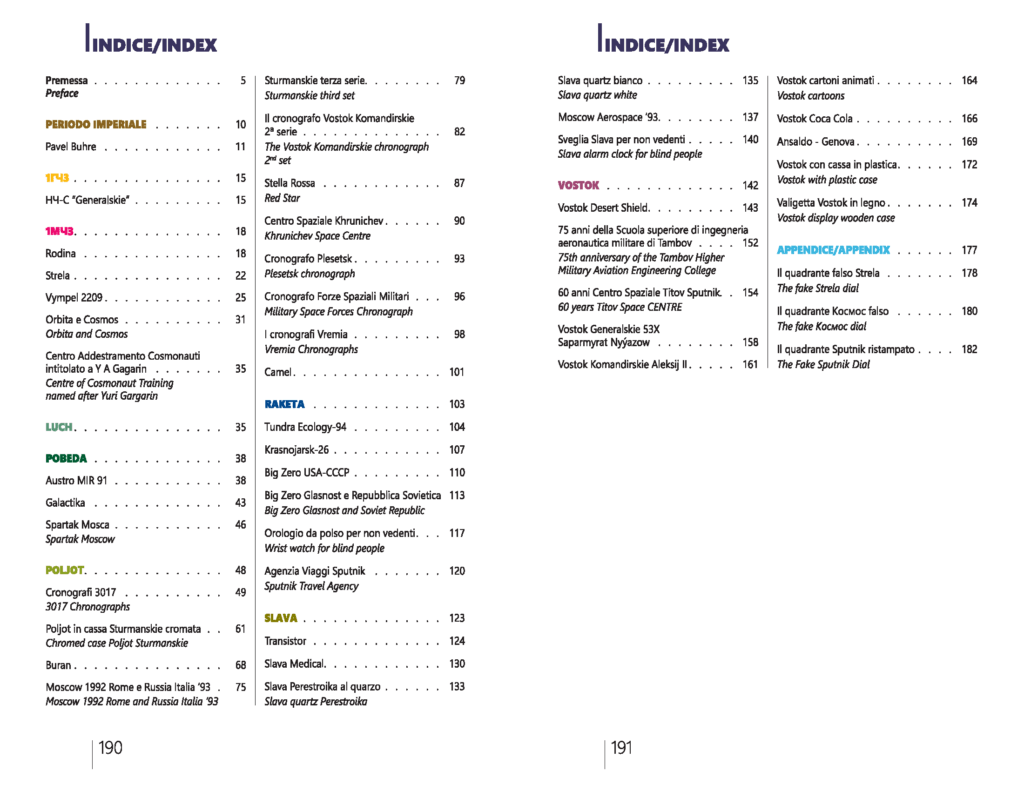
Here is a detailed preview of the main chapters of the book, offering a comprehensive and engaging overview for enthusiasts of Russian collectible watches:

Imperial Period

  • Pavel Buhre: The watches of the official jeweler of the Romanov family.
  • 1ГЧЗ: The first attempts at industrial watchmaking.
  • НЧ-С “Generalskie”: Watches reserved for officers of the Red Army.

Soviet and Space Era

  • LUCH: Models that marked an era.
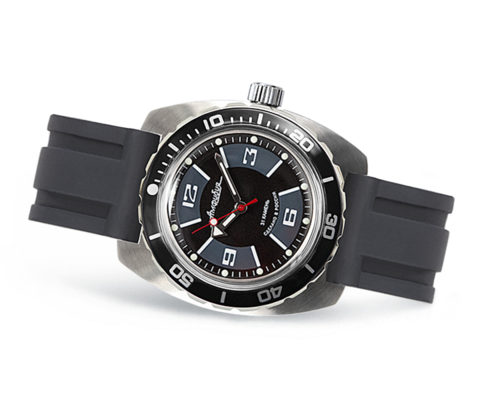
  • POBEDA: Symbols of victory and hope.
  • Galactika and Austro MIR 91: Watches that traveled into space.
  • POLJOT: The excellence of the 3017 chronographs.
  • Sturmanskie: The watches of pilots and cosmonauts.

From Perestroika to the Present Day

  • Vostok Komandirskie: Watches symbolizing military strength.
  • SLAVA: Models representing innovation and progress.
  • RAKETA: From the Soviet period to modern Russia.
  • Moscow Aerospace ’93: Watches celebrating space missions.

Special Features

One of the most fascinating aspects of the book is the attention to technical details. Soviet engineers achieved extraordinary successes with ultra-thin, electromechanical, and quartz movements, remaining at the forefront of their time. The book not only explores these technical details but also contextualizes them within broader historical and cultural innovations.

Furthermore, the volume also addresses lighter themes such as commercial productions that hint at military ones, or watches to be understood as real advertising gadgets or political propaganda tools. A curious example is the Vostok with a plastic case, a watch as innovative as it was unusual for its time.

Back Cover Presentation

The back cover of the book offers a perfect summary of what the reader can expect: a total immersion in a vast and fascinating subject like Soviet and Russian watchmaking. Through the over 300 high-quality photographs, the reader can explore details that tell epic stories and the heroes of an era, immersing themselves in a time span of over 100 years.

Conclusions

“Russian Collectible Watches – Volume 2” is a book for enthusiasts, made by enthusiasts. It does not represent any political or ideological inclination but is a work that explores the world of Russian and Soviet watchmaking as a pretext to study, photograph, and understand the world society, interconnected with the Russian one in many aspects. With the publication of this volume, another important piece is added to the knowledge of a sector as fascinating as it is little known, continuing a journey begun with the first book and destined to continue for a long time.

For those who wish to delve deeper, it is possible to contact the authors at russiancollectiblewatches@gmail.com. Happy reading and enjoy the journey through time!

Exploring the Universe of Russian Watches with Vittorio: A Journey Through Time and Technology

Exploring the Universe of Russian Watches with Vittorio: A Journey Through Time and Technology

Welcome to the fascinating world of Russian watches! In an exclusive interview conducted by Andrea, known as Sovietaly, we delve into the collection of Vittorio, a passionate enthusiast of Russian watches with an engaging story to share.

If you’re curious about exploring the world of Russian-inspired watches, get ready for an exciting journey that will take us through the history, technology, and uniqueness of these timepieces.

This interview video offers a privileged insight into Vittorio’s passion for Russian watches and the captivating stories behind each piece in his collection.

Introduction: Welcome! Whether you are a watch enthusiast or simply curious to explore a unique world, you are in the right place. This video by Andrea, known as Sovietaly in the watch world, takes us on an engaging journey through the collection of Vittorio, a lover of Russian watches with an overwhelming passion for the history and technology behind these incredible pieces.

Summary: In Andrea’s interview with Vittorio, we get an up-close look at Vittorio’s passion for Russian watches. Before becoming a collector, Vittorio developed a deep interest in the Russian language and culture, learning the language and visiting the country. Originally from Frosinone, Italy, but now residing in Warsaw, Poland, Vittorio shares how his passion for Russian watches grew over the years, starting with the serendipitous discovery of a 1990s Molnija pocket watch at a market. His collection, though not vast, includes significant pieces such as the Canfie Dia, his favorite watch due to the rich history it embodies.

Vittorio explains his extensive knowledge of the Russian language, almost at a native level, and his ability to converse fluently on any topic. He recalls his visits to Russia, starting in 2005, and his regular trips since then. Despite living in Poland for many years and initially knowing Polish only for tourist purposes, he later had to deepen his knowledge for work-related reasons.

Vittorio’s collection of watches extends beyond Russian models, including Swiss and Japanese pieces, reflecting his curiosity and openness to diverse cultures. He discusses the technical innovations and unique stories behind Russian watches, such as the use of plexiglass for waterproofing in Soviet-era dive watches, and his interest in the mechanical aspects of these timepieces.

Vittorio also shares his views on historical events, particularly the period from 1917 to 1991 in Russia, and his fascination with Soviet technological advancements like atomic icebreakers and amphibious vehicles. His passion for Russia goes beyond watches, encompassing history, geography, geopolitics, and culture, including 1990s and 2000s music that helped him learn the Russian language.

Finally, Vittorio mentions his online presence, including a website and participation in watch enthusiast forums, and his use of social media to share photos of his travels and collections. His enthusiasm for Russian watches is evident as he describes their stories, technical solutions, and the unique blend of history and technology they represent.

Conclusion: Andrea’s interview with Vittorio has been an exciting experience, taking us into the world of Russian watches through the eyes of a passionate enthusiast. With fascinating stories, technical curiosities, and palpable passion, Vittorio has introduced us to a universe where history and technology merge uniquely.

Watch the full interview on YouTube

Vostok Aurora: A Review of the 70th Anniversary of the October Russian Revolution Commemorative Watch

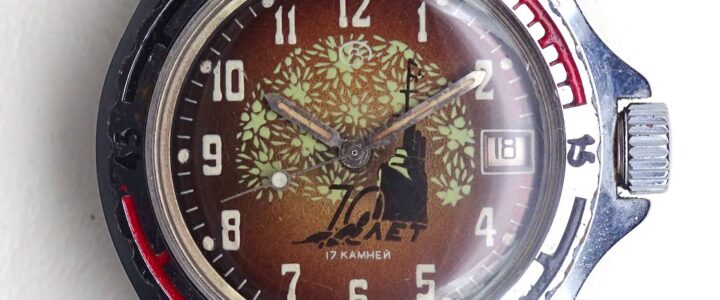
russian watch Vostok Komandirskie Aurora

The October Revolution of 1917 was a momentous historical event that led to the founding of the Soviet Union. To commemorate the 70th anniversary of this revolution, the Vostok watch factory produced a special model of the Komandirskie watch, called the “Aurora”.

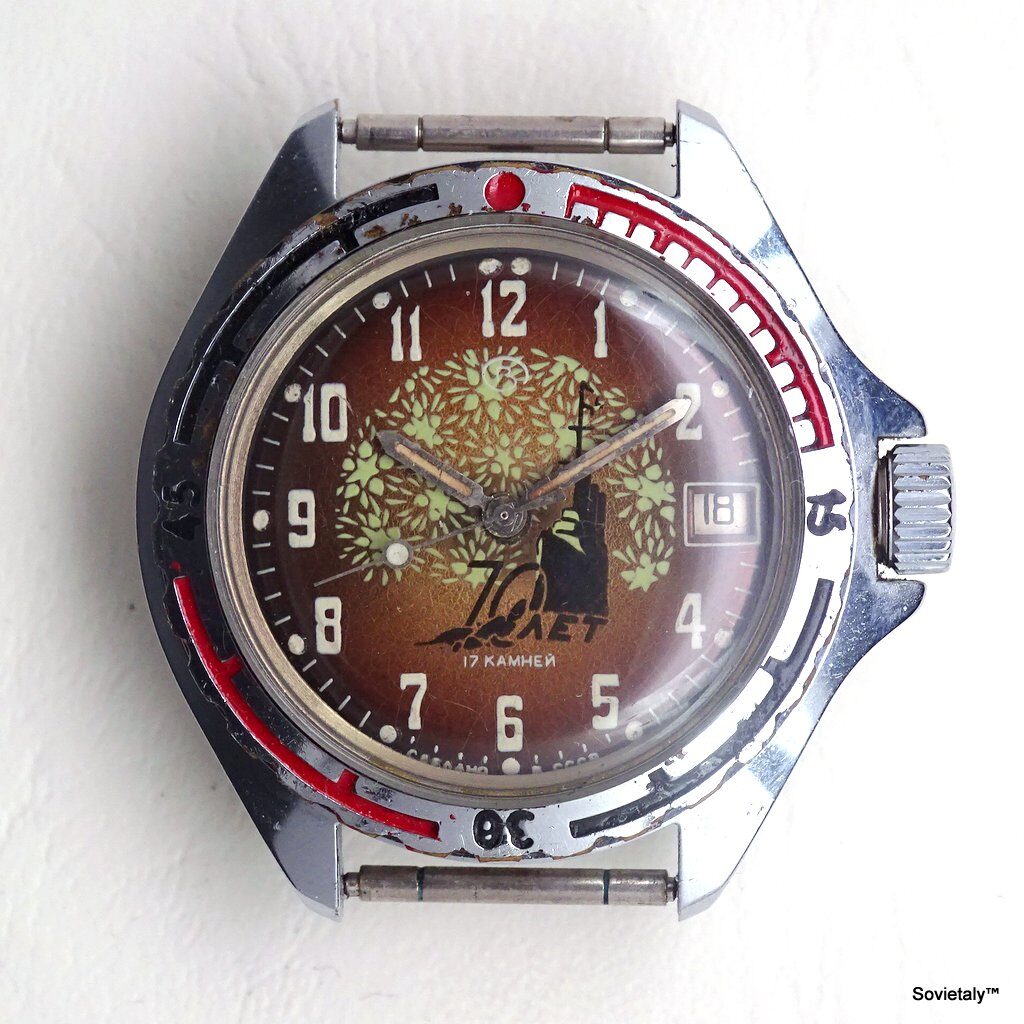
The watch has a unique dial, with a bronze/brown background featuring the image of the Aurora, the battleship that fired the cannon shot that began the revolution. In the background, which takes up almost the entire dial, is a sky full of small explosions, halfway between cannon shots and fireworks.

This combination of elements is symbolic: on the one hand, it represents the first cannon shot fired by the Aurora, which began the revolution; on the other hand, it represents the celebration and joy that accompanied the event.

The watch is made of stainless steel, with a chrome-plated case and a bi-directional bezel. The movement is mechanical manual, with a Vostok 2414 caliber, which has 17 rubies and 19,800 vibrations per hour. The power reserve is 45 hours.

The watch is a collector’s item, combining a unique design with an important historical significance. It is perfect for fans of Soviet watches or of the history of the October Revolution.

Information about the October Revolution:

The October Revolution was a historical event that took place in Russia in 1917. The revolution led to the fall of the Russian Empire and the founding of the Soviet Union.

The revolution was led by the Bolsheviks, a political group led by Vladimir Lenin. The Bolsheviks were convinced that Russia could be transformed into a socialist society only through a revolution.

The revolution began on November 7, 1917, when the Bolsheviks took control of the city of Petrograd, now St. Petersburg. The Bolsheviks marched towards the Winter Palace, the seat of the imperial government, and captured it.

The October Revolution had a significant impact on world history. It led to the birth of the first socialist state and helped to spread socialist ideas around the world.

Information about the Aurora:

The Aurora was a Russian battleship that was built in 1903. The ship was used during World War I and the Russian Civil War.

The Aurora is famous for firing the cannon shot that began the October Revolution. The cannon shot was fired on November 7, 1917, from a distance of about 2 kilometers from the Winter Palace.

The Aurora is now a museum, located in St. Petersburg.

Vostok Amphibia 470303: An Icon of the ’80s at Garbagnate’s Flea Market

Vostok Amphibia watch, close-up view 470303 2409

Vostok Amphibia 470303: A Soviet Relic at Garbagnate‘s Secondhand Market

Are you passionate about vintage watches and history? The Vostok Amphibia 470303 is an authentic historical piece, its story intertwining with the late ’80s and early ’90s. Found at the bustling secondhand market in Garbagnate Milanese, this Soviet watch is a gem waiting to be discovered by precision and aesthetics enthusiasts.

Technical Information – Caliber 2409a with 17 Jewels

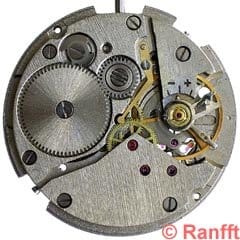
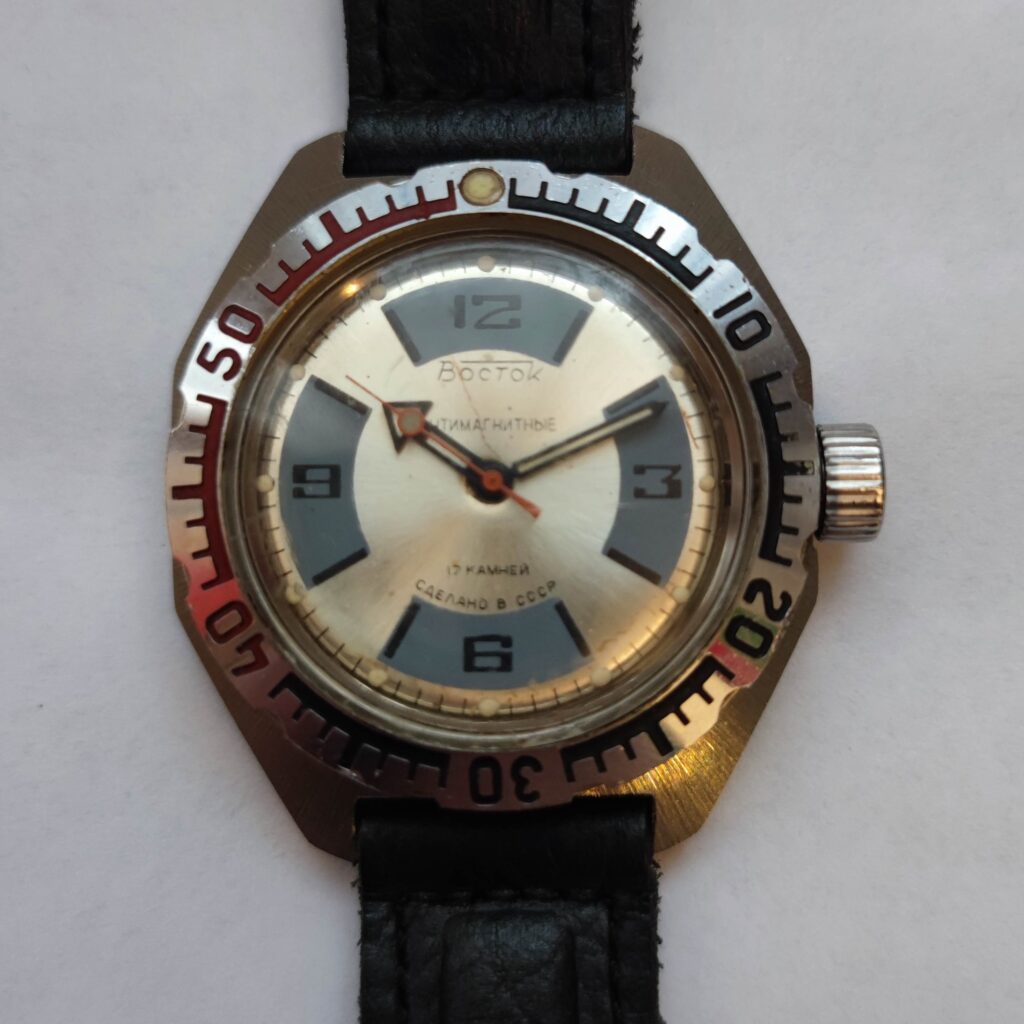
The heart of this watch is its caliber 2409a, a manual movement with 17 jewels ensuring reliability and precision. Waterproof up to 200 meters, it features a screw-down crown and soft iron antimagnetic protection. Its bidirectional rotating bezel makes it practical and functional for outdoor enthusiasts.

Wostok_2409 Rannft (C)
Vostok_2409 Rannft (C)

Design and Exclusive Details

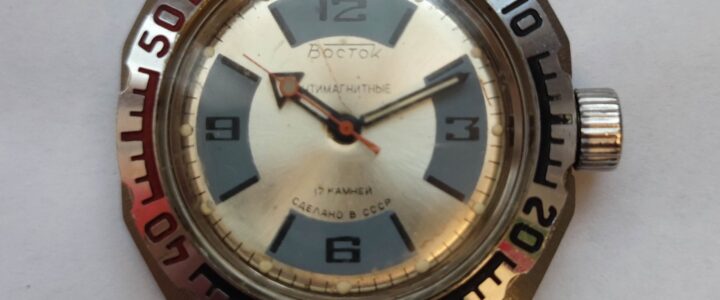
The silver metallic dial with the distinctive blue ‘Maltese cross’ offers timeless elegance. Dark Amphibia arrow-style hands and a red second hand add a touch of originality. It’s worth noting that a modern copy of this dial does not feature the ‘antimagnetic’ inscription.

orologio vostok amphibia 470303 2409

Historical Trivia: Antimagnetism in Watchmaking

The history of antimagnetism in watches is fascinating. Although it’s not clear who invented the first antimagnetic wristwatch, models like the 1940s IWC Pilot’s Watch Mark XI and later iterations by Omega, Rolex, and Jaeger-LeCoultre introduced robust and functional antimagnetic versions.

If you’re seeking a relic from the Soviet era that embodies stories and precision, the Vostok Amphibia 470303 is an unmissable option. It merges vintage aesthetics with modern functionality, making it a one-of-a-kind piece.

Technical Specifications

Vostok Amphibia 470

Reference: 470303 Production: Late ’80s to early ’90s Caliber: 2409A with 17 jewels Winding: Manual Water Resistance: Up to 200m Crown: Screw-down Dial: Silver metallic with a blue ‘Maltese cross,’ dark Amphibia arrow-style hands Antimagnetic Protection: Soft iron Bezel: Bidirectional rotating Versions: ‘Boctok’ for domestic market, ‘Wostok’ for export

Caliber Technical Data:

Diameter: 10.75 / 11.5”’, Dm= 24.0 / 25.65mm Thickness: H= 3.6mm Jewels: 17 Frequency: 19800 A/h Power Reserve: 45 hours

Exclusive Wide Selection of Vostok Amphibian Classic – Discover Model 170510 on Meranom

Experience the timeless elegance of the Vostok Amphibian Classic 170510 at Meranom! Marrying classic design with impeccable precision, this new model epitomizes Russian watchmaking craftsmanship. With unique features and reliable construction, it’s the perfect companion for quality watch enthusiasts. Explore the extensive range at Meranom and add an authentic touch to your style with the Vostok Amphibian Classic 170510. Click here to explore this exclusive collection and find the model that perfectly fits your personal taste.

CLICK HERE TO BE REDIRECTED TO MERANOM.COM

Exploring the Timeless Appeal of Soviet Watches

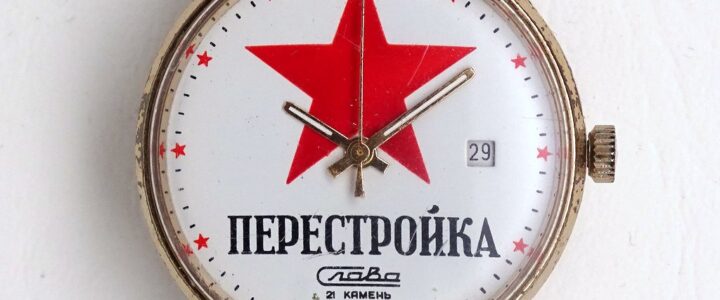
soviet watch slava perestroika

Unveiling the Legacy: A Journey into the World of Soviet Watches

Soviet watches stand as relics of a bygone era, encapsulating the heritage of craftsmanship and innovation. They’re not just timekeepers but symbols of a unique era that captivates both collectors and enthusiasts worldwide. Within the realm of horology, Soviet watches carve out a distinct identity, appealing to those who seek history on their wrists.

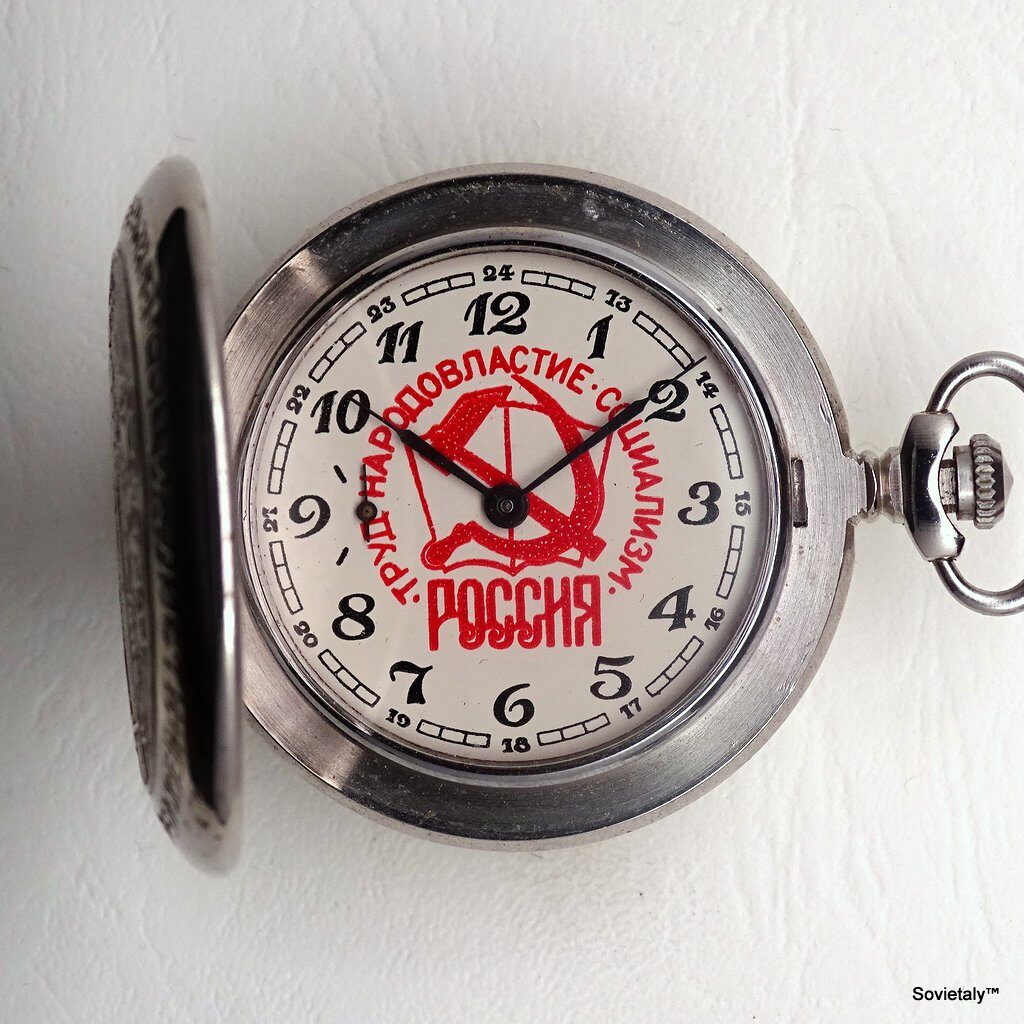
russian pocket watch molnija
Molnija RUSSIA LABOR POWER OF THE PEOPLE SOCIALISM

The Timeless Allure of Authentic Soviet Watches

Authentic watches possess a mystique that transcends time. Crafted with precision and imbued with historical significance, these timepieces mirror the essence of an era long past. From the iconic Raketa to the enduring designs of Poljot, each watch narrates a story of Soviet artistry and engineering prowess.

soviet watch Vostok Komandirskie 1 serie Navy
Vostok Komandirskie 1 serie Navy

A Historical Perspective

Watches are not just accessories; they’re portals to history. They chronicle a period of technological advancement and cultural significance. The 24-hour dials, distinct designs, and enduring durability showcase the ingenuity of Soviet craftsmanship, making each watch a timeless artifact.

Acquiring Authentic Watches: Tips and Insights

When venturing into acquiring watches, authenticity is paramount. Comprehensive research through reputable sources like SovietAly ensures a reliable purchase. Understanding the nuances in design, movement, and historical context aids in discerning genuine timepieces from replicas or alterations.

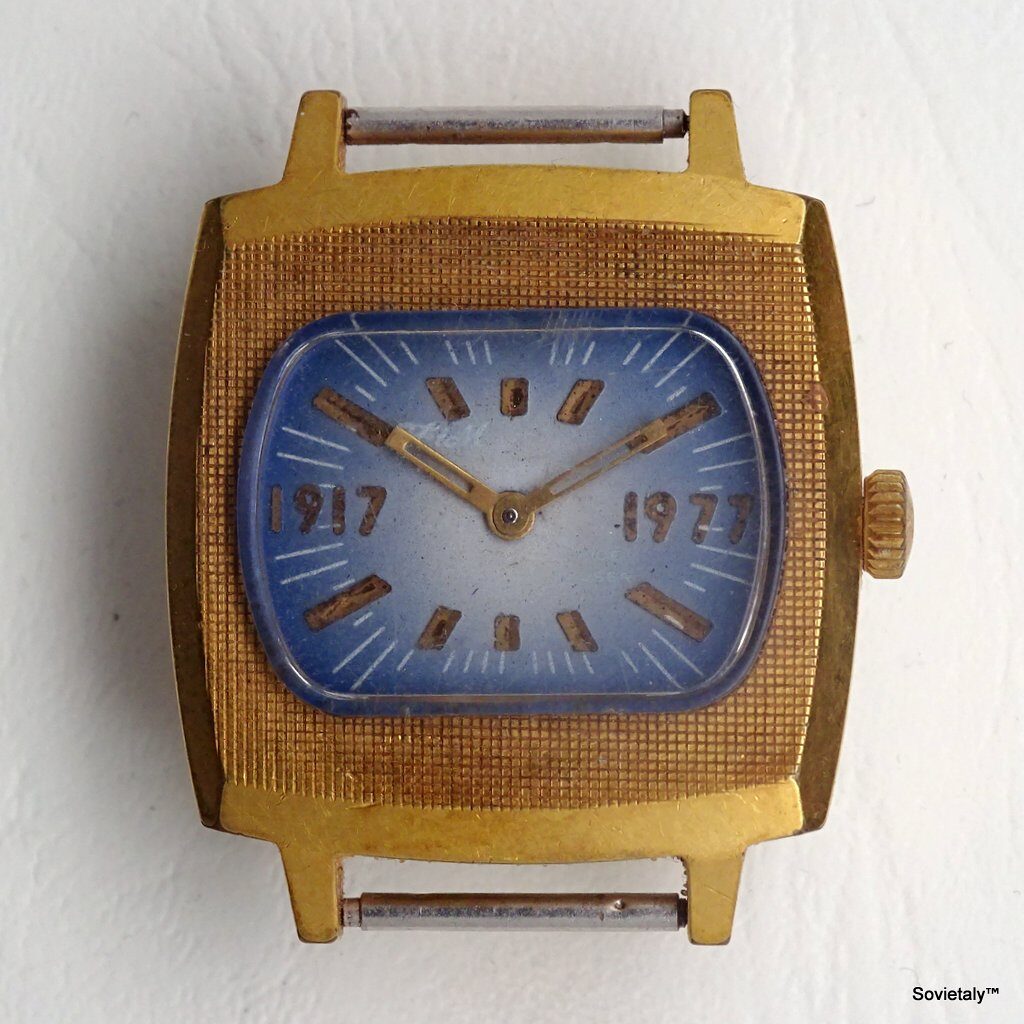
commemorative soviet watch 60 years of USSR
Zim 60 years of USSR

Conclusion: Embracing the Soviet Watch Legacy

Soviet watches continue to fascinate and captivate horology enthusiasts with their enduring appeal. Their ability to bridge the past with the present makes them not just timekeepers but living testaments to a remarkable era. Embrace the allure, history, and craftsmanship of Soviet watches and own a piece of a legacy that stands the test of time.
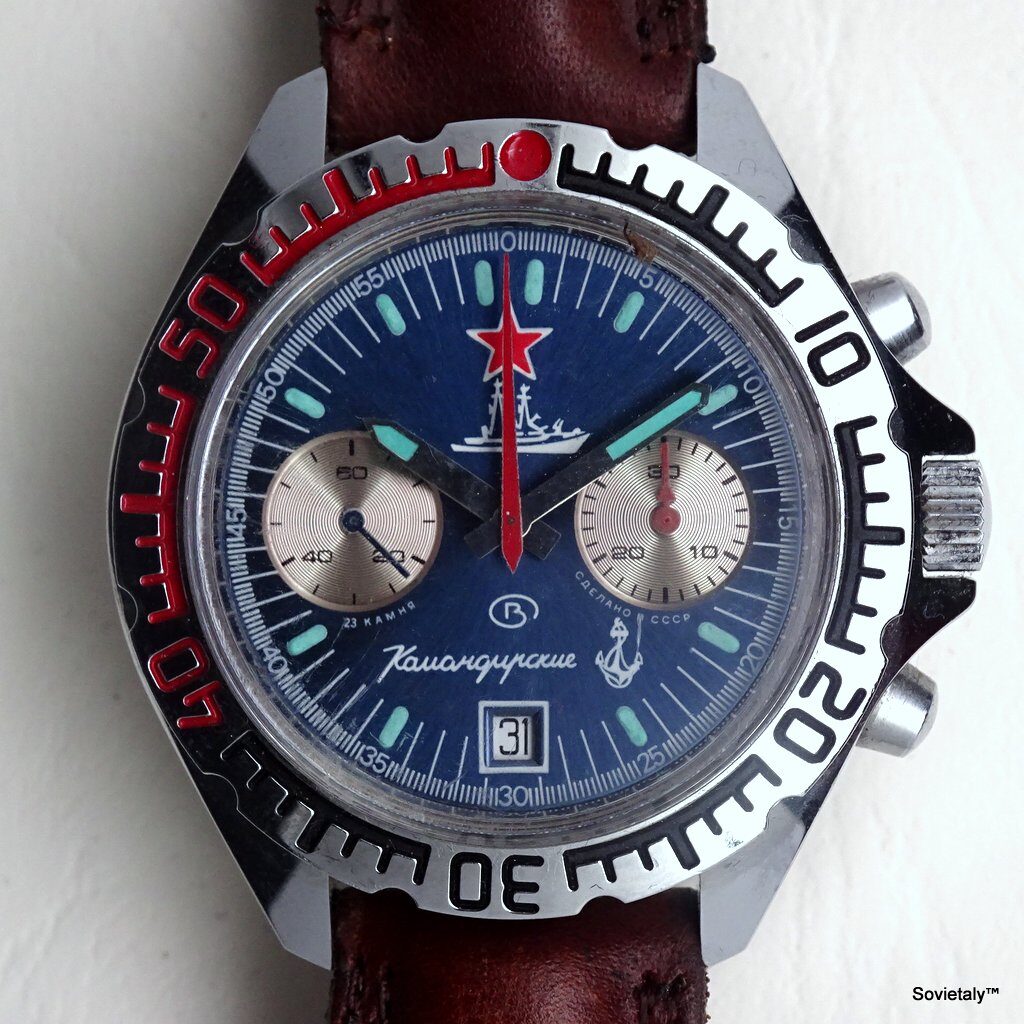
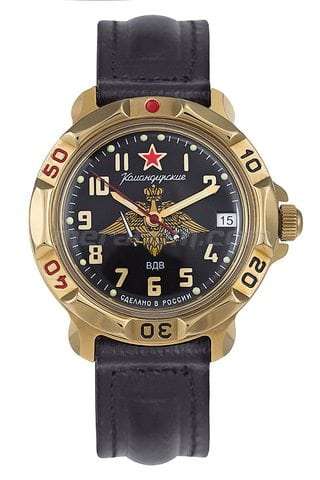
Vostok Komandirskie: A Journey into the World of the Russian Armed Forces

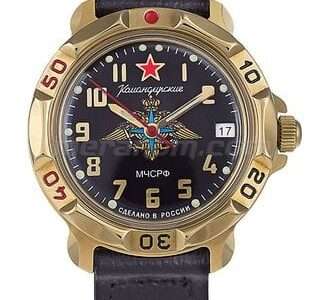
Orologio Vostok Komandirskie 819639

The Emblems Behind Vostok Komandirskie

Each Vostok Komandirskie model showcases an emblem that represents an official Russian institution. Here are three remarkable examples:

Vostok Komandirskie 819630 – Russian Airborne Troops (ВДВ)

The Vostok Komandirskie 819630 proudly displays the emblem of the ВДВ (Vozdushno-Desantnye Voyska), Russia’s elite airborne forces, known for their strategic operations and rapid deployment.

👉 Discover this model here

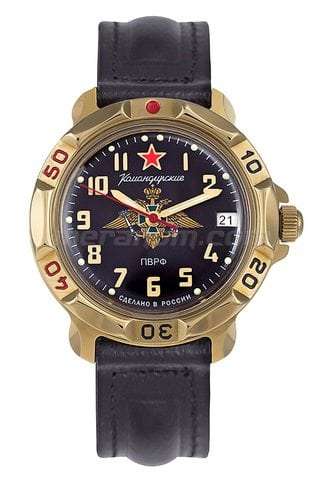
Vostok Komandirskie 819633 – Border Guard Service (ПВРФ)

This version features the insignia of the ПВРФ (Pogranichnaya Sluzhba FSB RF), the Border Guard Service of the Russian Federation, a division of the Federal Security Service (FSB).

👉 Get yours here

Orologio Vostok Komandirskie 819633

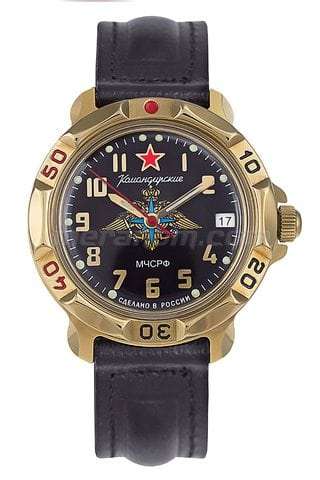
Vostok Komandirskie 819639 – Ministry of Emergency Situations (МЧС РФ)

The Vostok Komandirskie 819639 is adorned with the crest of the МЧС РФ (Ministerstvo po Delam Grazhdanskoy Oborony), Russia’s Ministry of Emergency Situations, responsible for civil defence and disaster response.

👉 See the model here


Orologio Vostok Komandirskie 819639

Why Choose a Vostok Komandirskie?

  • Collectible Appeal → Each model carries a unique history and real institutional ties.
  • Military-Inspired Design → Authentic symbols and bold dials make every piece stand out.
  • Affordability → Unlike many military-style watches, Komandirskie offer excellent value for money.
  • Proven Durability → Powered by the Vostok 2414A movement, built for longevity.

Where to Buy a Vostok Komandirskie?

You can find these legendary Russian watches on Meranom and at select specialist watch retailers.

🔴 Explore the collection and wear a piece of Russian history!