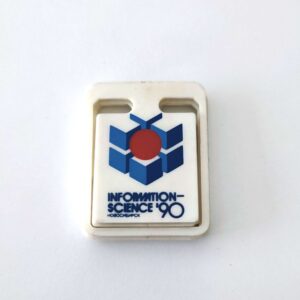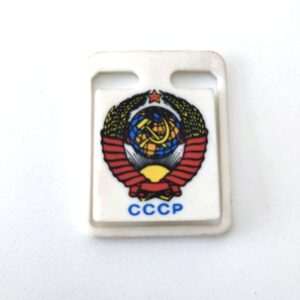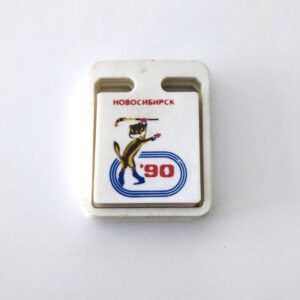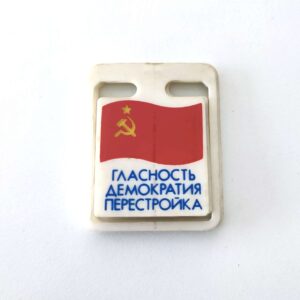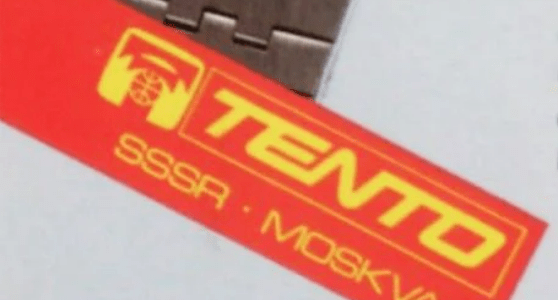
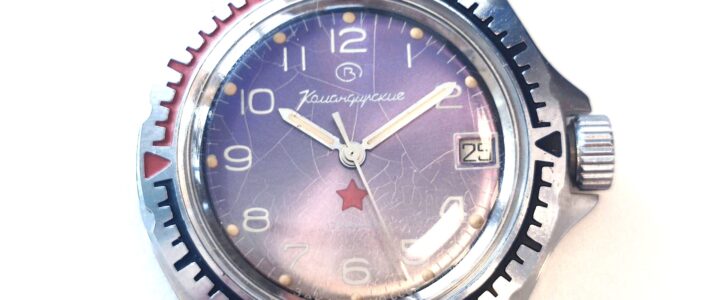
TENTO, a significant name in Soviet manufacturing, was renowned for its high-quality optical instruments, particularly binoculars, and various household appliances. Although initially thought to be involved primarily in watch exports, TENTO’s main focus was on producing and exporting a range of other products that gained international recognition during the 1980s and 1990s.
Origins and Products
TENTO was associated with the Zagorsk Optical-Mechanical Plant (ZOMZ), which began operations in 1935. The company produced a variety of optical devices, including binoculars that were highly regarded for their durability and optical clarity. Popular models like the BPC 7×35 and BPC 20×60 were known for their excellent performance and were widely used both within the Soviet Union and abroad. These binoculars were praised for their robust construction and high-quality optics, making them a favorite among outdoor enthusiasts, bird watchers, and hunters (Optics Trade) (REIBERT.info) (Vplate) (REIBERT.info).
Export Activities
In addition to optical devices, TENTO also exported household appliances, including electric irons, which were known for their reliability and practicality. The brand’s extensive product range and quality manufacturing made its products highly sought after in international markets (CycloWiki) (Реальность против мифологем).
TENTO played a role in exporting Soviet watches, although this was more of a complementary activity. The company helped distribute watches from renowned Soviet brands like Vostok, creating catalogs that showcased a range of timepieces. This activity was reflected in multilingual catalogs written in Russian, English, French, Spanish, and German, indicating the broad international reach of TENTO’s marketing efforts (CycloWiki) (Реальность против мифологем).
International Markets
During the 1980s, the Soviet Union, under the economic restructuring policies of Perestroika, sought to increase its hard currency earnings through the export of various goods, including TENTO’s products. TENTO’s exports reached numerous countries across Europe, Asia, and beyond, facilitated by the Soviet Union’s efforts to engage more deeply with international markets. Countries such as Germany, France, the United Kingdom, and several others were notable destinations for TENTO’s exports (CycloWiki) (Реальность против мифологем).
Conclusion
TENTO’s legacy in producing high-quality binoculars and household appliances, alongside its role in distributing Soviet watches, showcases the breadth of Soviet industrial capabilities. The brand’s products continue to be appreciated by collectors and enthusiasts around the world. As interest in vintage Soviet technology grows, TENTO’s contributions to various fields are increasingly recognized and celebrated.
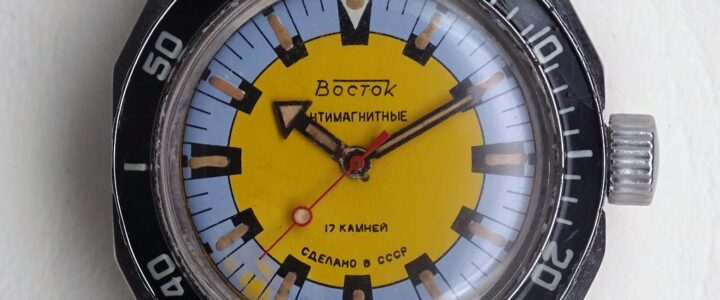
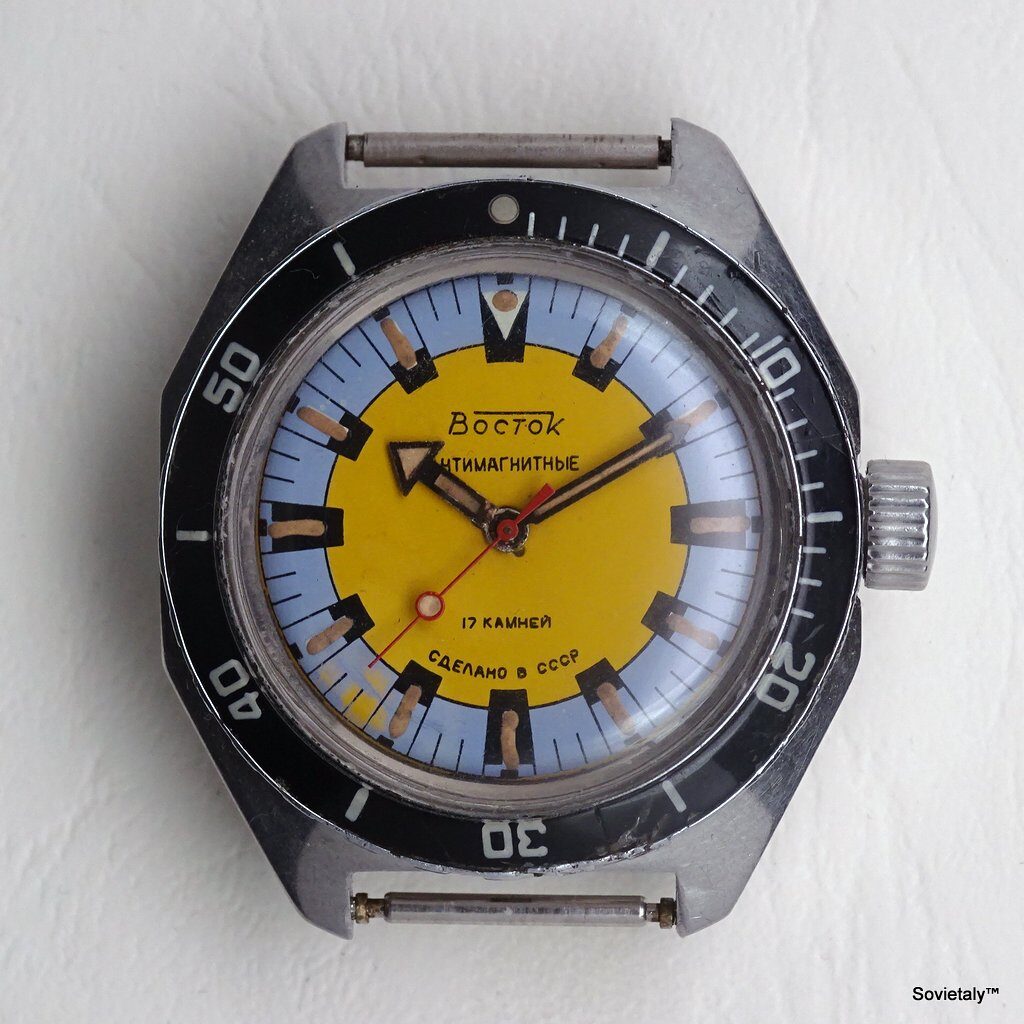
The Vostok Banana, also known as the Vostok Amphibia “Banana,” is a Soviet dive watch that has captured the attention of collectors due to its distinctive design and fascinating history. This article provides a detailed comparison of this watch with the iconic Omega Seamaster 200 “Banana,” from which it draws inspiration.
Features of the Vostok Banana
Dial and Bezel:
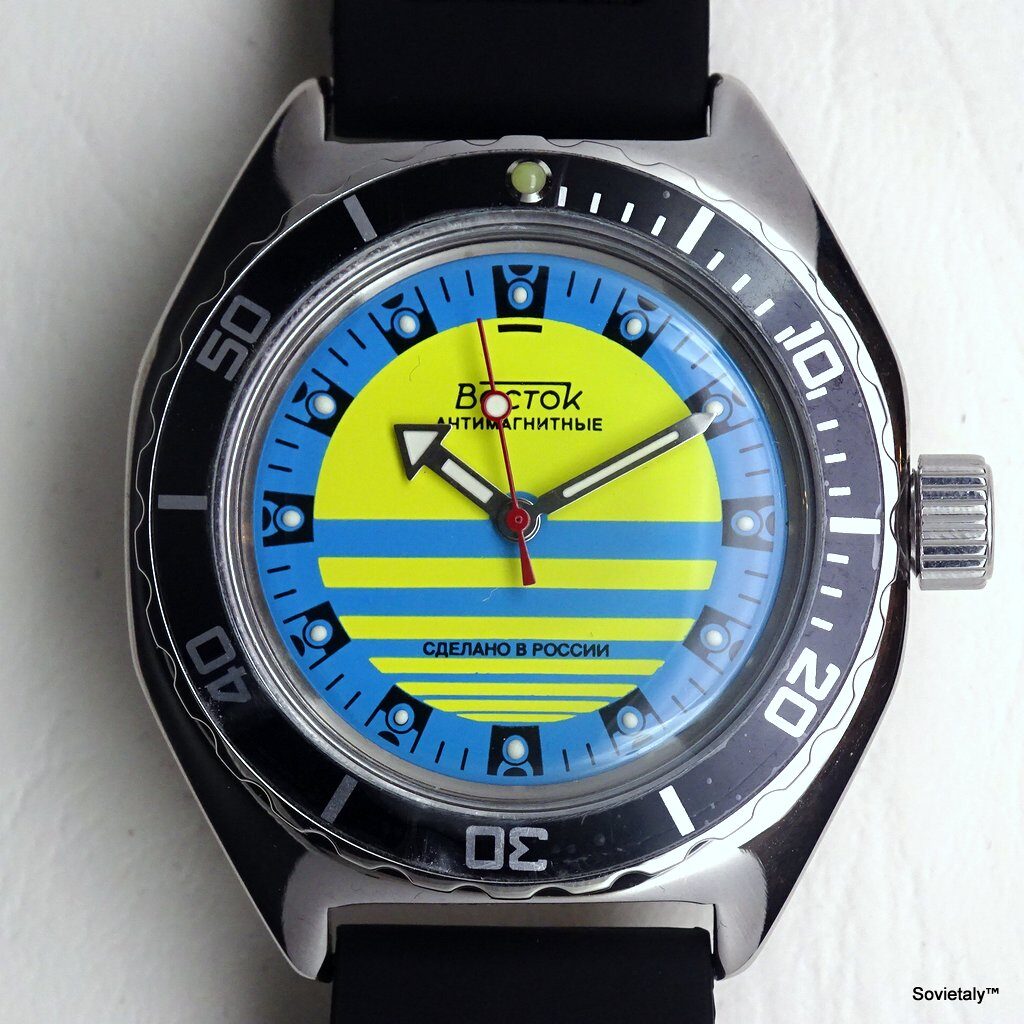
The Vostok Banana features a yellow dial with black details. The 1990 Tento catalogue shows a black bakelite bezel, but many examples have a chrome bezel.
The hands are flat and filled with permanent-action phosphor for visibility.
Case:
The case is made of stainless steel, designed to withstand depths of up to 200 meters. It has a robust and durable shape typical of dive watches.
Movement:
The Vostok uses the automatic 2409A movement, known for its reliability and simplicity. This movement is less sophisticated than those used in luxury watches but still offers good precision.
Value and History:
With reference 320228, the Vostok Banana was introduced in the 1990 Tento catalogue, following the Omega. It is appreciated for its unique design and historical value, representing an accessible entry into the world of vintage watches for collectors.
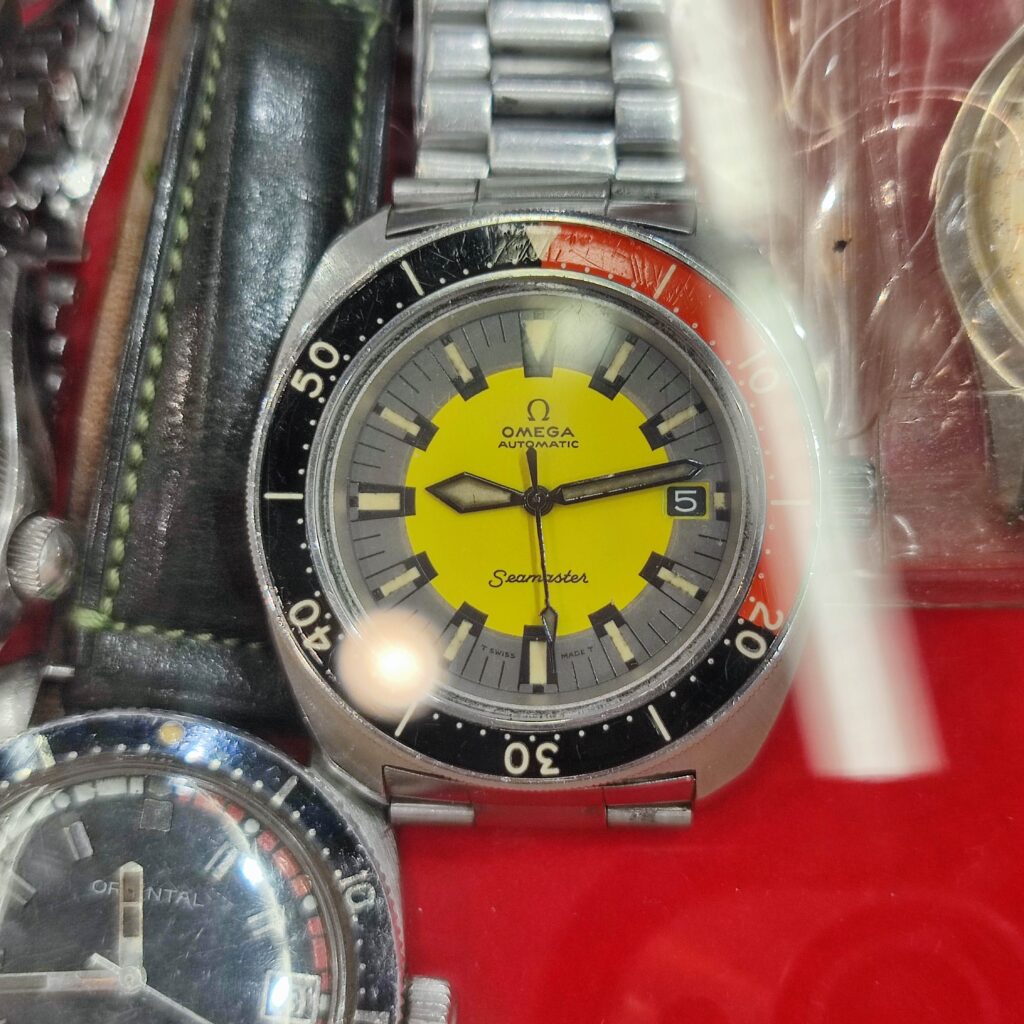
The Omega Seamaster 200 “Banana” is known for its yellow dial with a grey border and a two-tone red and black bezel. This bold design is a symbol of the experimental aesthetics of the 1970s.
Case:
The stainless steel case has a diameter of 41 mm and a screw-down case back, ensuring water resistance up to 200 meters. The robust construction is ideal for diving.
Movement:
The Omega uses the automatic calibre 565, renowned for its precision and durability. It includes a date function and offers superior performance compared to simpler movements.
Value and History:
Introduced in 1972, the Omega Seamaster 200 “Banana” is highly sought after by collectors for its rarity and quality. Well-preserved examples can fetch high prices at auctions.
Direct Comparison
Design Quality and Materials:
The Omega Seamaster 200 “Banana” uses high-quality materials and finishes, with a sophisticated movement that justifies its high price. The Vostok Banana, while well-constructed, uses more economical materials, making it a more accessible option for collectors.
Movement and Precision:
The Omega calibre 565 offers greater precision and reliability compared to the Vostok 2409A movement, making the Omega preferable for those seeking superior performance.
Market Value:
The Omega Seamaster 200 “Banana” has a significantly higher market value due to its rarity and quality. The Vostok Banana is much more affordable but still appreciated for its design and history.
History and Iconicity:
Both watches have fascinating histories, but the Omega Seamaster 200 “Banana” is considered an icon of 1970s design. The Vostok Banana is seen as a Soviet homage to this legendary design, keeping the tradition alive with its variants.
The Luminous Paste Issue of the Vostok Banana
One common criticism of the Vostok Banana is the application of luminous paste on the dial. Often, the luminescence appears irregular and hand-applied, resulting in less than optimal results. This issue can be attributed to several factors:
Material Quality: The chemical components used in the luminous paste may be of lower quality, leading to a less uniform application and reduced luminescence longevity.
Hand Production: Many Vostok watches are hand-assembled, and the luminous paste is applied manually, causing significant variations in application quality.
Quality Control: Tolerance in quality control can vary. Some examples show good luminescence application, while others may have obvious defects.
Storage Conditions: Exposure to extreme storage conditions, such as excessive heat and cold, can deteriorate the luminous paste, reducing its effectiveness and stability over time.
Identifying Fake Vostok Banana Dials
There are several ways to identify fake Vostok Banana dials:
Markings Print: Fake dials often have thicker, less defined markings. Fine, detailed printing is hard to replicate.
Detail Alignment: Authentic dials have well-aligned details and lines. Fakes may show noticeable misalignments.
Luminous Quality: On fake dials, the luminous paste application can be even more irregular and less uniform than on originals.
Internal Movement: Checking the internal movement can be a good indicator. Fakes often do not use original Vostok movements.
Modern Versions and Special Editions of the Vostok Banana
Meranom offers modern and Special Edition versions of the Vostok Banana. These models feature improvements in material quality and finishes while retaining the iconic design:
Special Edition (SE): SE versions include high-quality dials and custom stainless steel bezels. They use special variations of the 2409A movement and are sold exclusively on Meranom.
Classic and SE Amphibia: These versions have better assembly quality and control, with dials free from visible defects and improved materials.
These modern editions keep the spirit of the original Vostok Banana alive while offering enhanced quality for today’s enthusiasts.
Vostok Amphibia SE Rising Banana
Conclusion
The Vostok Banana and the Omega Seamaster 200 “Banana” represent two distinct approaches to dive watch design. The Omega stands out for its superior quality and technical sophistication, making it a high-value collector’s piece. The Vostok, while less sophisticated, provides affordable access to the vintage charm and history of these iconic designs, making it a popular choice among Vostok Banana collectors.
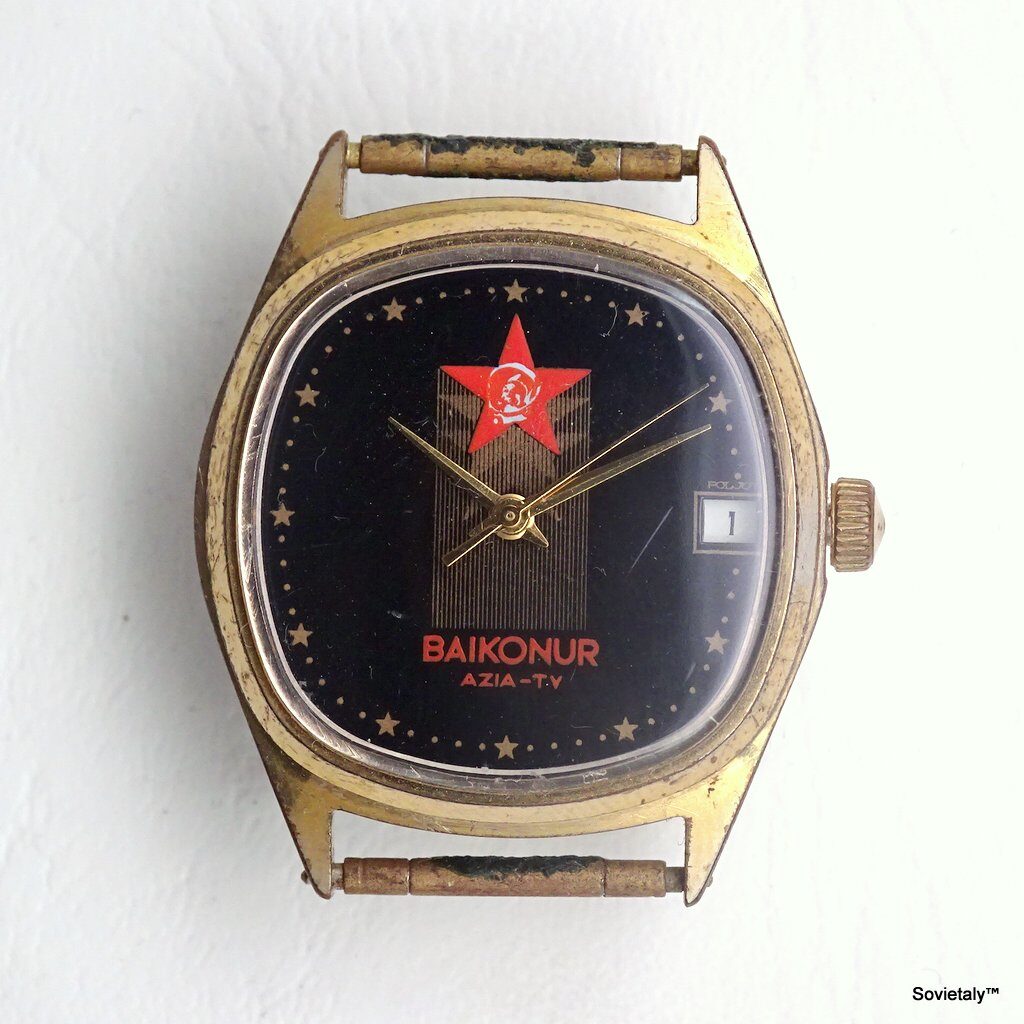
The Baikonur Azia-TV Poljot watch is an iconic piece celebrating Soviet space achievements. With its unique design and historical significance, it is highly sought after by collectors. This article explores the watch’s technical details, the history of AZIA-TV, and the context where these elements intersect.
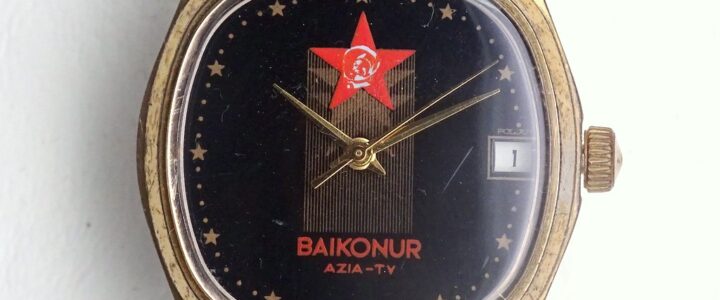
Design: Black dial with a red star and Yuri Gagarin’s image
Produced between the late 1980s and early 1990s, this watch pays tribute to Soviet space missions, referencing the Baikonur Cosmodrome in Kazakhstan.
The History of AZIA-TV
“АЗИЯ-ТВ” (AZIA-TV) was a television company operating in Kazakhstan in the late 1980s and early 1990s. Based in Almaty, it was part of a broader movement of independent broadcasters like “Otrar” and “Dala”. These channels played a crucial role in diversifying Kazakhstan’s post-Soviet media landscape, offering a variety of content including news, cultural programs, and entertainment.
Connections with Baikonur
Baikonur is renowned for its cosmodrome, the launch site for numerous Soviet space missions. While there are no direct references to specific collaborations between AZIA-TV and Baikonur, it is plausible that the channel featured content related to space activities due to regional ties and the cosmodrome’s importance.
Development of the Television Industry in Kazakhstan
Kazakhstan’s television industry began developing in the 1950s, with significant growth in the following decades. By the 1980s, television broadcasting had expanded considerably, offering mixed programming in Kazakh and Russian. The emergence of independent broadcasters like AZIA-TV marked an important shift towards a more diverse national media landscape.
Conclusion
The Baikonur Azia-TV Poljot watch is more than just a timepiece; it is a piece of history celebrating Soviet space achievements and the dynamic post-Soviet media landscape in Kazakhstan. This makes the watch of great interest to both collectors and history enthusiasts.
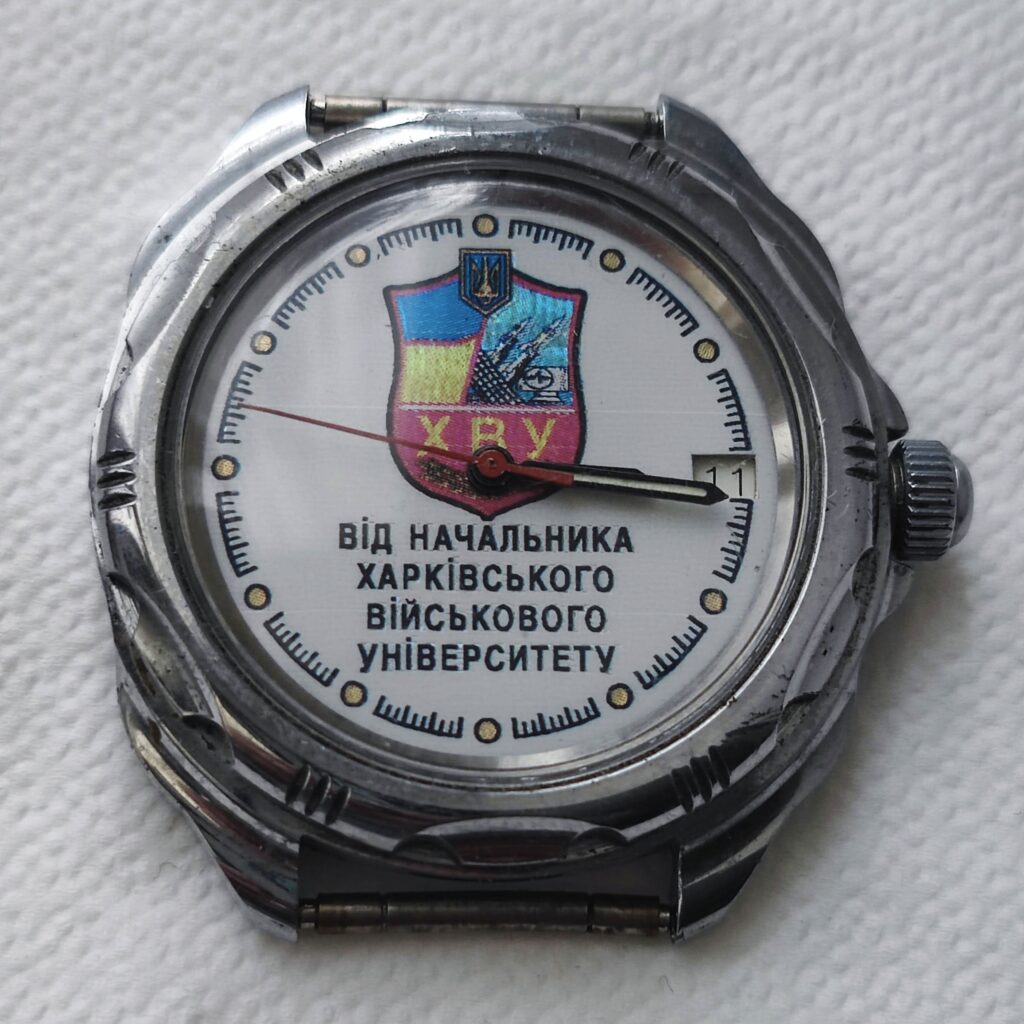
Recently, I had the opportunity to acquire a very special watch for my collection of Soviet and post-Soviet memorabilia. This commemorative watch comes from the Kharkiv Military University, located in the Kharkiv region of Ukraine. In this article, I will tell you the story of this fascinating item, the meaning of the inscriptions on the dial, and the technical features of the watch.
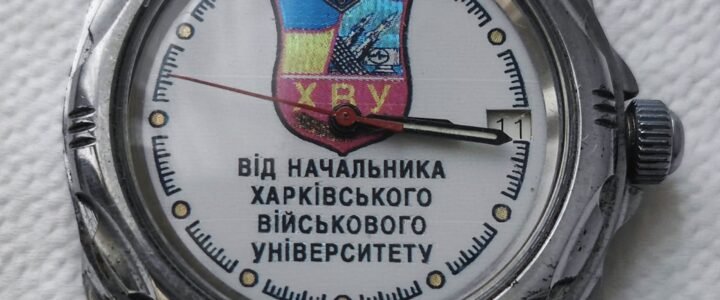
As an avid collector of historical Soviet and post-Soviet items, I am always on the lookout for unique pieces that tell a story. When I came across this commemorative watch, I was immediately drawn to its robust design and significant history. The dial reads “ВІД НАЧАЛЬНИКА ХАРКІВСЬКОГО ВІЙСЬКОВОГО УНІВЕРСИТЕТУ,” which translates to “From the Director of the Kharkiv Military University.”
Watch Description
The watch has a chrome-plated brass case, giving it an elegant and durable appearance. Inside, it features a Vostok 2414A hand-wound calibre, a reliable movement appreciated for its accuracy. The dial is decorated with the emblem of the Kharkiv Military University, colourful and representative of the pride and tradition of the institution. This type of watch is usually given as recognition for distinguished service or as a token of affiliation with the University.
Meaning of the Inscriptions
The Cyrillic inscriptions on the watch dial refer directly to the Director of the Kharkiv Military University. This indicates that the watch might have been a gift or an award, a symbol of recognition for commitment and service to the institution. It’s fascinating how these small details can tell such a rich story.
The Kharkiv Military University
The Kharkiv Military University, officially known as “Національний університет оборони України імені Івана Черняховського” (National Defence University of Ukraine named after Ivan Chernyakhovsky), is located in the Kharkiv region of Ukraine. Founded during the Soviet period, this university has continued to train officers and specialists for the Ukrainian armed forces, maintaining a high standard of military education and training.
The Kharkiv Region
Kharkiv is one of the major cities in Ukraine, located in the eponymous region. It is an important cultural, educational, and industrial centre. The Kharkiv Military University plays a crucial role in training the country’s armed forces and has a long tradition of excellence.
Conclusion
Having this commemorative watch in my collection is a true honour. Not only is it a beautiful example of military design, but it is also a piece of history that represents the importance and legacy of the Kharkiv Military University. Every time I look at it, I am reminded of the value of service and dedication.
The Vostok with Calibre 2409 and the Commemorative Dial
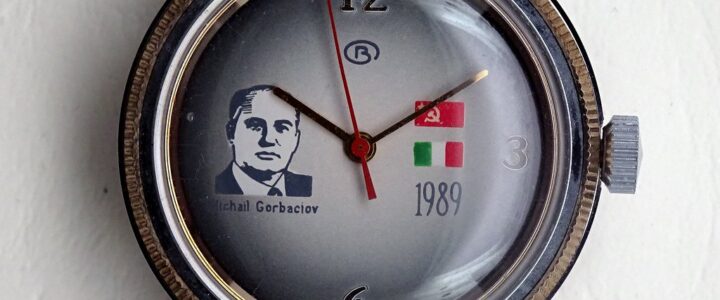
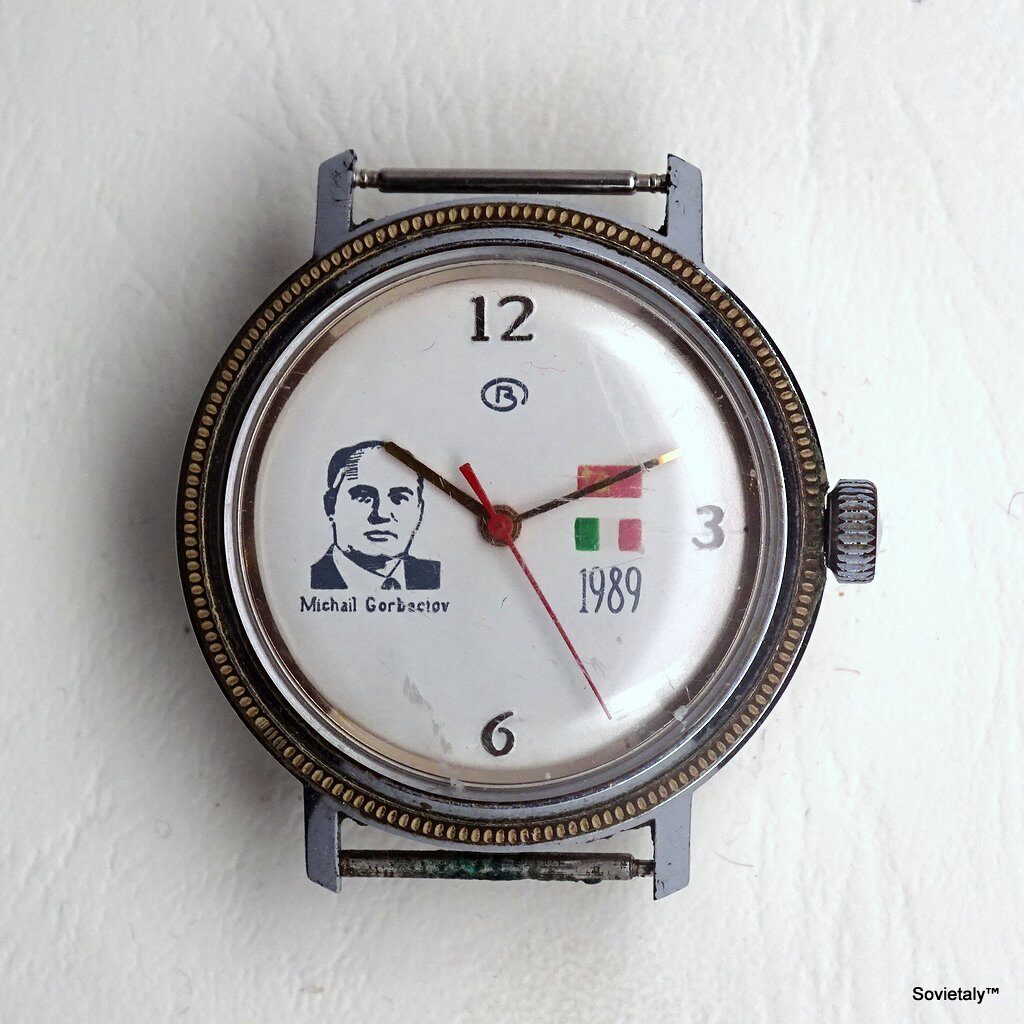
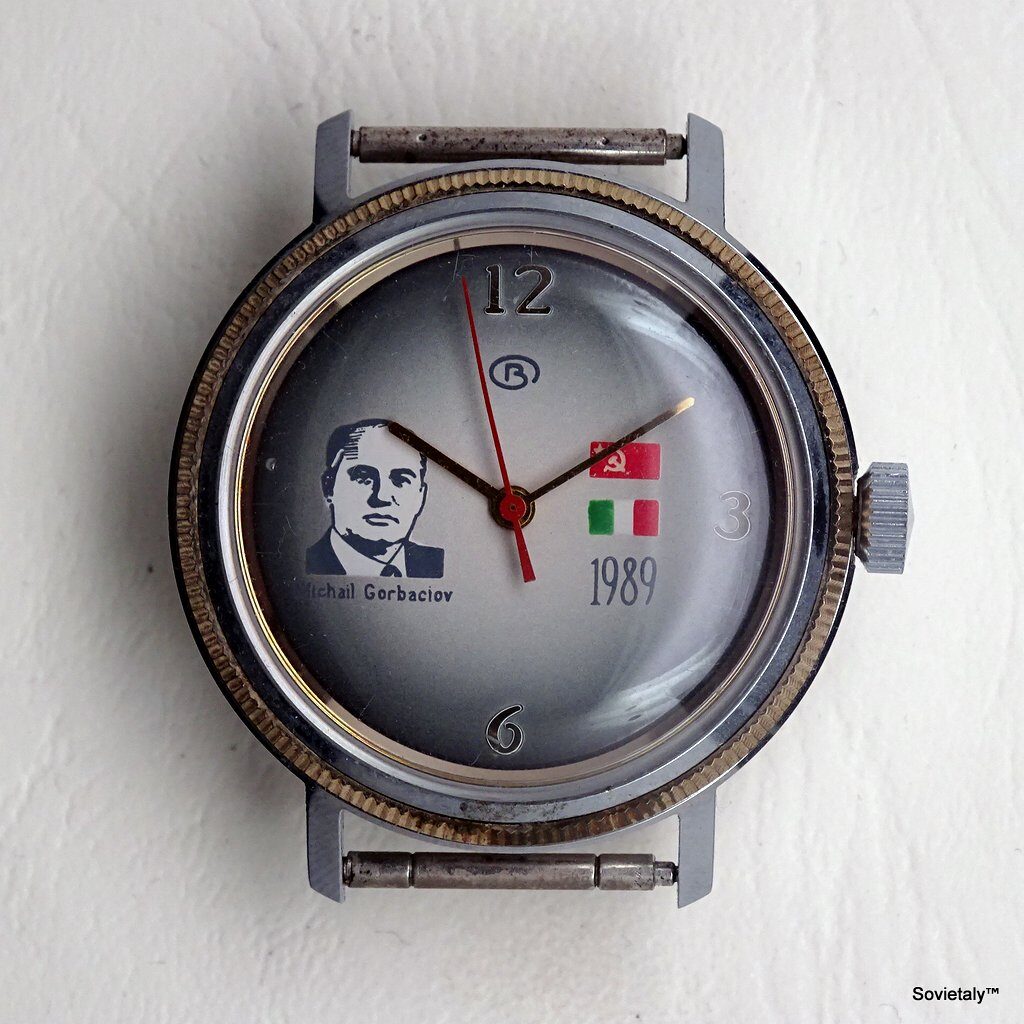
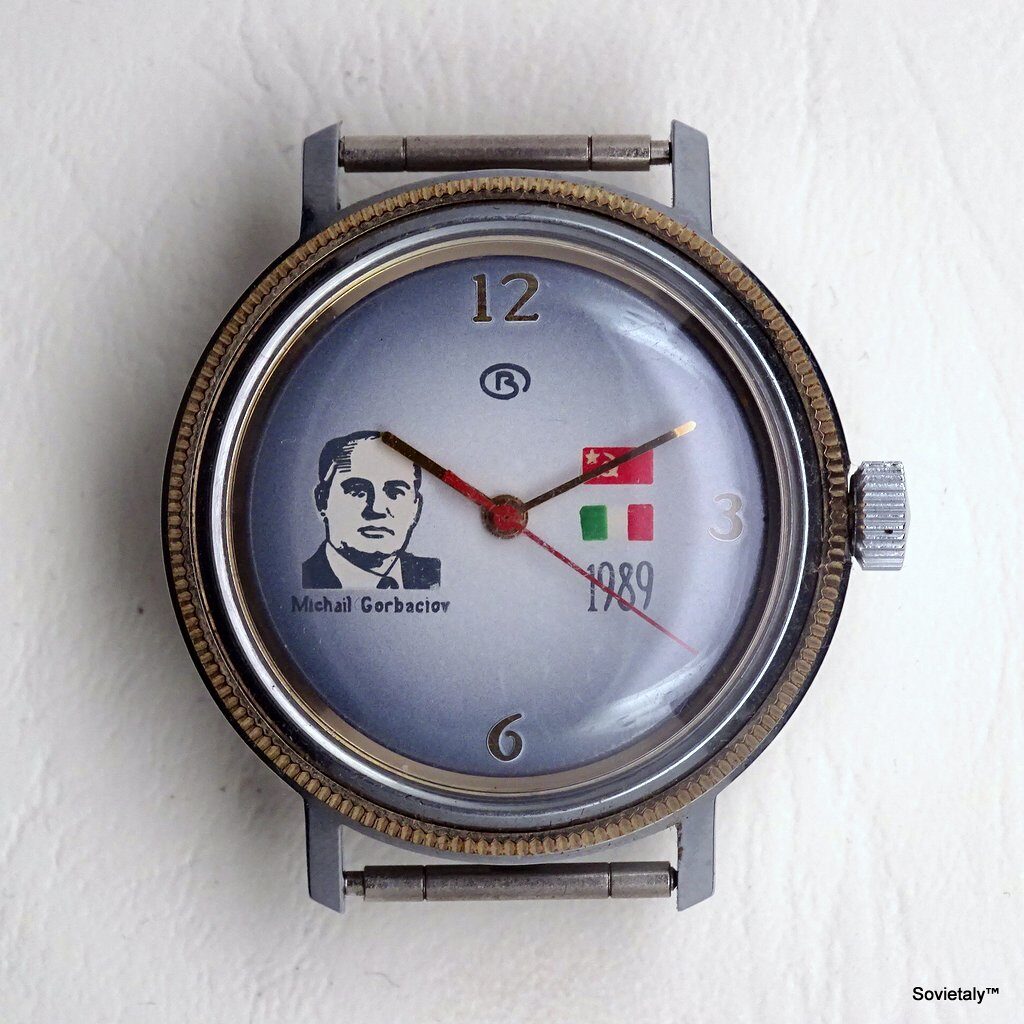
The Vostok watch with calibre 2409 is known for its robustness and reliability, typical characteristics of Russian mechanical movements. This hand-wound watch has a diameter of 24 mm, a height of 3.7 mm, and includes 17 jewels. It operates at a frequency of 19,800 vibrations per hour and offers a minimum power reserve of 40 hours. The dial of this particular model celebrates Mikhail Gorbachev’s visit to Italy in 1989, featuring his image (WatchUSeek Watch Forums) (Wikipedia) (WatchUSeek Watch Forums). It is available in several dial colour variants, allowing collectors to choose the option that best suits their personal taste.
In 1989, Mikhail Gorbachev, then General Secretary of the Communist Party of the Soviet Union, visited Italy from 29 November to 1 December. This trip was part of a broader European diplomatic tour aimed at strengthening political and economic ties between the Soviet Union and Italy amidst the ongoing reforms of perestroika and glasnost (Wikipedia) (The Nation).
Agenda and Meetings
During his stay in Italy, Gorbachev had a series of high-profile meetings:
Meeting with the President of the Republic: Gorbachev was received by President Francesco Cossiga. The discussions focused on bilateral cooperation and global issues such as nuclear disarmament and international security.
Talks with the Prime Minister: Gorbachev met with Prime Minister Giulio Andreotti to discuss economic and political relations between the two countries, with a particular focus on trade cooperation.
Visit to the Vatican: Gorbachev had a historic meeting with Pope John Paul II. This event was significant given the atheist nature of the Soviet state and the Pope’s influence in the Eastern Bloc, especially in Poland.
Participation in Conferences: Gorbachev attended various conferences and gave public speeches, highlighting the importance of perestroika and glasnost for the future of the Soviet Union and for international stability, promoting greater cooperation between East and West (Making the History of 1989) (OpenEdition).
Anecdotes and Curiosities
Enthusiastic Reception: Gorbachev and his wife Raisa were warmly received by the Italian public, demonstrating the interest and admiration for the reforms introduced by Gorbachev.
Raisa Gorbachev’s Visit to Milan: Raisa visited Piazza Adelaide di Savoia 2 in Milan to pay homage to Nicola Benois, a renowned Russian-Italian scenographer who had worked extensively at La Scala in Milan. Benois was known for his extraordinary contributions to opera and ballet, and Raisa’s visit highlighted the importance of culture as a bridge between nations (Wikipedia) (Teatro alla Scala Pittori 1937-1970).
Cultural Impact: Gorbachev’s visit helped to strengthen cultural ties between Italy and the Soviet Union. Various cultural exchange projects were discussed during the stay, including study programmes and artistic collaborations that would facilitate greater mutual understanding (Wikipedia) (Making the History of 1989) (OpenEdition) (The Nation).
Conclusion
The Vostok watch with calibre 2409 and its commemorative dial represent not only a piece of horological history but also a symbol of an era of significant changes in international relations. Mikhail and Raisa Gorbachev’s visit to Italy in 1989 remains a memorable moment that contributed to strengthening cultural and political ties between the two countries. Thank you for visiting our site and for your interest in this piece of history and culture.
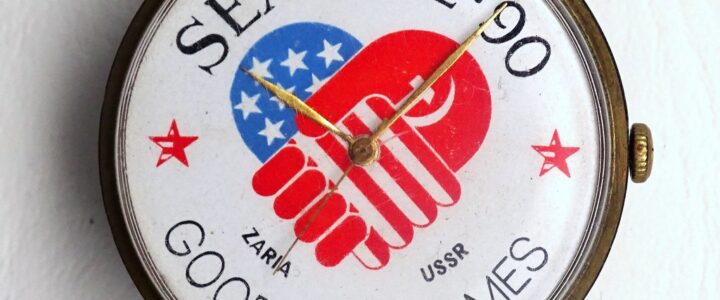
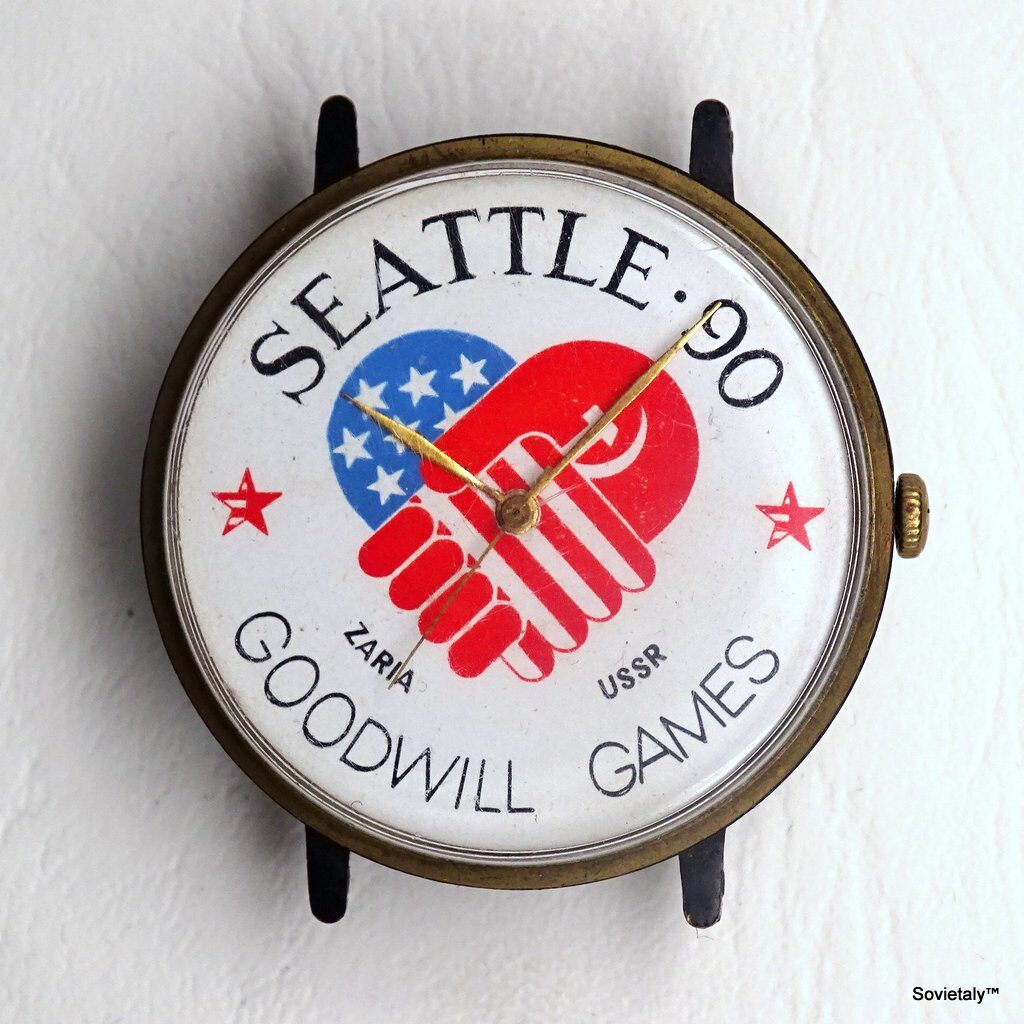
In the realm of Soviet watchmaking, the Zaria watch from the 1990 Goodwill Games stands out as an intriguing piece of historical memorabilia. Produced by the Zaria brand, this watch features a 21-jewel, manually wound 2009b calibre. Although an economical model, its design and the historical context in which it was made make it noteworthy for enthusiasts of Soviet horology.
The Zaria Goodwill Games 1990 watch uses a manually wound mechanical movement, identified as the 2009b calibre, with 21 jewels. This type of movement was common in watches from that era. The watch case is made of coated brass, a material often used for budget watches, providing basic protection for the internal mechanism. The technical specifics of the 2009 calibre include an oscillation frequency of 21,600 vibrations per hour (vph) and a power reserve of approximately 42 hours. This movement is simple and functional but not particularly known for long-term reliability.
Dial Analysis
The watch dial is rich in symbolism. At the centre, it features a logo depicting two hands shaking, one with the colours of the United States flag and the other with those of the Soviet Union. This symbol of international cooperation is surrounded by the text “Seattle ’90” and “Goodwill Games,” clearly indicating the event and the year.
Significance of the Goodwill Games
The Goodwill Games were conceived by media mogul Ted Turner as a response to the Olympic boycotts during the Cold War. The first edition was held in 1986 in Moscow, and the 1990 event in Seattle marked a moment of détente between the United States and the Soviet Union. This sporting event aimed to promote peace and cooperation between the two superpowers.
Dial Details
In addition to the central logo, the dial features two red stars and the text “Zaria USSR,” confirming the Soviet origin of the watch. The gold-coloured hands stand out clearly against the white background of the dial, offering good legibility.
Conclusion
The Zaria watch from the 1990 Goodwill Games is an interesting example of Soviet watchmaking, with a design reflecting a specific moment in world history. Despite being an economical model with modest technical features, its value lies primarily in the historical and symbolic context represented by the dial. For enthusiasts of Russian and Soviet horology, this watch represents an intriguing piece to add to their collection, helping to preserve the memory of a period of international collaboration.
The CARDI Vostok watch brand represents a unique collaboration between Western design and Russian mechanical precision. Founded in the early 1990s, this brand distinguished itself with unique designs and the use of high-quality movements produced by the renowned Vostok watch factory.
Origins and History
The history of CARDI Vostok begins in 1991, shortly after the collapse of the Soviet Union. The name “Cardi” is derived from the abbreviation of “Car Design Studio,” a Russian company specializing in automobile customization. In an attempt to diversify its activities, Cardi began collaborating with the Vostok watch factory to produce watches with a more “Western” aesthetic (WatchUSeek Watch Forums) (WatchUSeek Watch Forums).
The early models of CARDI Vostok were known for their innovative design and the use of materials such as brass and cheap alloys, mainly produced by the Minsk Watch Factory. These watches were considered high quality, but over time the quality of the materials declined, leading the brand to lose popularity and cease production around 2009 (Sovietaly).
Design and Movements
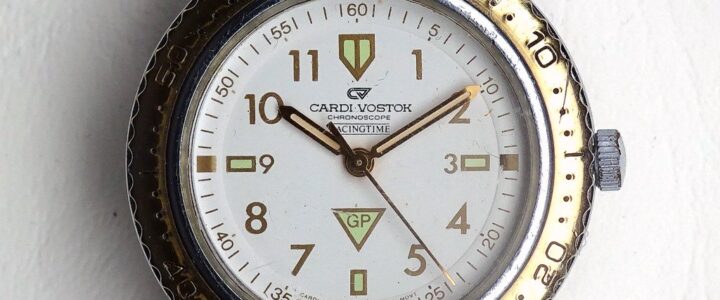
Cardi Vostok Racingtime GP
CARDI Vostok models combine Cardi’s creative design with Vostok’s robust mechanical movements. The designs were often inspired by the automotive world, with names like “Capitan,” “MVM Sport,” “GP,” “Racing Time,” and “Radar” (WatchUSeek Watch Forums).
The watches used high-quality mechanical movements, such as the 2409 caliber produced by the Vostok factory. Some later models used movements from the 1st Moscow Watch Factory (Poljot) and the Slava factory, in addition to the original Vostok movements. However, after being acquired by Interex-Orion in 2000, the brand began using Chinese movements to reduce costs, further impacting the overall quality of the watches (WatchCrunch) (WatchUSeek Watch Forums).
Cardi Vostok Racingtime GP
Decline and End of Production
Despite initial success, various factors led to the brand’s decline. The quality of the materials used decreased over time, and the introduction of Chinese movements compromised the brand’s reputation for quality. These changes led to a drop in sales and, ultimately, the cessation of production around 2009. Today, Cardi has withdrawn from the watch market and refocused on automotive design (Sovietaly) (WatchUSeek Watch Forums).
Conclusion
CARDI Vostok watches represent an interesting chapter in the history of Russian watchmaking, characterized by a mix of Western design and Russian mechanics. Although production has ceased, these watches remain collectible items for vintage watch enthusiasts and symbolize a period of transition and innovation.
The watch depicted in the photo is a Raketa model, calibre 2609 HA with 19 jewels. This specific timepiece, model number 4321xxx, was produced in the 1990s and celebrates the centenary of automotive transport in the Karelia region of Russia.
Raketa 100 years of transport in republic of Karelia
Dial Details
The watch’s dial is rich with symbolism and commemorations:
Historic and Modern Vehicles: At the top, there are illustrations of two vehicles: an old-fashioned car on the left and a modern vehicle on the right. These vehicles represent the evolution of automotive transport over a century.
Circular Inscription: The red inscription surrounding the dial reads “КАРЕЛИЯ 100 ЛЕТ АВТОМОБИЛЬНОМУ ТРАНСПОРТУ”, which translates to “Karelia, 100 years of automotive transport”. This underscores the centenary celebration.
Logo and Years: At the centre of the dial, a blue and red logo with the number “100” highlights the importance of the anniversary.
Historical Significance
The watch was created to celebrate an important milestone in the history of the Karelia region, highlighting the significance of automotive transport in the economic and social development of the area. The commemoration of 100 years of automotive transport reflects the technological and infrastructural progress that has taken place since the introduction of the first cars up to the present day.
The Raketa Brand
Raketa, one of the most renowned watch brands in Russia, has a long history of producing robust and reliable watches. The calibre 2609 HA used in this model is known for its precision and durability, making the watch not only a commemorative piece but also a high-quality technical object.
The Karelia Region
Karelia is a historic region located in the northwest of Russia, known for its breathtaking natural landscapes and rich cultural history. Here are some highlights about Karelia:
Geography and Nature: Karelia is characterised by a vast number of lakes and forests, making it a popular destination for nature lovers. Lake Ladoga, the largest in Europe, is partly located in Karelia.
History and Culture: The region has a complex and fascinating history, having been contested between Sweden, Russia, and Finland over the centuries. This has led to a rich cultural mix and diverse influences in language, music, and local traditions.
Economy: In addition to tourism, Karelia’s economy is based on the timber, fishing, and natural resources industries. In recent decades, automotive transport has played a key role in the region’s economic development, facilitating trade and mobility.
Conclusion
This Raketa watch is not just a timekeeping device, but also a piece of history that celebrates a century of progress in automotive transport in Karelia. With its distinctive design and significant details, it stands as a lasting tribute to the evolution and importance of automotive transport in the region.
The history of Soviet watchmaking is enriched by fascinating episodes of international cooperation. A significant example is the French branch of SLAVA, located in Besançon. This branch, established to facilitate Soviet industrial activities in the West, played a crucial role in the production of high-quality watches.
Besançon, known for its long tradition of watchmaking, hosted the SLAVA branch at number 7 rue Auguste Jouchoux, right next to the famous Lip company. The choice of this location was not accidental: the city not only had a strong tradition in the sector but also historical ties with the USSR. In fact, collaborations between Lip and the Soviets in the 1930s laid the foundations for the post-war revival of Soviet watchmaking.
Production and Innovation
The French branch of SLAVA began producing gold-plated cases as early as the late 1960s. This strategy allowed the Soviets to leverage local expertise to create high-quality products for the European market. The factory also produced and marketed various models under the Raketa brand. The dials of these Soviet-Besançon watches bore the inscription « механизм cccp » (« USSR mechanism »), distinguishing them from those produced in the USSR.
The SLAVA Besançon supply catalogue, probably dated to the late 1960s, lists spare parts for Chaika, Zaria, Slava, Molnia, and Poljot movements. This document is a valuable testimony to the diversification and quality of SLAVA’s production in France.
Expansion and Development
Slava Besançon also registered the trademarks Diamant, Diamant de Luxe, and Saintis, under which it marketed watches entirely made in the USSR. Initially, Slava was located in place Saint-Pierre, the headquarters of S.I.C.E.H., then in place du Jura. The first factory was installed in rue Henri Baigue, but in 1975 Slava built a new factory in rue Auguste Jouchoux. The industrial park still bears the name Slava today.
By the early 1980s, the factory employed 70 people for assembly, quality control, and after-sales service. Soviet mechanical movements were gradually replaced by quartz movements, all supplied by France-Ébauches. The company also marketed, in the last years of the USSR, the Big Zero and Rising Sun models, classics marked “Made in USSR”. It is unclear whether these watches were imported, assembled from Soviet parts, or assembled with a Soviet mechanism and a Besançon case.
Changes and Decline
In 1983, the Soviet board of directors (Mashpriborintorg representatives) of Slava parted ways first with its Besançon director, Bernard Le Varlet, then with Maurice Carruzzo a few months later. Dismissed for “technical reasons”, Maurice Carruzzo distributed leaflets through his wife at the factory gates on 16 August.
One possible explanation is that he had brought Slava closer to Lip and France-Ébauches, sourcing quartz mechanisms from them and thus creating 100% French watches, which probably was not in the Soviets’ interest.
Slava Precision: New Directions
On 15 January 1990, the joint-stock company Slava-Précision was founded, taking over Slava’s assets. It was led by M. Aubach, already active in the para-watchmaking industry (Interstrap and Watch Design companies), with the Russian supervisory board president, M. Korolev. The company continued its watchmaking activities in the same building on rue Jouchoux, importing from Russia and Hong Kong, and exporting to Canada, Switzerland, and Italy, but moving its optical activities to the Paris region.
Slava Précision still employed 24 people in 2004 but went into judicial liquidation on 12 June 2006 (the procedure was closed in 2009).
Union of Expertise and Tradition
The watches assembled in Besançon used movements produced in the USSR, such as the 2602 movement from 2MChZ. These watches bore the inscription “RUSSIAN MOVEMENT” on the dials, testifying to the Soviet origin of their components. This production avoided the commercial constraints that would have made the use of the “Made in USSR” label problematic in Europe.
Conclusion
The SLAVA branch in Besançon represents a fascinating example of industrial cooperation between the USSR and Western Europe. This story not only enriches the narrative of Soviet watchmaking but also demonstrates how the union of different skills can lead to the creation of exceptional products.
The world of horology is vast and varied, with different regions contributing unique innovations and styles to the craft of watchmaking. Among these, Soviet watches hold a special place for their robustness, affordability, and historical significance. This essay explores why Soviet watches offer a superior quality-price ratio compared to Swiss watches of the same era, analyzes the reasons behind the decline of Soviet watchmaking, and examines whether the rise of Japanese quartz watches played a role in this decline.
Why Soviet Watches Offer Great Value
Production Efficiency and Cost Containment
Soviet watch manufacturers, such as Vostok and Raketa, were known for their efficient production methods. Unlike the highly specialized and labor-intensive Swiss watchmaking process, Soviet factories emphasized mass production and automation. This approach allowed them to keep production costs low while maintaining a reasonable level of quality. For instance, the Vostok Amphibia, famous for its durability and water resistance, was produced using straightforward and cost-effective techniques that still met high standards of robustness (Russian Watches) (Vintage Radar).
Focus on Functionality and Durability
Soviet watches were designed to be functional and durable, often used in military and industrial settings. The Vostok Komandirskie, for example, was the official watch of the Soviet military and was built to withstand harsh conditions. Similarly, the Raketa Polar was designed for Arctic explorers, featuring a 24-hour dial to help navigate the polar day-night cycle (Russian Watches). These watches were engineered to be reliable tools rather than luxury items, making them highly valued for their practicality.
Innovation in Movements
Despite being produced under challenging conditions, Soviet watchmakers managed to create innovative and reliable movements. The Raketa 24-hour movement and the Poljot chronographs are prime examples. These movements, while not as refined as their Swiss counterparts, were robust and served their purpose well. This innovation extended to unique designs like the Poljot 2200, one of the thinnest movements ever produced, showcasing Soviet ingenuity (aBlogtoWatch) (Collectors Weekly).
The Decline of Soviet Watchmaking
Impact of Japanese Quartz Watches
The introduction of quartz watches by Japanese manufacturers like Seiko in 1969 revolutionized the watch industry. Quartz technology offered greater accuracy at a lower cost compared to mechanical movements, which severely impacted traditional watchmakers worldwide. Swiss manufacturers were hit hard, but Soviet watchmakers, who were already struggling with economic inefficiencies and political instability, found it even more challenging to compete (Swissinfo) (Fratello Watches).
Internal Challenges and Economic Collapse
The decline in the quality of Soviet watches began in the late 1970s and continued through the 1980s. As the Soviet economy weakened, so did the watch industry’s ability to procure high-quality materials and maintain production standards. By the time the Soviet Union collapsed in 1991, many watch factories were already in disarray, suffering from underfunding and disorganization (VintageDuMarko) (Collectors Weekly).
Loss of Market and Transition to Capitalism
With the dissolution of the Soviet Union, the transition from a centralized economy to a market-oriented one was chaotic. Many state-owned enterprises, including watch factories, could not adapt quickly enough to survive in the new economic environment. The lack of infrastructure to support a market economy, coupled with the sudden influx of foreign competition, led to the closure of many iconic Soviet watch brands (VintageDuMarko) (Collectors Weekly).
Conclusion
The story of Soviet watchmaking is a tale of innovation, resilience, and eventual decline. While Soviet watches provided excellent value through their robust design, efficient production, and innovative movements, they could not withstand the dual pressures of technological disruption from Japanese quartz watches and the economic collapse of the Soviet Union. Despite these challenges, the legacy of Soviet watches endures, celebrated by collectors and horology enthusiasts worldwide for their historical significance and unique charm.
In the end, the rise and fall of Soviet watchmaking offer valuable lessons in industrial adaptation, the impact of technological advancements, and the complex interplay between politics and economics in shaping industry fortunes. As we look back on this fascinating chapter in horological history, the indomitable spirit of Soviet watchmakers continues to tick away, reminding us of a bygone era of innovation and resilience.
Among Russian watches, the Vostok Desert Shield stands out as a hero of numerous urban legends, misunderstandings, stories, and fictional anecdotes. Below, we explore the history and various versions of this iconic watch.
Origins and Creation
The American newspaper Beverly Times mentions the birth of the Vostok Desert Shield on January 28, 1991. The article, likely an advertorial, highlights Bruce Erikson, an American businessman who had the idea of importing “Made in the USSR” watches to the United States. Erikson founded Timepeace Russian Watches Inc. in 1990, commissioning the Vostok factory in Chistopol to produce 10,000 watches to commemorate Operation “Desert Shield” during the Gulf War.
An article from the Beverly Times dated January 28, 1991, highlighting the promotion of the Vostok Desert Shield watch by Timepeace CEO Bruce Erikson.
The Flag Research Centre worked on the dial image, creating the famous design that combined the American flag with a palm tree and two green Arabian sabres, in homage to the Kingdom of Hejaz and the Sultanate of Nejd, united in 1932 to become Saudi Arabia. Erikson also intended to send a watch to President Bush. These watches were not intended for American soldiers serving during the Gulf War; the entire initiative was purely commercial.
Production Details and Various Versions
It seems that the actual production increased to 40,000 units, divided into several series worth distinguishing and analyzing.
First Series
The first series of the Desert Shield is recognizable by the absence of the Vostok B logo on the dial, with the inscription “Made in USSR.” The case is the 420 Amphibian, combined with a bezel with a luminous dot at 12, four small red dots, and seven black dots. The hands are those of the Amphibia, with the seconds hand red and a luminous “lollipop.”
The Timepeace logo is engraved on the case back, which also bears the words “VOSTOK,” “Series I,” “USSR,” “Self Winding,” “SS Case,” “Watertight 200m,” “21 jewels,” and a five-digit serial number. The movement is an automatic Vostok 2416B, with the words “twenty-one” and “21 jewels” written in black on the oscillating weight.
The watch was sold for $149, with a discount for military personnel at $99. It was sold with documents in English, suggesting it was intended for the American market, supporting the idea that it was not a military watch but an accessory available in outlets.
This version had an identical dial to the first series but some differences. The case remained the 420 steel model, but the coordinated bezel became the standard Amphibia one, with slightly larger red dots.
The case back had the Timepeace logo and the inscriptions “VOSTOK” or “VREMIR,” “USSR,” “Self-Winding,” “SS Case,” “Watertight 200m,” “21 jewels,” and a six-digit serial number. The movement remained the automatic 2416B, with the inscriptions “twenty-one” and “21 jewels” not in black.
When we talk about the possibility of finding the VOSTOK or VREMIR logo on the case back, we should add that “VREMIR” combines two words: “VREMIA” (time) and “MIR” (peace). “Vremir” was a registered trademark of Timepeaces Russian Watches Inc. in 1991. This detail on the case back is a sort of nod to the company’s name.
This series also had documents in Russian, indicating they were sold both in the United States and in Russia. The number of units produced remains unknown.
Another popular model is the 34 mm Cadet model, distinctive for the inscription on the dial “Desert Shield” on the left semicircle and “Desert Storm” on the right semicircle, instead of “Operation Desert Shield,” indicating a design developed after 1991.
The case is the “Cadet” model, measuring 34 mm, with spear-shaped hands for the hours and minutes. The movement is the 2409A, 17 jewels with manual winding. The case back bears the Timepeace logo and the words “Vremir,” “USSR,” “Watertight 50m,” “17 jewels,” “Shockproof,” “SS back,” and a six-digit serial number.
This model often appears in small cases with standard Vostok case backs and is included in a 1993 Vostok catalog.
Other Versions
Browsing the internet or exploring flea markets, you can find Vostok Desert Shield watches with variations from the described models. These might have different case backs, more similar to standard Vostok designs, or dials with the Vostok “B” logo. It is believed that Vostok had a surplus of dials and assembled watches using different Komandirskie or Amphibia cases from the 420. These versions featured the “B” logo and used different cases or movements depending on the period.
Vympel Version
A very special version of the Desert Shield is known with the inscription Alcor Vostok (Алькор Восток) on the case back, a model that at first glance might seem like a fake made with a standard Chinese Tongji calibre, but several elements suggest authentic production, albeit bizarre.
This model is often attributed to the Belarusian factory Vitebsk Instrument-Making Plant, known for using standard Chinese Tongji calibres for its production. The attention to detail and the presence of Vostok logos on the calibre, dial, and case back suggest that, for some particular reason, the production was requested by Vostok. The case design suggests a Vympel, a brand that often used standard Chinese Tongji calibres for its production.
Vympel Vostok Operation Desert Shield
Modern Versions and Legacy
The Vostok Desert Shield has been honoured several times, with modern and contemporary models updated following new Vostok productions. The museum in Chistopol, where the Vostok factory is located, displays two examples of the Desert Shield, indicating its historical and commercial importance.
Despite its commercial origins, the Vostok Desert Shield is a fascinating artefact, reflecting a combination of history, marketing, and craftsmanship. Its history, linked to the Gulf War and the cultural exchange between the USA and the USSR, continues to capture the attention of watch enthusiasts and collectors worldwide.
BEVERLY – Timepeace Russian Watches Inc., a Hale Street inport company that formed a year ago, is selling a watch made in the Soviet Union to commemorate Operation Desert Shield.
In the last month, the company already has given away about 300 of the 10,000 limited edition Russian military watches to troops stationed in Saudi Arabia.
Timepeace CEO Bruce Erikson, who runs the company out of his Hale Street home, is saving the first Operation Desert Shield watch made to personally present to President Bush in the future.
“Operation Desert Shield gave peace a chance,” says Erikson, who runs Timepeace with partners Bruce Corwin and W. Edgar Cornish. “America has emerged as the peace-keeping force in the world. Part of a peaceful world order is stopping an aggressor like Saddam Hussein.”
Erikson’s company is promoting the $149 watch among veterans group publications and in various upscale department stores as a way to show support for American soldiers fighting in the Middle East and their families at home.
Designed by the Flag Research Center in Winchester, the face of the Operation Desert Shield watch features an American flag, a palm tree and crossed sabers.
While Erikson admits the outbreak of war in the Persian Gulf was an unfortunate turn of events, he points out one opportunity it presents for many Americans.
“It’s an opportunity for some people to relive the Vietnam experience in a better way,” Erikson says. “People have come to understand the importance of supporting a war effort at home.”
Erikson was introduced to the high quality of Russian watches last year when he and his wife, Lynne, visited the Soviet Union as chaperons with a group from the Hamilton-Wenham Regional High School chorus.
When he returned, Erikson and the partners in the investment company he also runs out of his home began importing watches as Timepeace Russian Watches Inc.
Erikson’s new company would not only fan the embers of free enterprise in the Soviet Union, but also take advantage of what the 43-year-old entrepreneur considers one of Russia’s best-kept secrets.
It’s kind of a secret the Russians have because they have been cut off from the rest of the world for so long.
This is an interview with Novikov and Belova, the inventors and developers of the Amphibia project.
Mikhail Fyodorovich Novikov and Vera Fyodorovna Belova, Developers of the Amphibia Watches
The developers of the Amphibia watches, Mikhail Fyodorovich Novikov and Vera Fyodorovna Belova. Image from a video by Vyacheslav Medvedev.
Gli sviluppatori degli orologi Amphibia Michail Fëdorovič Novikov e Vera Fëdorovna Belova. Immagine tratta dal video di Vjačeslav Medvedev.
In 1967, a peculiar event caught the attention of many: a “Volga” car drove over a watch. This was not an accident but a public demonstration of the extraordinary capabilities of the Amphibia, the first Soviet waterproof watch. The article describes this moment as follows:
«…10 …7 …5. Неумолимо, метр за метром движется колесо машины. Затаив дыхание, застыли люди. Что же будет? … Три … метр и, наконец, произошло то, чего с таким любопытством ожидал собравшийся здесь народ: колесо «Волги» переехало… часы» (…10 …7 …5. Relentlessly, metre by metre, the car’s wheel moves forward. People hold their breath, motionless. What will happen? … Three … metres and, finally, what the crowd gathered here was so curiously expecting happened: the wheel of the Volga ran over… the watch.)
The creators of the Amphibia, Mikhail Novikov and Vera Belova, tell us about the genesis and peculiarities of this revolutionary watch. Novikov, then head of the New Developments Bureau, was tasked with designing a watch that could compete with the best foreign models, ensuring reliable operation up to 200 metres in depth and resistance to significant variations in pressure and temperature.
Novikov M.F.:
“The challenge was to develop a watch that was not inferior to foreign models and that ensured reliable operation up to a depth of 200 metres, in conditions of great pressure and temperature variations. The name ‘Amphibia’ was chosen through an internal competition, representing a being that feels at home both in water and on land.”
The design of the Amphibia required the adoption of innovative technical solutions to avoid patent issues and to overcome the limitations of the available technology. For example, the watch glass was designed with a special profile to withstand extreme pressures, while the rubber gasket was developed with highly specific materials to ensure perfect watertightness.
Belova V.F.:
“The glass of the Amphibia is thicker than normal: 3 mm compared to the 2 mm of the ‘Komandirskie’ watches. Not only are the thickness and configuration different, but the manufacturing process is also special. The glass is polished to ensure a perfect seal under high pressure.”
Belova emphasises that the processing of the Amphibia glass required extreme precision, with a production process that included polishing to ensure the absence of any imperfections. The watch case’s resistance was further enhanced using stainless steel, a material that was not common for this type of application in the USSR at the time.
Novikov M.F.:
“It seemed that we could simply copy foreign models, but many of their solutions were patented. Moreover, our equipment could not guarantee the necessary precision. We had to find solutions that were just as effective but without infringing existing patents.”
The Amphibia was not just a water-resistant watch; it was an engineering masterpiece. Every detail, from the rubber gasket to the stainless steel case, was designed to overcome the toughest challenges. Novikov and Belova, with their dedication and innovation, managed to create a watch that would mark an era.
In addition to the civilian version, a military version of the Amphibia, called the NVCH-30, was developed for Soviet Navy divers. These models were subjected to rigorous tests of resistance and operation, including drills simulating sea rescue scenarios.
Belova V.F.:
“These watches were tested with very rigorous programmes. Even the strap had to pass extreme resistance tests. The strap’s connection to the NVCH-30 looked a bit strange but was extremely robust.”
The legacy of the Amphibia lives on today as a symbol of innovative engineering and durability. Novikov and Belova, with their vision and expertise, have left an indelible mark on the history of watchmaking.
Per fornire le migliori esperienze, utilizziamo tecnologie come i cookie per memorizzare e/o accedere alle informazioni del dispositivo. Il consenso a queste tecnologie ci permetterà di elaborare dati come il comportamento di navigazione o ID unici su questo sito. Non acconsentire o ritirare il consenso può influire negativamente su alcune caratteristiche e funzioni.
Funzionale
Always active
L'archiviazione tecnica o l'accesso sono strettamente necessari al fine legittimo di consentire l'uso di un servizio specifico esplicitamente richiesto dall'abbonato o dall'utente, o al solo scopo di effettuare la trasmissione di una comunicazione su una rete di comunicazione elettronica.
Preferenze
L'archiviazione tecnica o l'accesso sono necessari per lo scopo legittimo di memorizzare le preferenze che non sono richieste dall'abbonato o dall'utente.
Statistiche
L'archiviazione tecnica o l'accesso che viene utilizzato esclusivamente per scopi statistici.L'archiviazione tecnica o l'accesso che viene utilizzato esclusivamente per scopi statistici anonimi. Senza un mandato di comparizione, una conformità volontaria da parte del vostro Fornitore di Servizi Internet, o ulteriori registrazioni da parte di terzi, le informazioni memorizzate o recuperate per questo scopo da sole non possono di solito essere utilizzate per l'identificazione.
Marketing
L'archiviazione tecnica o l'accesso sono necessari per creare profili di utenti per inviare pubblicità, o per tracciare l'utente su un sito web o su diversi siti web per scopi di marketing simili.
Per fornire le migliori esperienze, utilizziamo tecnologie come i cookie per memorizzare e/o accedere alle informazioni del dispositivo. Il consenso a queste tecnologie ci permetterà di elaborare dati come il comportamento di navigazione o ID unici su questo sito. Non acconsentire o ritirare il consenso può influire negativamente su alcune caratteristiche e funzioni.
Funzionale
Always active
L'archiviazione tecnica o l'accesso sono strettamente necessari al fine legittimo di consentire l'uso di un servizio specifico esplicitamente richiesto dall'abbonato o dall'utente, o al solo scopo di effettuare la trasmissione di una comunicazione su una rete di comunicazione elettronica.
Preferenze
L'archiviazione tecnica o l'accesso sono necessari per lo scopo legittimo di memorizzare le preferenze che non sono richieste dall'abbonato o dall'utente.
Statistiche
L'archiviazione tecnica o l'accesso che viene utilizzato esclusivamente per scopi statistici.L'archiviazione tecnica o l'accesso che viene utilizzato esclusivamente per scopi statistici anonimi. Senza un mandato di comparizione, una conformità volontaria da parte del vostro Fornitore di Servizi Internet, o ulteriori registrazioni da parte di terzi, le informazioni memorizzate o recuperate per questo scopo da sole non possono di solito essere utilizzate per l'identificazione.
Marketing
L'archiviazione tecnica o l'accesso sono necessari per creare profili di utenti per inviare pubblicità, o per tracciare l'utente su un sito web o su diversi siti web per scopi di marketing simili.