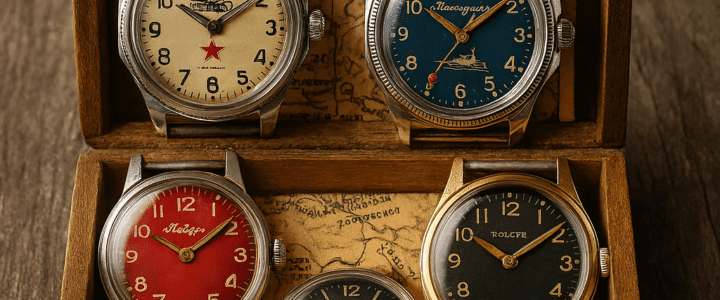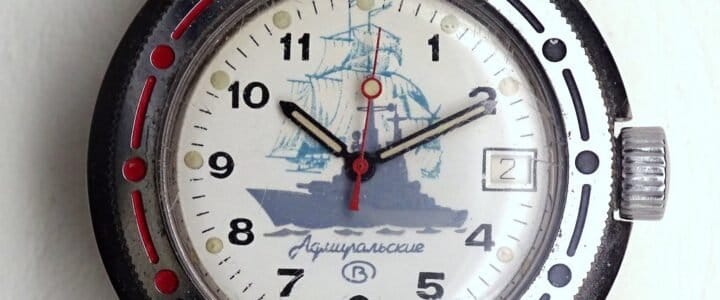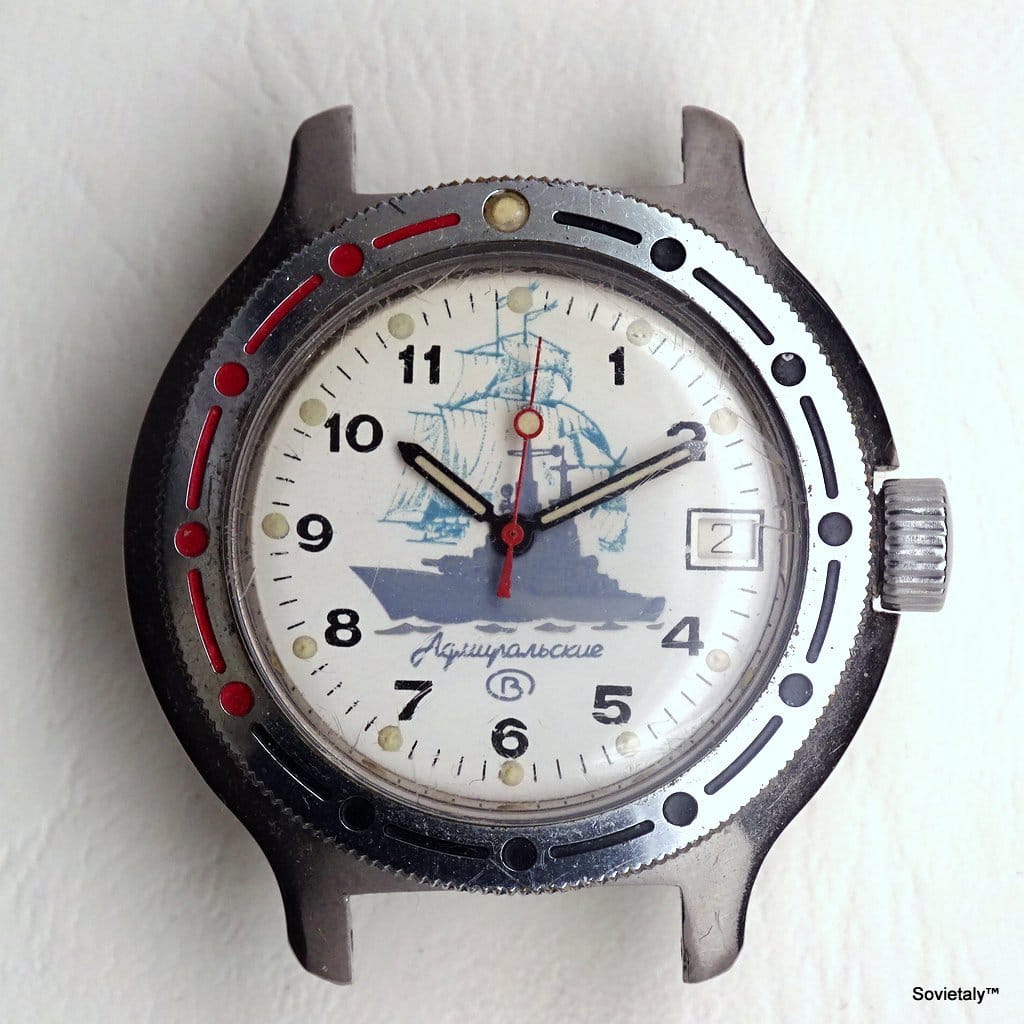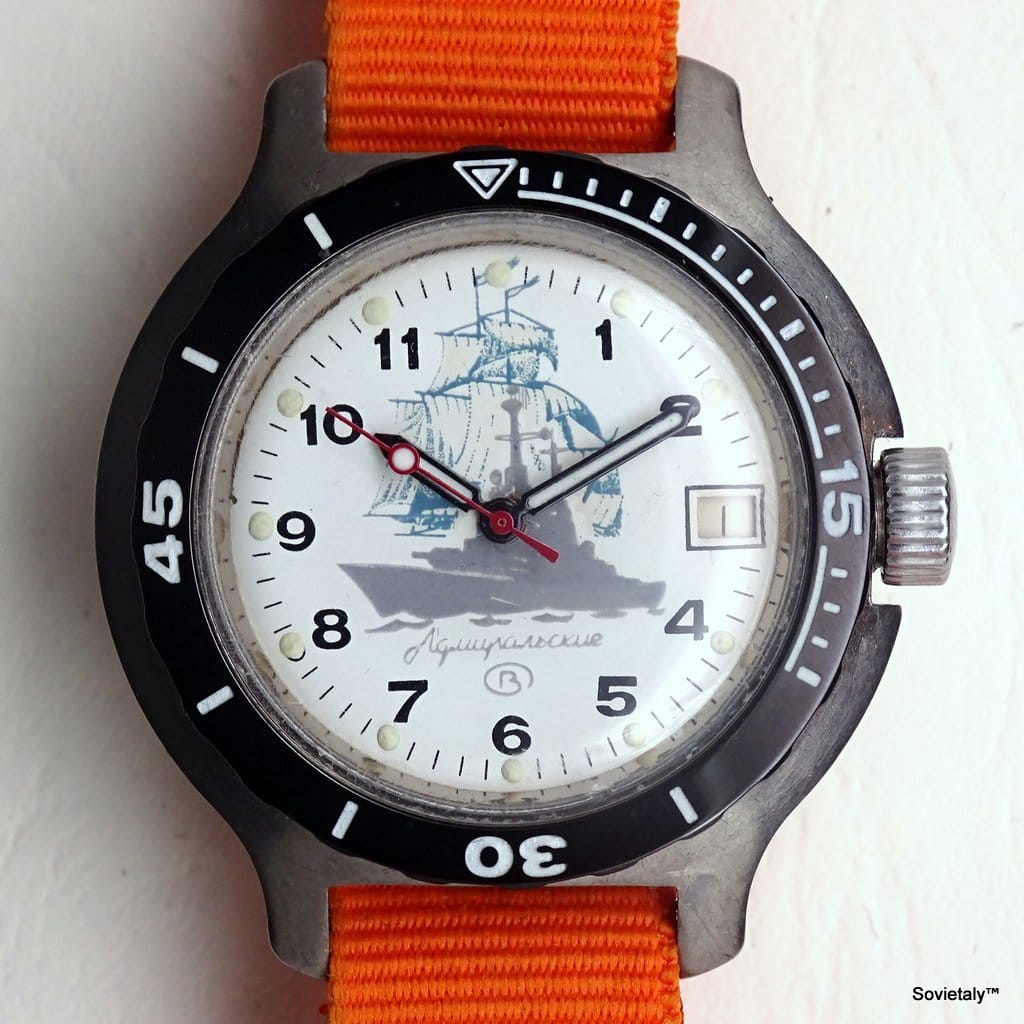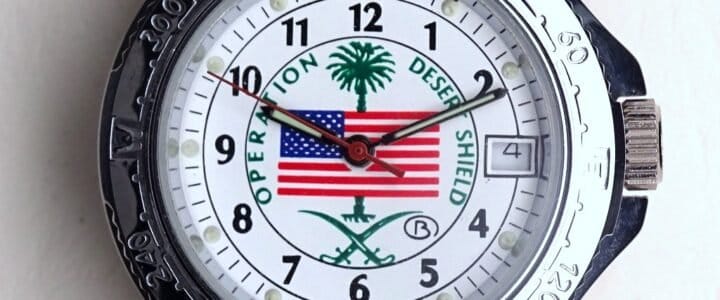
Vintage Soviet watches are unique collectibles cherished for their Cold War history, utilitarian engineering, and surprising affordability. Unlike luxury Swiss timepieces, Soviet watches were mass-produced by state-owned factories as practical tools first and foremost. In fact, by the 1950s–60s the USSR’s watch output was second only to Switzerland’s, meaning authentic Soviet-era watches remain widely available and budget-friendly for today’s collectors. Each piece offers a tangible link to history – their dials often feature Cyrillic script, military emblems or space-race motifs, making them fascinating artifacts of a tumultuous era in world history. For newcomers, this international guide explains why these “Russian watches” hold such appeal and how to start collecting watches from the Soviet era wisely. [dumarko.com][gearpatrol.com]
Historical Significance
Soviet watches mirror their era – from Red Army Komandirskie military motifs to space-race commemoratives – each timepiece tells a Cold War story.
Robust & Reliable
Built under an ethos of utilitarian durability, USSR watches were engineered to work in harsh conditions. Their simple, in-house mechanical movements are famed for reliability over glamour.
Affordable Vintage
Unlike many vintage Swiss models, most Soviet watches remain very affordable (often well under $300) due to massive production and low western demand.
Recommended Starter Models
Several Soviet watch brands offer great entry points for beginners. Here are three famous brands and models to consider:
Raketa – Affordable and Classic:Raketa (Russian for “rocket”) was produced by Russia’s oldest watch factory and became one of the USSR’s best-known brands. Millions of Raketa watches were made for both civilians and the military in the 1970s–80s, so they are common and inexpensive. Raketa is famous for clean, minimalist designs. Notable models include the Raketa “Polar” 24-hour watch made for Arctic expeditions (to distinguish day from night in polar summer) and the “Big Zero”, a classic design with a prominent 0 at the top of the dial. These watches are simple, reliable hand-wound or automatic timepieces – ideal for a first vintage Soviet watch.
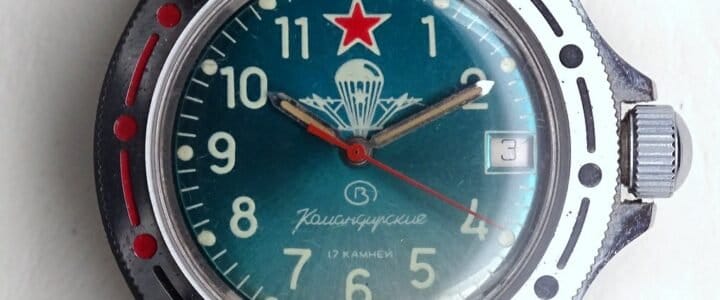
Vostok – Durable Military Watches:Vostok (meaning “East”) became the official supplier of watches to the Soviet Ministry of Defense in the 1960s, specializing in rugged military and dive watches. The Vostok Komandirskie (“Commander’s”) models, originally made for Soviet officers, feature military crests and tough manual movements. Even more famous is the Vostok Amphibia, an iconic 200m water-resistant dive watch introduced in 1967. The Amphibia’s innovative sealed case design actually improves its water-tightness under pressure, and it remains so popular that modern versions are still sold new for under $100. For collectors, vintage Vostoks offer proven durability – their mechanical movements are easy to service, and parts are plentiful.
Poljot – Elegant & Historically Rich:Poljot (Russian for “flight”) was the USSR’s flagship watch brand, known for higher-grade watches including chronographs and pilot timepieces. Poljot originated at the First Moscow Watch Factory and produced both dressy watches and complicated models for the Soviet military. One legendary example is the Poljot Sturmanskie, the pilot’s watch worn by Yuri Gagarin during the world’s first human spaceflight in 1961. Poljot also developed its own chronograph movement (the Caliber 3133, derived from a Swiss Valjoux design) used in watches like the Poljot Okean Navy chronograph. These timepieces are a bit rarer and typically a bit pricier than Raketa or Vostok, but still very accessible. With Poljot, you get a blend of Soviet technical achievement and elegance – an excellent choice for a collector interested in cosmonaut or military history.
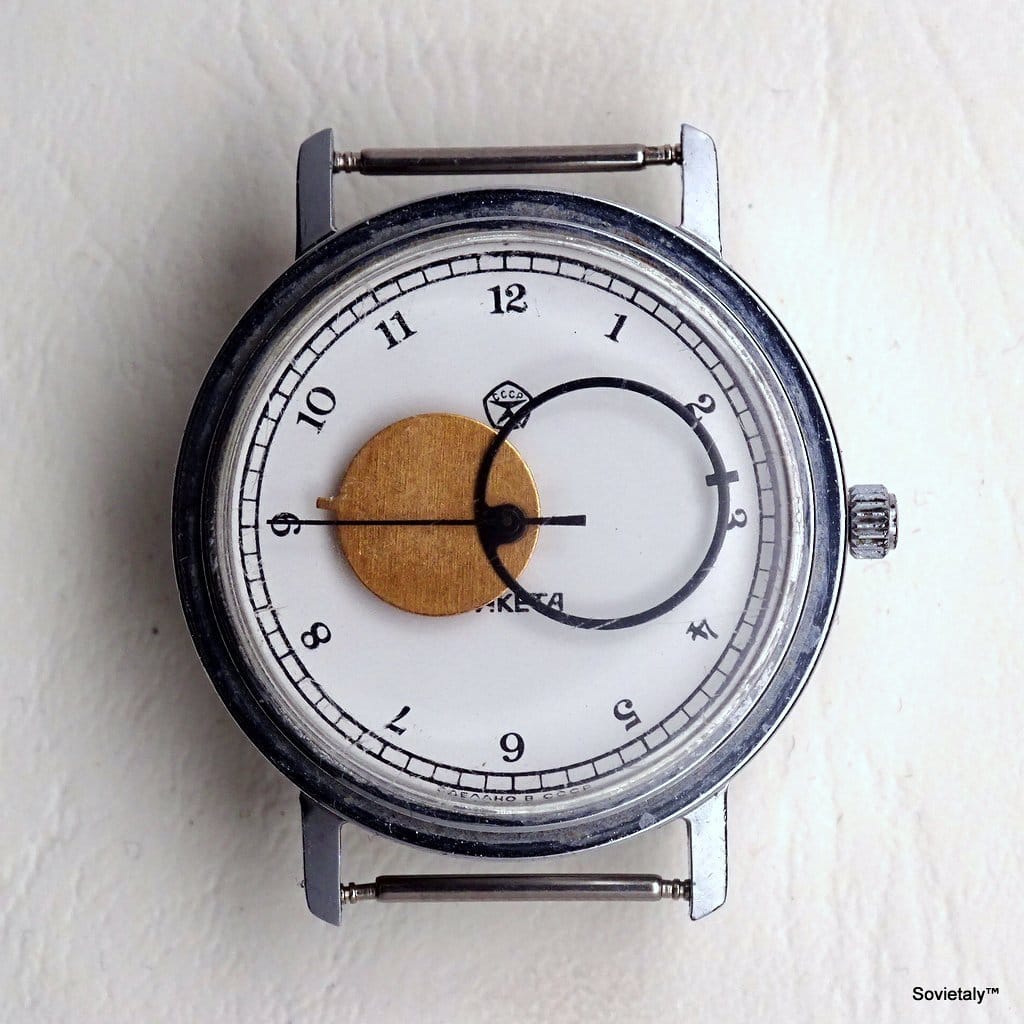
Raketa Copernicus
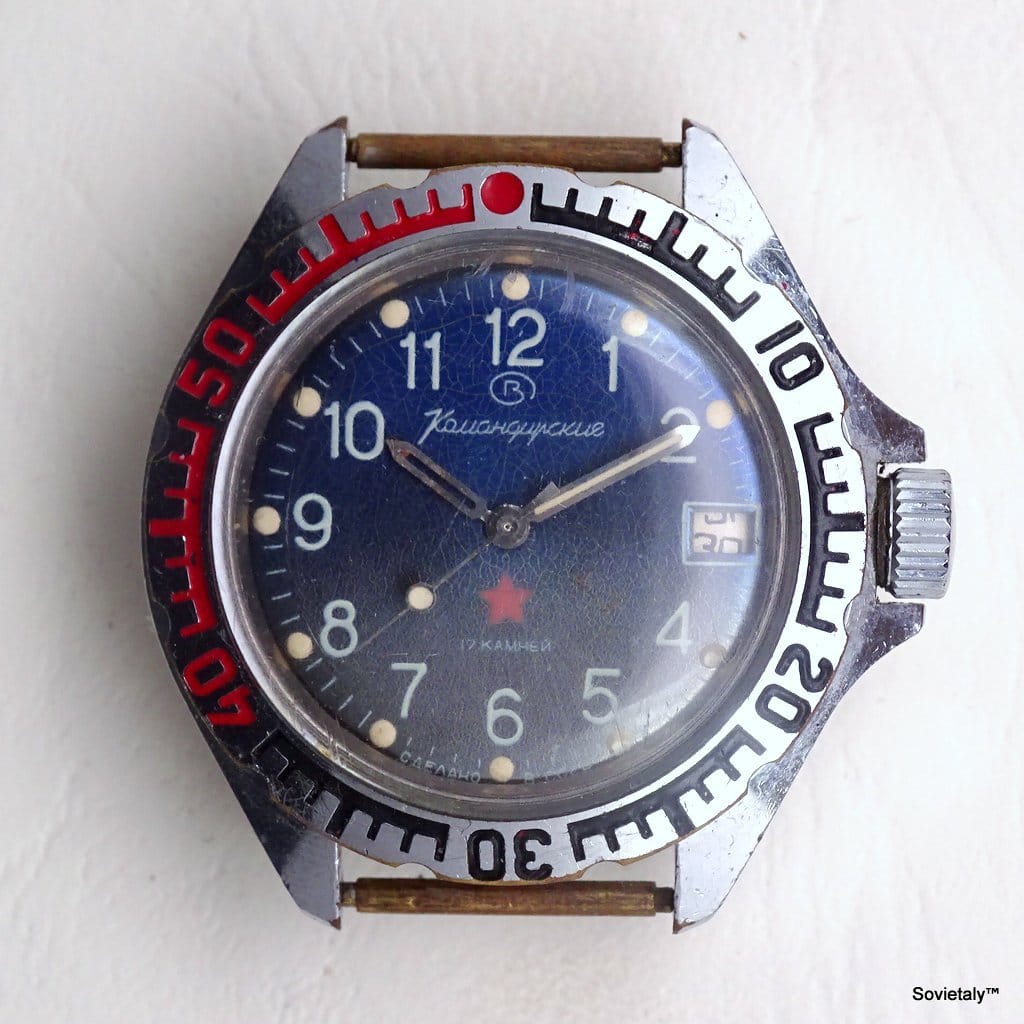
Vostok Komandirskie Red Star
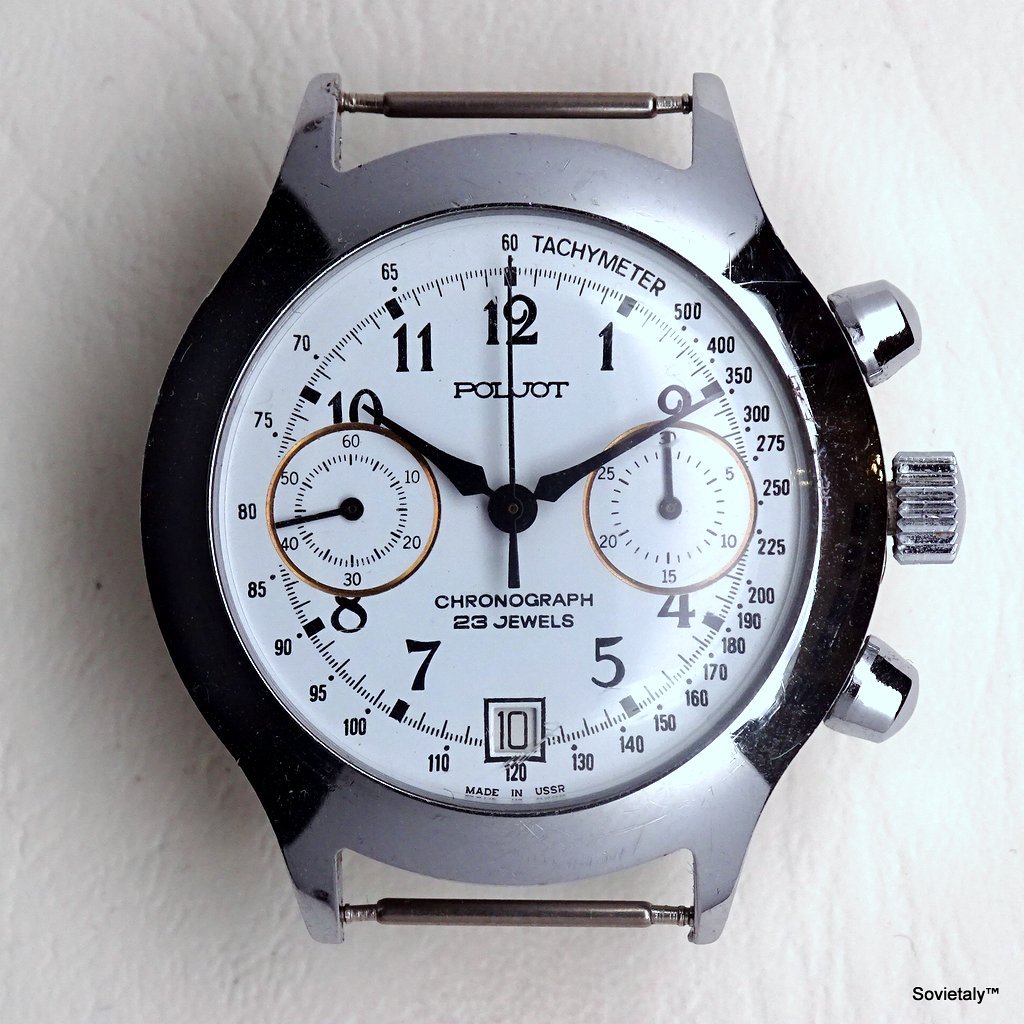
Poljot chronograph
Comparison of Key Starter Models
Below is a quick comparison of the three Soviet watch brands discussed, including their key features, typical price ranges, and famous models:
Brand
Key Features
Typical Price Range
Notable Models
Raketa
Oldest Russian factory; clean, minimalist designs; some 24-hour dials for polar use
~$50–$150 for most vintage pieces
Big Zero, Polar 24H (expedition), Copernic (artistic)
Vostok
Military-grade durability; official Soviet Army supplier
Higher-end Soviet brand; chronographs and pilot/space watches
~$100–$300 for many; more for rare chronographs
Sturmanskie (Gagarin’s watch) , Okean (Navy chrono)
Table: A brief comparison of three beginner-friendly Soviet watch brands. Prices are approximate for typical examples in good condition.
Where to Buy Internationally
Thanks to global interest, it’s easy to find Soviet watches for sale worldwide. Here are some reliable avenues for international buyers:
Online Marketplaces: Large platforms like eBay and Chrono24 host thousands of Soviet and Russian watches listings at any given time. For example, a search on eBay often yields over 30,000 results for “Soviet watches” ranging from dirt-cheap lots to collector-grade pieces. Similarly, Chrono24 (a major watch marketplace) lists hundreds of Russian/Soviet watches, with filters for brand and price; as of this writing, the UK site shows about 1,281 Soviet-era watch listings (with Poljot chronographs from ~£180, Vostoks from ~£98). These sites offer global reach and allow you to buy from sellers in Russia, Ukraine, the US, and elsewhere. Tip: When using marketplaces, favour listings from sellers with good ratings, clear photos, and detailed descriptions of the watch’s condition and authenticity.
Specialist Dealers: A more curated option is to buy from specialist vendors or online shops dedicated to vintage Soviet watches. Some Eastern European sellers (for instance, Ukraine- or Russia-based online stores) refurbish and sell authentic USSR timepieces with warranties. An example is “Soviet Box,” a professional seller that offers fully inspected, original Soviet watches to international buyers. The prices may be a bit higher than eBay, but you get peace of mind that the watch has been vetted (and often serviced) by an expert. Always ensure any dealer is reputable – look for customer reviews or community recommendations.
Flea Markets & Antique Fairs: For an hands-on hunting experience, consider local flea markets or antiques shops – particularly in Europe. Collectors report finding Soviet watches in markets across the UK, France, and Spain, where Cold War-era memorabilia often turns up. In cities like London and Paris, vintage watch stalls or militaria dealers may have a few Soviet pieces mixed in. Visiting big flea markets (for example, London’s Portobello Road or Paris’s Marché aux Puces) can be rewarding if you’re willing to search and negotiate. When buying in person, inspect the watch closely and don’t be shy to ask about its origin or to haggle on price, especially if the piece shows its age.
Watch Forums and Groups: Online enthusiast communities can also be great places to find watches or get leads on trusted sellers. Forums like the WatchUSeek Russian watches board are frequented by collectors who occasionally sell or trade pieces. There are also Facebook groups and Reddit communities for buying vintage watches safely. These peer-to-peer deals can yield bargains, but exercise caution – verify the seller’s reputation in the group and use secure payment (or meet in person in a safe place if local).
Wherever you choose to buy, remember that international purchases may involve shipping costs and customs duties. Always factor those into your budget. If possible, use platforms that offer buyer protection or escrow services – for instance, Chrono24’s system holds payment in escrow until you confirm the watch arrived as described. With a bit of patience and due diligence, you can confidently source genuine Soviet timepieces from virtually anywhere in the world.
Affordable Price Ranges
One of the biggest attractions of Soviet watch collecting is its affordability. Most vintage Soviet models still sell for a fraction of the cost of comparable Western watches. As a general guide:
Entry-Level Prices: The majority of common USSR-era watches trade in the ballpark of $50 to $500 USD on today’s market. On the lower end, simple pieces (like a basic Pobeda or Raketa) can often be found for under $100. Even more feature-rich models rarely exceed a few hundred dollars. In fact, many authentic Soviet watches – including durable automatics or even some minor complications – can be had for under $300. This low cost lowers the barrier to entry for new collectors. For UK buyers, these figures translate roughly to about £40 up to £400. By comparison, a Swiss or Japanese vintage piece of similar age and function might cost several times more.
Higher-End and Rare Pieces: Of course, some Soviet watches do fetch higher prices. Historically important or rare models – for example, an original 1960s Sturmanskie issued to a Soviet pilot (identical to Gagarin’s watch), or a mint-condition Raketa Copernic – can command a premium. Collectible chronographs like the Poljot Okean or a military-issued 1970s dive watch can also reach the upper hundreds or into four figures if in exceptional condition. However, “high-end” Soviet watch prices are still modest compared to vintage Rolex or Omega prices. Even the most sought-after USSR pieces often remain under $1,000, unless they have extreme rarity or provenance.
What to Expect in Condition: Given their age (most are 40–70 years old), Soviet watches typically show some wear. It’s common to find acrylic crystals with scratches, brass cases with faded plating, or dials with patina. These cosmetic signs of age are expected and often add character. Many affordable specimens will have replacement straps (original bands are rarely intact). Internally, the movements are usually robust but may require a tune-up. If a watch hasn’t been serviced in decades, it likely needs a cleaning and fresh oil to run reliably. The good news is Soviet movements were made to be serviced – parts (new old stock or donor movements) are available, and any competent watchmaker can usually get them ticking again. Always assume a vintage watch might need an immediate service unless the seller explicitly says it was recently overhauled. Even after adding a service cost, the total investment in a Soviet watch still tends to be quite low.
Overall, collecting Soviet watches offers perhaps the best value in vintage watch collecting today. You can assemble a varied collection – spanning dress, diver, military, and novelty watches – on a moderate budget. As long as you buy carefully (and budget for maintenance), you’ll find these pieces punch well above their price in both history and enjoyment.
Tips to Avoid Scams and Buy Safely
While most Soviet watches are cheap, it’s still important to buy smart. The vintage market has its pitfalls, especially online. Here are some essential tips to ensure you get a genuine watch and a fair deal:
Do Your Homework: Before purchasing, research the specific model you’re interested in. Learn the correct dial designs, logos, and movement numbers. A little knowledge helps you spot if something is “off.” Enthusiast sites and forums are invaluable – for example, the WatchUSeek forum has an “encyclopedia” of Soviet watches and experts who can answer questions. If possible, compare the listing’s photos to reference images of an original piece.
Verify Authenticity:Authentic Soviet watches should have Soviet signatures. Look for Cyrillic markings such as “Сделано в СССР” (“Made in USSR”) on the dial or movement. Original Soviet mechanical movements are usually stamped with a caliber number (e.g. “2414A” for a Vostok, “2609” for a Raketa) – check that these match the model and aren’t blank or replaced. Avoid watches that have modern logos or laser engravings pretending to be Soviet; those are red flags for replicas. If an emblem looks overly crisp or new for a supposed 1970s watch, be skeptical.
Beware of Frankenwatches: A “Frankenwatch” is a watch assembled from mismatched parts, and unfortunately the Soviet watch market has plenty of them. Because so many parts exist, unscrupulous sellers may mix dials, cases, and movements from different models (or reprint a fake dial) to create a “new” variant. These hybrids can look attractive but are not original and often less valuable. Be cautious of listings with phrases like “custom dial” or watches that have unusual dial designs that you can’t verify in any reference. Unless you specifically want a project piece, stick to watches in original factory condition. Rule of thumb: if a vintage watch looks too clean or unique for its claimed age, it might be a Frankenstein or heavily refurbished piece.
Price Reality Check: If a deal looks too good to be true, it probably is. While Soviet watches are generally inexpensive, extremely low prices (especially on rare models) should raise concern. For instance, a genuine Poljot 3133 chronograph usually fetches a few hundred dollars – if you see one listed for $20, it’s likely a scam or assembled from scrap parts. Be willing to pay a fair market price to get a real item. Scammers often lure buyers with unrealistically cheap offers, but you’ll end up with a disappointment. Check completed sales or ask in forums to gauge typical prices, so you know roughly what’s realistic.
Use Trusted Platforms & Safe Payment: Stick to well-known marketplaces or dealers with buyer protections. eBay’s Authenticity Guarantee now covers some watches (mostly higher-end, but it’s expanding), and Chrono24’s escrow system protects your payment until you receive the watch. If you’re buying via a forum or privately, use a secure payment method – PayPal Goods & Services (which offers buyer protection) or an escrow service. Never send money via methods like Western Union or bank transfer to an unknown individual; those offer no recourse if something goes wrong. Also ensure the seller provides a tracking number for shipping and consider insurance for valuable shipments. It’s worth paying a bit extra for peace of mind on a shipment from overseas.
Check Seller Reputation: Whether on eBay, Chrono24, or a hobby forum, vet the seller. Read their feedback and reviews. On eBay, a long history of positive feedback specifically for selling watches is a good sign. On specialist forums, see if other members vouch for them. A trustworthy seller will also communicate promptly and answer questions. If a seller is evasive or pushes you to “buy now without questions,” that’s a red flag. Patience and caution upfront can save a lot of hassle later.
By following these precautions, you can avoid most scams and pitfalls. The vast majority of Soviet watch transactions are smooth – enthusiasts are often excited to share these pieces with others. Just remember to stay vigilant, informed, and patient. A bit of care will ensure every addition to your Soviet watch collection is a source of joy, not regret.
Conclusion
Collecting Soviet watches can be an immensely rewarding hobby. You’re not just acquiring a functional timekeeper – you’re also gaining a piece of history and a conversation starter on your wrist. This beginner’s guide covered the core essentials: understanding the unique appeal of Soviet-era watches (their history and value), starting with a few iconic models (like Raketa, Vostok, and Poljot), knowing where to find them, and learning how to buy safely.
As a beginner, it’s wise to start small. Perhaps buy one inexpensive yet interesting model – say, a Vostok Amphibia or a Raketa – and see how it speaks to you. Over time, you can expand to other pieces as you discover what aspects fascinate you most (be it military history, space-themed watches, or simply the vintage aesthetic). Each watch you collect will teach you something new, whether it’s how to decipher a movement caliber or the story of a Soviet factory in 1970s Moscow.
Most importantly, enjoy the journey. The world of Soviet watch collecting is meant to be fun and accessible. Feel free to wear your vintage finds proudly – these watches were built to be used, not locked away. Join online communities to share your excitement and learn from others. With minimal investment, you can gradually build a diverse collection that reflects both your personal taste and an intriguing slice of horological history. So, set the time, wind it up, and let your Soviet watch adventure begin – start collecting, and wear a story from another era on your wrist!
The Raketa Big Zero is far more than a mere timepiece; it represents an iconic symbol of Soviet design and a tangible fragment of history. Its distinctive, minimalist aesthetic, characterised by oversized numerals and a prominent “0” at the 12 o’clock position, has captivated collectors worldwide. This design, initially conceived for practical reasons, transcended its original purpose to become a cultural landmark, particularly during the Perestroika era.
This report aims to delve deeper into the Raketa Big Zero, exploring its complex history, diverse models, and technical specifications. It intends to uncover lesser-known facts, verify existing information, and provide a comprehensive comparative analysis between vintage and modern iterations. Furthermore, this guide seeks to equip collectors with essential authentication advice, aiding them in navigating the intricate market of Soviet-era watches.
Raketa Big Zero
I. The Petrodvorets Watch Factory: From Imperial Origins to the Birth of Raketa
Foundation and Link to Peter the Great (1721)
The Petrodvorets Watch Factory, the birthplace of Raketa watches, boasts a remarkably long and distinguished history, with its origins tracing back to 1721. It was established by decree of Emperor Peter the Great, initially as a lapidary factory specialising in the processing of precious stones and jewellery. This imperial heritage underscores the factory’s deep roots in Russian craftsmanship and its historical significance, predating many renowned Swiss watch manufacturers. The factory is still housed in its original building in Peterhof (Saint Petersburg).
The factory’s founding by Peter the Great in 1721 and its continued operation in the historic Peterhof building indicate a strong emphasis on historical continuity and national pride. This is not merely a watch factory; it is an institution deeply intertwined with Russia’s history and achievements. This long and unbroken lineage, which even spanned the Soviet period, bestows a level of prestige and authenticity that many newer brands lack. This characteristic serves as a powerful positioning tool for the modern Raketa brand , also suggesting a deep accumulation of generational skills and knowledge, a distinguishing factor in an industry where many companies outsource production.
The Naming of “Raketa” in Honour of Yuri Gagarin (1961)
The brand name “Raketa” was established much later, in 1961, to commemorate a pivotal moment in human history: Yuri Gagarin’s first manned space flight aboard Vostok 1. This naming decision, meaning “Rocket” in Russian, directly linked the watches to Soviet innovation and industrial might, positioning them as symbols of national achievement.
The choice to name the brand “Raketa” in 1961, following Gagarin’s flight, proved to be a strategic branding move during the Cold War. This decision immediately associated the watches with Soviet technological triumphs and national pride. However, this association also generated a negative perception in the West, where “Raketa” was linked to intercontinental ballistic missiles. This dual perception highlights how deeply the brand was intertwined with the geopolitical context of the era, transforming a consumer good into a subtle propaganda tool. This historical context adds significant depth to the brand’s narrative for collectors.
Raketa’s Role in the Soviet Era: Production for Military, Explorers, and Civilians
During the Soviet era, Raketa watches were not mere consumer goods; they served critical functions for various state entities. They were produced for the Red Army, the Soviet Navy, and for North Pole expeditions, indicating a focus on robustness and reliability in extreme environments. Specialised models like the “Polar” (1969), with a 24-hour movement, were specifically designed for Arctic explorers to distinguish day from night. The factory also holds the world’s largest collection of watch design archives. The “Baikonur” model, designed in collaboration with cosmonaut Sergey Krikalev, featured special functions necessary for space travel. Raketa also collaborated with major aircraft manufacturers like Sukhoi and Tupolev to develop watches for pilots. At its peak in the 1970s, Raketa was among the world’s largest watch manufacturers, producing approximately five million mechanical watches annually.
The extensive production of watches for the military, navy, and explorers , coupled with the development of specialised models like the “Polar” and “Baikonur” , demonstrates that functionality and durability were absolute priorities in Soviet design, often outweighing luxury or aesthetic embellishments. This approach starkly contrasts with Western watchmaking, which tended to emphasise prestige and elaborate complications. This “function before flourish” philosophy, born out of necessity and state-controlled production, holds a strong appeal for many modern collectors of Soviet watches , offering a unique blend of history and robust engineering. This also implies a high standard of internal quality control, given the critical nature of these watches’ applications.
Post-Soviet Revival (2010) and Commitment to In-House Production
Following the dissolution of the Soviet Union, Raketa faced significant challenges in adapting to a market economy. However, its fortunes began to change in 2010 with a revival led by British entrepreneur David Henderson-Stewart. Under new management, Raketa adopted modern production methods while preserving its heritage, notably by continuing to produce its mechanical movements entirely in-house, “from A to Z”. This commitment to vertical integration, including the production of hairsprings and escapements , is a rare feat in the global watch industry, distinguishing Raketa from most brands that rely on external suppliers like Nivarox. The factory even attracted former Rolex and Breguet watchmakers to modernise its production.
The post-Soviet revival led by David Henderson-Stewart and the renewed focus on in-house movement production represent a strategic move to reposition Raketa in the global luxury market. In an industry where “manufacture” status is highly valued, Raketa’s ability to produce its own hairsprings and escapements provides a strong narrative of authenticity and a competitive advantage over brands that merely assemble external components. This commitment to traditional watchmaking, combined with a modern marketing approach, allows Raketa to appeal to both vintage watch enthusiasts and new collectors seeking genuine horological value.
II. The “Big Zero”: Design Genesis and the Gorbachev Legend
The Original 1970s Design and Its Minimalist Aesthetic
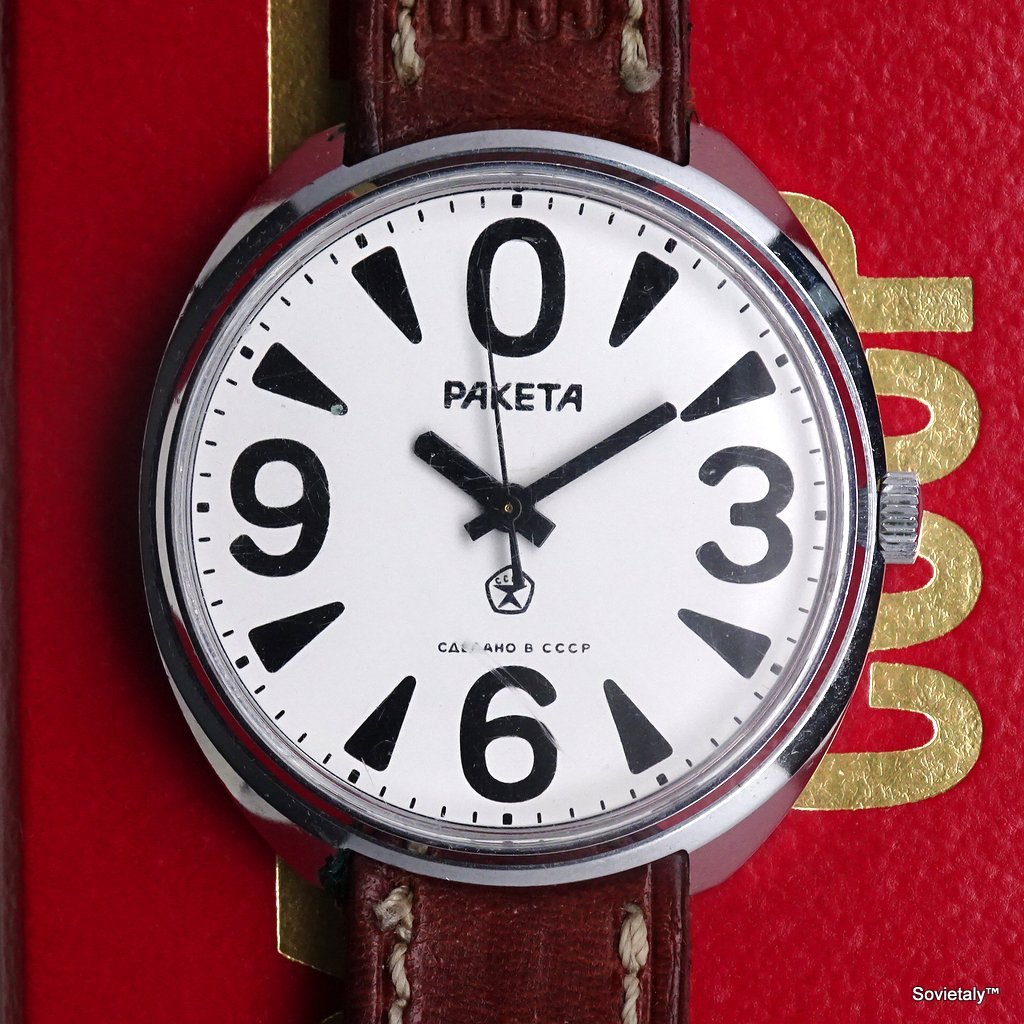
The original design of the Raketa “Big Zero” dates back to the 1970s. Its aesthetic is distinctly minimalist, characterised by a clean, uncluttered dial with oversized numerals for 3, 6, 9, and a prominent “0” at the 12 o’clock position. The other hour markers are typically represented by long, narrow triangles. This bold, almost “brutal” yet functional design, with its high-contrast black and white colour scheme, ensured excellent legibility.
The “Big Zero” design, originating in the 1970s , with its oversized numerals and the “0” at 12 o’clock, was initially conceived for practical purposes, such as making it easier for visually impaired individuals to read the time or ensuring clear time indication in challenging conditions. This emphasis on legibility and functionality aligns with the broader Soviet design philosophy, where utility often took precedence over ornamental aesthetics. The enduring appeal of the design lies precisely in this radical simplicity, which, ironically, has made it a timeless classic.
The Philosophy Behind the “0” Instead of “12”: Functionality and Symbolism
The most striking feature, the “0” instead of “12”, is not merely a design quirk. According to seasoned experts from the Raketa factory, it is rooted in a logical principle: “it is simply more logical to start counting time from zero. After all, time, like many aspects of our lives, invariably begins from zero”. This “rebellious concept” challenges traditional timekeeping norms, expressing a philosophical statement about new beginnings.
While it might appear to be a simple design choice, the “0” at 12 o’clock possesses a deeper, almost subversive utility. It is a pragmatic approach to time-telling that also embodies a philosophical statement about starting anew. This “zero” concept, coupled with the watch’s later association with Perestroika, gives the “Big Zero” a symbolic weight that extends far beyond its mechanical function, making it particularly appealing to collectors interested in the cultural and historical narratives embedded in objects. It is a watch that, literally and figuratively, marked a fresh start.
The Mikhail Gorbachev Anecdote and “Perestroika”: Analysing the Legend and Its Impact on Popularity
The Raketa “Big Zero” gained considerable international fame due to an anecdote involving Mikhail Gorbachev, the General Secretary of the USSR. During an official visit to Italy in the 1980s , when asked to explain the meaning of “Perestroika” (restructuring), Gorbachev reportedly pointed to his Raketa Big Zero watch and stated: “It’s like my watch: the Soviet people aspire to start everything from zero” or “It expresses the Russians’ determination to start their lives from ‘zero'”. This direct gesture made headlines in Italy and cemented the watch’s status as a legendary design. Although the exact origin of the design predates Gorbachev’s use, the anecdote undeniably boosted its popularity.
The Gorbachev anecdote transformed the “Big Zero” from a functional timepiece into a cultural icon. This direct link to a central historical figure and a transformative political movement (“Perestroika”) significantly increased its collectability and market value. The story, regardless of its precise historical accuracy regarding the design’s intent, has become an integral part of the watch’s identity, demonstrating how historical narratives and public figures can profoundly influence the perception and desirability of consumer goods.
Historical Context of Perestroika and Glasnost and Their Influence on Soviet Design
Perestroika (restructuring) and Glasnost (openness) were Mikhail Gorbachev’s reforms aimed at revitalising the stagnant Soviet economy and increasing political openness. These reforms introduced elements of market economics, encouraged private enterprise, and reduced central planning, leading to greater political and cultural freedoms and increased access to Western ideas and consumer goods. However, they also led to economic challenges such as shortages and inflation. The “Big Zero” emerged during this period of significant societal transformation , symbolising the desire for a fresh start.
The “Big Zero” design, with its symbolism of “starting from zero”, perfectly encapsulated the spirit of Perestroika and Glasnost. This connection goes beyond a mere anecdote; it suggests that even consumer goods like watches could reflect the profound social and political changes underway in the USSR. The watch became a subtle yet powerful representation of a nation grappling with change and aspiring to a new beginning, making it a compelling artefact for understanding the late Soviet era.
III. Historical Models and Variants of the Raketa Big Zero (Soviet Era)
Distinctive Features: Details on Cases, Dials, and Hands
Vintage Raketa Big Zero watches are most commonly characterised by a cushion-shaped case, particularly reference #51. This case measures approximately 39mm in width (excluding crown), 40.5mm lug-to-lug, and 11mm in thickness. It features a smooth, press-on bezel with a slight bevel towards the crystal and a subtle upward curve in its profile when viewed from the side. The lugs are relatively small, which can sometimes make strap pairing challenging. Some vintage models were also available with a barrel-shaped stainless steel case. The case material was often chrome-plated brass.
Dials are typically black and white, offering high contrast. The iconic “0” at 12 o’clock, along with the numerals 3, 6, and 9, are oversized. The remaining hour markers are generally represented by long, narrow triangles. A crucial aspect for authentication is that these numerals and triangles are applied markers, appearing as a type of glossy resin or thin metal, rather than simply being printed. The tips of these wedge-shaped markers should be slightly rounded in cushion-cased variants, although some authentic dials from 1980s catalogues may feature sharper tips. The “0” itself is often described as “squarish” rather than a perfect oval.
The hour and minute hands are characteristically thick and bold, often described as “stubby”, with a slight tip or curve at their ends. The seconds hand is thin but flares slightly at the back end. These specific shapes are important for authentication, as incorrect hands are a common sign of “franken-watches” (watches assembled from non-original parts).
Vintage Big Zeros typically featured a steeply-domed acrylic (plexiglass) crystal. An authentic Raketa Big Zero crystal is described as “hockey puck”-shaped, with sharp edges that angle up 90 degrees towards a flat surface. This contrasts with modern sapphire crystals.
The consistency of design elements in vintage Big Zero models, such as the specific case shapes (cushion/barrel), applied numerals with rounded tips , and distinctive hand shapes , suggests a standardised production process within the Soviet system. The use of acrylic crystals instead of sapphire (common in modern versions) indicates the material availability and technological constraints of the era. However, this consistency also makes deviations from these norms critical indicators for identifying fakes or “franken-watches”, highlighting the importance of understanding original production specifications for collectors.
The 2609.HA Movement: Detailed Technical Specifications, Reputation for Reliability, and Common Issues
The Soviet-era Raketa Big Zero typically housed the mechanical hand-wound Calibre 2609.HA movement.
Reputation for Reliability: The 2609.HA movement is widely recognised for its durability and robustness. It is described as a “utilitarian, but very robust” movement that “can hold up to a lot”. It was even considered “the most reliable and robust movement in the world” in its time, with Russian watches exported to 38 countries. This reliability was a hallmark of Soviet watchmaking, which prioritised functionality and longevity over planned obsolescence.
Common Issues and Serviceability: While robust, vintage 2609.HA movements can exhibit issues due to age and lack of servicing. Common problems include low amplitude and inconsistent accuracy, especially when worn, which might indicate a loose hairspring. Setting issues, where the stem moves freely without interacting with the hands, can occur if the cannon pinion binds, causing minute wheel teeth to shear off. Repairs can be costly due to the need for non-standard parts. Servicing these movements requires specific techniques, particularly for delicate parts like the escape wheel jewels. Collectors are advised that antique watches are generally not waterproof and must be protected from moisture, and hands should only be adjusted clockwise to prevent damage.
The reputation of the 2609.HA calibre as a “robust” and “durable” movement is a direct consequence of Soviet-era production priorities. In a planned economy, the emphasis was on producing reliable, long-lasting goods for the masses and for critical state functions (military, exploration). This contrasts with market economies where planned obsolescence might be a factor. The common issues reported today (low amplitude, setting problems) are primarily age-related, not inherent design flaws, which underscores the movement’s fundamental durability. The difficulty in sourcing non-standard parts for repairs is a direct implication of the shift from a centralised production system to a global market, where parts for defunct Soviet industries are scarce.
Dial Variants and Markings: Analysing “Paketa” (Cyrillic) vs “Raketa” (English) and “Made in USSR” vs “Made in Russia” as Time and Market Indicators
The markings on the dial of vintage Raketa Big Zero watches provide crucial indicators for authentication and dating.
Logo: The brand logo can appear in two ways: “Paketa” (РАКЕТА in Cyrillic) or “Raketa” (in Latin characters). “Paketa” is characteristic of earlier Soviet-era models intended for the domestic market, while “Raketa” in Latin characters indicates more modern pieces or those produced closer to the collapse of the USSR (around 1992) for export.
Country Designation: Authentic Soviet-era dials typically feature “Сделано в CCCP” (Made in USSR in Cyrillic) for models intended for the domestic market or “Made in USSR” for export models. A red flag for authenticity is a dial with both “Paketa” (Cyrillic) and “Made in Russia” (English) simultaneously, or a dial with no country designation at all. Later (post-Soviet) models may bear “Сделано в России” or “Made in Russia”.
Quality Mark: Some vintage Big Zero models, particularly those from 1986 catalogues, might display the USSR state quality seal.
The variations in dial markings, such as Cyrillic “Paketa” versus Latin “Raketa”, and “Made in USSR” versus “Made in Russia” , serve as fundamental linguistic and historical markers. They reflect the Soviet Union’s evolving relationship with the global market and its subsequent dissolution. The shift to Latin script and “Made in Russia” signalling a post-Soviet era of increasing internationalisation and a move away from the more insular Soviet identity. For collectors, these subtle textual changes are vital for dating a watch and assessing its authenticity and market origin.
Special and Rare Editions
The Raketa Big Zero did not only exist in its most common form but also saw the production of various rare and special variants that add complexity and allure to its lineage.
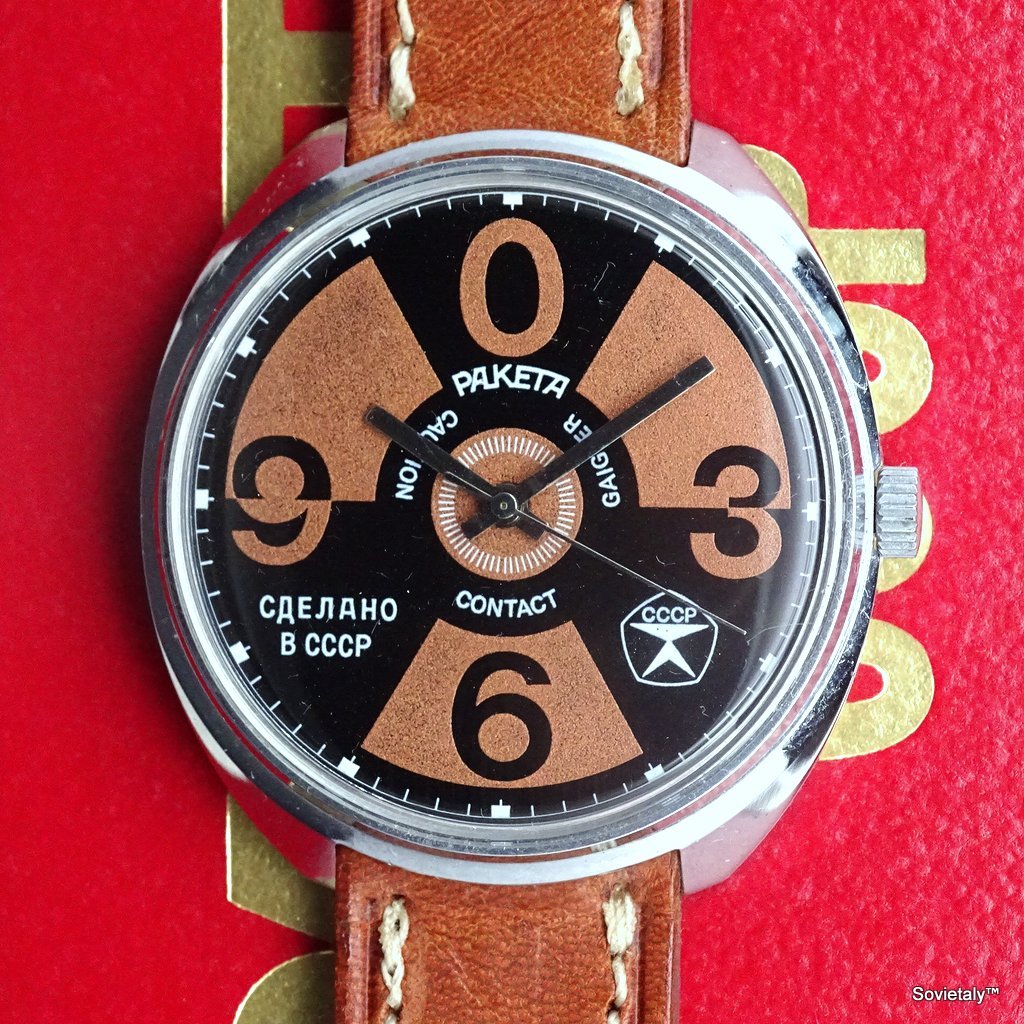
The “Big Zero Geiger”: This is a particularly unique and mysterious variant. It is said to have been assembled in Italy by an import company named “Mirabilia” in the late 1980s, using original Raketa Big Zero parts but adding a “unique local touch”. The most intriguing aspect is the intentional misspelling “Geigher” instead of “Geiger”. The theory suggests this was done to avoid negative associations with Geiger counters and radioactivity, especially after the Chernobyl incident in 1986, when public sensitivity to radioactivity was high. The Big Zero Geiger exists in two main variants: black and ochre, and black and grey. Both are extremely rare and highly sought after by collectors for their rarity, Soviet-Italian connection, and the mystery surrounding the name error.
Raketa Caution Contact Gaigher
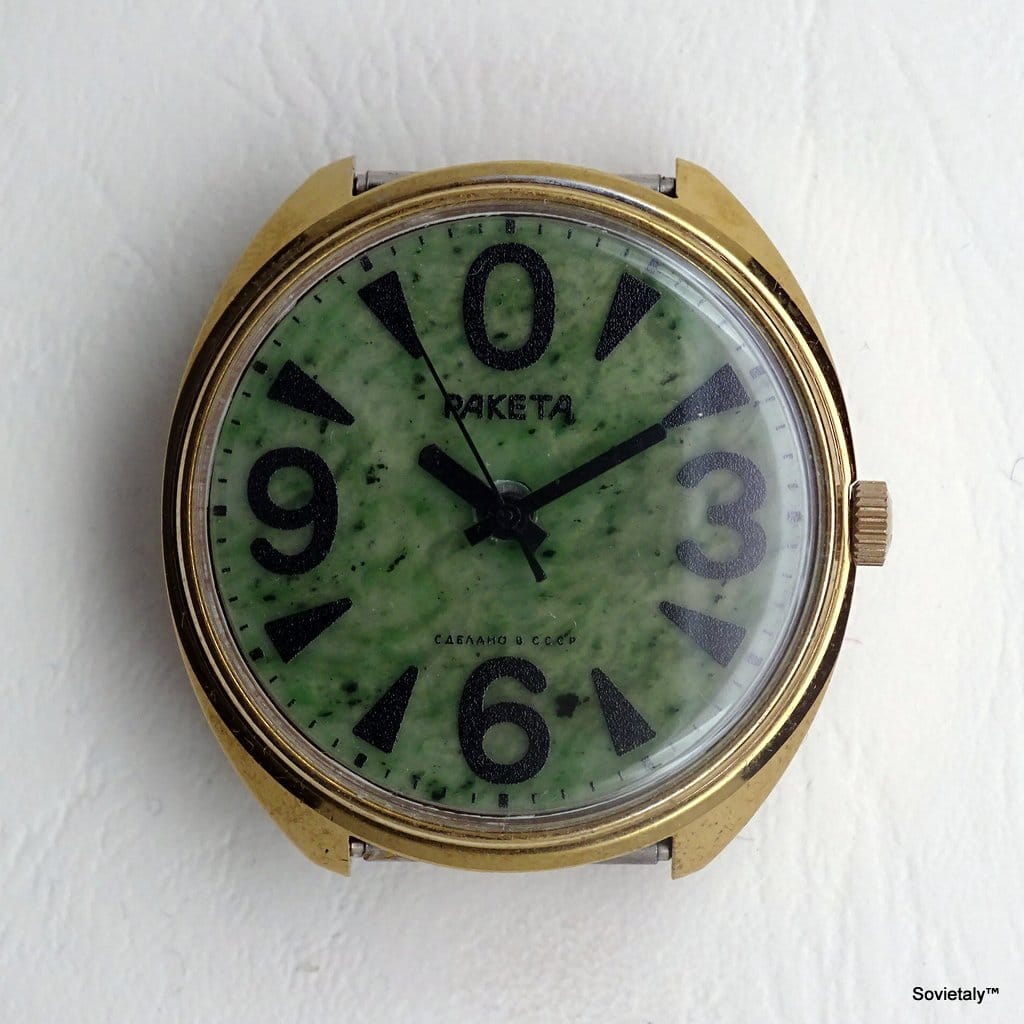
Stone Dials (e.g., Jade) and Their Rarity: Raketa also produced Big Zero models with dials crafted from natural stone, such as jade. These dials, typically 0.5mm thick, boast unique and unrepeatable textures, making each watch a one-of-a-kind piece. They were produced in limited quantities, often by special order, and primarily intended for the Italian market. Cases for these models could be chrome-plated brass or titanium nitride (for yellow dials). These stone dial watches are now considered rare collectible items.
Raketa Big Zero Nephrite
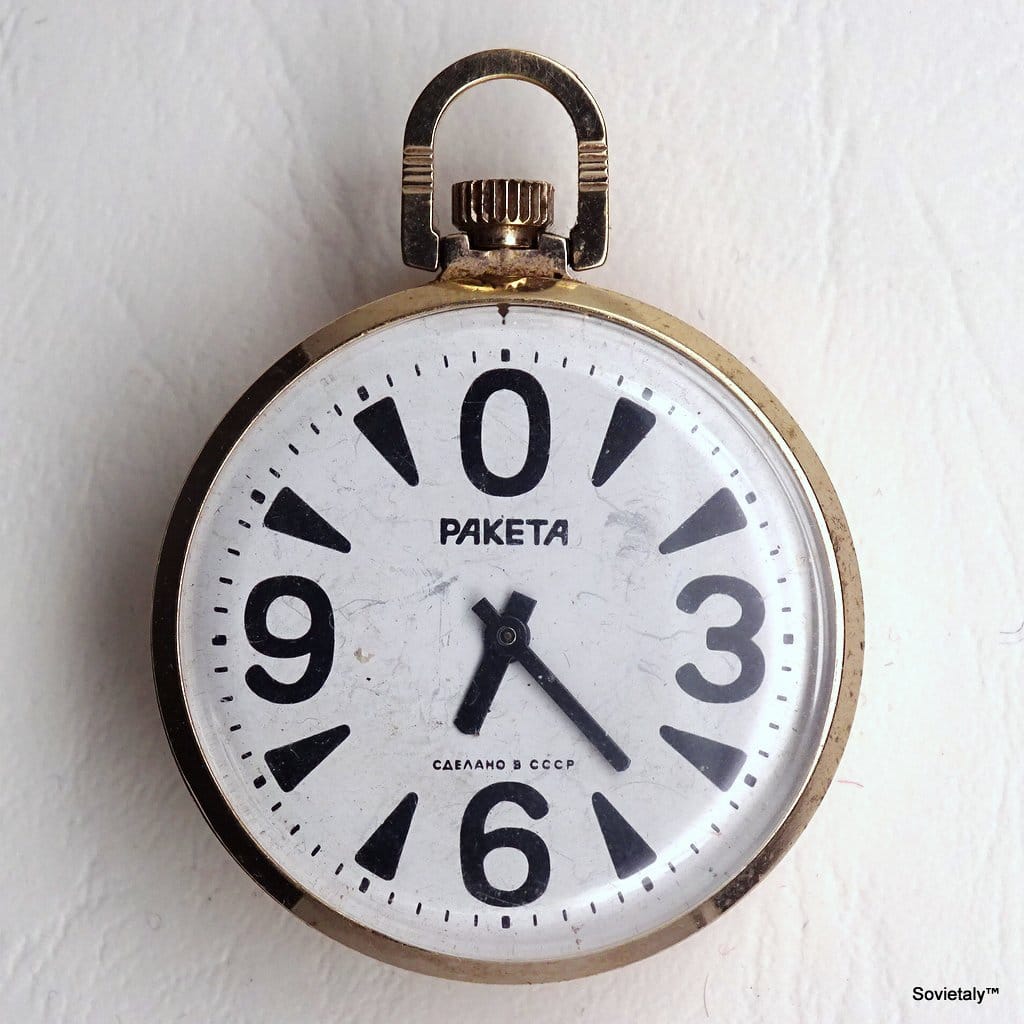
The Pocket Watch Version: A pocket watch variant matching the “Big Zero” design also existed, with catalogue images dating back to 1986. These “Big Zero” pocket watches typically feature a white dial with oversized black numerals and are powered by the Raketa 2609.HA hand-wound mechanical movement.
Raketa Big Zero Pocket
The existence of the “Big Zero Geiger” and the stone dial variants , particularly their Italian market orientation, reveals Raketa’s efforts to adapt to specific market demands and create niche products even during the Soviet era. The “Geigher” misspelling is a fascinating example of how external geopolitical events (Chernobyl) could directly influence product naming and marketing, highlighting a reactive and perhaps cautious approach to international sales. These rare variants demonstrate that Soviet production was not entirely monolithic and could respond to perceived market opportunities, adding layers of complexity to the brand’s history.
Raketa Pocket Watches: Finishes and Sailboat Engravings
In addition to wristwatches, Raketa also produced pocket watches with distinctive features. These pocket watches were generally powered by the Raketa 2609.HA hand-wound movement and featured typical dimensions of approximately 44mm overall diameter with the crown and 11.1mm thickness. Cases were often made of brass with chrome plating or, in some instances, gold-plated.
A notable aesthetic element on some Raketa pocket watches is the “caseback with a bas-relief in the form of a sailing ship”. This motif, variously described as “Raketa SHIP” or “Navy Brigantine” , was often paired with white dials featuring a matte surface and thin black Roman numerals, complemented by black, straight, thin hands. The sailboat likely symbolised Russia’s maritime heritage and naval power, given Raketa’s historical connection to the Soviet Navy and its location in Saint Petersburg.
It is important to note that while Raketa produced both “Big Zero” pocket watches and pocket watches with sailboat engravings , current research does not indicate the existence of an original factory Raketa “Big Zero” pocket watch that combines both features (a “Big Zero” dial and a sailboat engraving on the caseback). Descriptions of sailboat pocket watches consistently refer to dials with Roman numerals , suggesting these were distinct design lines. Therefore, a pocket watch claiming to combine a “Big Zero” dial with a sailboat engraving should be examined with extreme caution, as it may be a “frankenwatch” or a non-original assembly.
Table 1: Technical Specifications of the Raketa 2609.HA Movement
The following table provides a consolidated reference for the mechanical heart of vintage Big Zeros. For collectors, verifying movement specifications is crucial for authentication and understanding the watch’s performance characteristics. The inclusion of variations (e.g., 17 or 19 jewels, power reserve discrepancies) highlights the nuances of Soviet production and helps manage expectations regarding the performance of vintage pieces. It also serves as a direct comparison point for modern automatic movements, illustrating the Big Zero’s technical evolution.
Feature
Detail
Calibre Name
Raketa 2609.HA
Type
Mechanical (Hand-Wound)
Launch Year
Circa 1975
Jewels
19 (some variants 17)
Frequency
18,000 beats/hour (2.5 Hz)
Power Reserve
45 hours (Note: some sources indicate 36 hours or 24 hours )
Functions
Hours, Minutes, Central Seconds
Shock Protection
Yes
Dimensions (Overall Diameter)
26.65 mm
Height
4.4 mm
Reputation
Reliable, Robust, Durable
Table 2: Historical Dial Variants and Markings of the Big Zero
This table is an essential authentication tool. It systematically categorises key visual cues on the dial, hands, and case that distinguish authentic vintage Big Zeros from fakes or “franken-watches”. By presenting these variations and their implications (e.g., time indicators, market origin), it empowers collectors to make informed purchasing decisions and appreciate the subtle historical evolution of the watch’s aesthetic.
Feature
Authentic Characteristics
Implications
Red Flags
Dial Logo
“Paketa” (РАКЕТА in Cyrillic) or “Raketa” (Latin)
Cyrillic for earlier domestic Soviet market; Latin for later Soviet or export models
Mix of Cyrillic logo and “Made in Russia” (English)
Country Designation
“Сделано в CCCP” (Cyrillic) or “Made in USSR” (English)
Cyrillic for domestic Soviet market; English for export models. “Made in Russia” for post-Soviet era
No country designation; Mix of Cyrillic logo and “Made in Russia” (English)
Hour Marker Shape (Triangles)
Rounded tips (for cushion case); some 1980s catalogues show sharper tips
Key detail for cushion-cased model authentication
Pointy/sharp tips on cushion-cased models
Numeral Application
Applied markers (glossy resin or thin metal, slightly raised)
Indicates higher quality and original production
Flat/printed numerals
Hands
Thick, bold, “stubby” hour/minute hands with slight tip/curve; thin seconds hand with slight flare at back
Specific proportions and shapes are crucial for originality
Hands with incorrect shapes or proportions
Crystal
Acrylic, “hockey puck” shape (sharp 90-degree edges towards flat top)
Reflects original Soviet-era materials
Domed or overly rounded crystal
IV. The Raketa Big Zero in the Modern Era: Continuity and Innovation
The Contemporary Re-edition of the Big Zero: Models 0283 (White), 0296 (Black), 0297 (Grey), and the “Arabic” Edition
Raketa has successfully re-issued the iconic Big Zero in contemporary collections, maintaining its distinctive design while incorporating modern materials and movements.
Current Models:
Big Zero 0283 (White): Features a matte white dial with multi-layered lacquered black numerals and indices, paired with a black leather strap. It was launched in 2022.
Big Zero 0296 (Black): A black dial variant with white numerals, launched in late 2023, featuring highly luminescent numerals and indices.
Big Zero 0297 (Grey): Introduced for the first time with a stainless steel bracelet, it features a grey dial that changes shade from taupe to metallic depending on the light. It also boasts bright Superluminova-coated hands and large numerals for optimal night readability. This was a limited production of 200 pieces in its launch year.
Big Zero Arabic: Reimagined specifically for the Middle East, this limited edition (initially 100 pieces) features Eastern Arabic numerals on a black and white dial, with the Raketa logo in Arabic script designed by renowned calligrapher Mohammad Sharaf. This collaboration reflects a growing interest in foreign watch brands in the Middle East and Raketa’s strategy to combine Russian watchmaking history with regional cultural elements.
Common Technical Specifications (Modern Models):
Movement: Raketa 2615 in-house automatic calibre.
Jewels: 24 jewels (some sources indicate 27, potentially an earlier variant of the 2615).
Frequency: 18,000 beats/hour (2.5 Hz).
Power Reserve: 40 hours.
Winding: Bi-directional automatic winding with a stopper system for manual winding.
Accuracy: -10/+20 seconds per day.
Decoration: Laser engraving, Neva waves, and often a red rotor visible through the transparent caseback.
Material Origin: All metal and the 24 ruby stones of the movement come from Russia, with the hairspring cast from a secret Soviet alloy, contributing to a distinctive acoustic signature.
Case: Stainless steel, cushion shape, 40mm diameter, 14.05mm thickness, 43mm lug-to-lug. Crown with a ruby stone underneath.
Crystal: Sapphire on the front, mineral on the transparent caseback.
Water Resistance: 10 ATM / 100 metres.
Luminosity: Hands and indices with Superluminova coating.
The modern re-editions of the Big Zero (0283, 0296, 0297, Arabic) demonstrate Raketa’s successful strategy in modernising its brand while retaining its fundamental design identity. The shift from the hand-wound 2609.HA movement to the automatic 2615 movement , the upgrade to sapphire crystal, and increased water resistance reflect contemporary market expectations for luxury watches. However, the retention of the iconic “Big Zero” dial and the commitment to in-house movement production (even with Russian materials) highlight a deliberate effort to maintain authenticity and appeal to both new and traditional collectors. The limited editions and regional variants (like the Arabic dial) further showcase a sophisticated marketing approach to cater to diverse global markets.
Comparison Between Vintage and Modern Models: Technical and Philosophical Evolution
The comparison between vintage and modern Raketa Big Zero models reveals a significant evolution both technically and philosophically, while maintaining a strong connection to the original design identity.
Movement: The most significant transition is the shift from the hand-wound 2609.HA calibre (vintage) to the automatic 2615 calibre (modern). While the 2609.HA was known for its robustness and simplicity in an era of mass production , the 2615 offers the convenience of automatic winding, a 40-hour power reserve, and more elaborate decoration visible through the transparent caseback.
Materials and Finishes: Modern models utilise stainless steel for the case and sapphire crystal for the front, enhancing durability and scratch resistance compared to the chrome-plated brass and acrylic crystal of vintage pieces. The addition of a ruby in the crown on modern models adds a touch of luxury.
Water Resistance: Vintage models were generally not waterproof , whereas modern ones offer 10 ATM / 100 metres of resistance, making them suitable for daily wear and light swimming.
Design Philosophy: Although the iconic “Big Zero” design remains faithful to the original, the transition from a functional, mass-produced Soviet-era watch to a collectible, luxury piece in the modern era is evident. Modern models are positioned for an audience that appreciates both history and in-house craftsmanship, with an average price point of around €1,200. The limited production of some modern editions (e.g., 200 pieces for the grey, 100 for the Arabic) underscores their exclusivity.
The comparison reveals a clear evolution from a utilitarian, mass-produced item (the vintage Big Zero) to a collectible luxury item (the modern Big Zero). This transformation is driven by technological advancements (automatic movement, sapphire, water resistance) and a strategic brand repositioning in a global market. The modern Raketa leverages its historical authenticity and in-house production capabilities to justify a higher price point and attract discerning collectors. This shift reflects broader trends in the watch industry, where historical brands adapt to new consumer expectations while preserving their unique heritage.
Table 3: Comparison Between Vintage and Modern Raketa Big Zero Models
The following table offers a concise and direct comparison highlighting the key differences and improvements between vintage and modern Big Zero models. It helps readers quickly grasp the watch’s evolution and provides practical information for collectors interested in both eras. It also reinforces the narrative of modernisation while preserving heritage.
Feature
Vintage Models
Modern Models
Era
Soviet (1970s – early 1990s)
Post-Soviet (Revival from 2010 onwards)
Movement
Calibre 2609.HA (Hand-Wound)
Calibre 2615 (Automatic, In-House)
Case Material
Chrome-plated Brass
Stainless Steel
Crystal Material
Acrylic (Plexiglass)
Sapphire (Front), Mineral (Caseback)
Water Resistance
Generally Not Waterproof
10 ATM / 100 Metres
Dial Numerals/Indices
Applied, triangle tips typically rounded (cushion case)
Multi-layered lacquered, Superluminova coating
Approximate Price Range
$80 – $400+ (depending on condition, rarity, “franken” status)
€1,200 – €2,200+ (based on models like 0283, 0297, Amphibia)
V. Authentication and Collecting Guide
Identifying Fakes and “Franken-watches”: Red Flags on Dials, Hands, Cases, and Movements
The market for vintage Soviet watches, including the Raketa Big Zero, contains a significant number of fakes and “franken-watches” (pieces assembled from non-original parts). Collectors must be vigilant.
Dials: This is the most commonly faked component.
Marker Shape: Authentic Big Zeros (especially cushion-cased ones) feature triangular hour markers with slightly rounded tips. Fakes often have pointy or sharp wedges. However, some authentic 1980s catalogues show sharper tips, so this is not a definitive standalone criterion.
Numeral Shape: The “0” and other numerals (3, 6, 9) should appear “squarish” rather than perfectly oval, with subtle variations in thickness.
Application: Authentic numerals and triangles are applied markers (glossy resin or thin metal, slightly raised), not simply flat printed. Flat printing is a major red flag.
Print Quality: Fakes often exhibit poor print quality, with “hairy” or uneven edges on the numerals.
Logo and Country Designation:
“Paketa” (Cyrillic) is for the domestic Soviet market; “Raketa” (Latin) for later Soviet or export models.
Authentic country designations are “Сделано в CCCP” (Cyrillic) or “Made in USSR” (English).
A mix of Cyrillic logo and “Made in Russia” (English) on the same dial, or the absence of any country designation, are strong red flags.
Hands: Incorrect hands are a common issue for “franken-watches”. Authentic hour and minute hands are thick and “stubby” with a slight tip/curve, while the seconds hand is thin but flares slightly at the back. Deviations from these specific shapes are warning signs.
Cases: The authentic Big Zero (cushion) case features a smooth, press-on bezel with a slight bevel and a continuous curve from the case midpoint to the lug tips. Many “franken-watches” feature incorrect case shapes or lugs. Vintage cases were often chrome-plated brass, which may show signs of wear over time.
Crystal: An authentic vintage Big Zero crystal is acrylic and “hockey puck”-shaped (sharp 90-degree edges towards a flat top), not a dome.
Pocket Watches: For pocket watches, it is crucial to verify the consistency between the dial and the caseback. While Raketa “Big Zero” pocket watches exist and Raketa pocket watches with sailboat engravings (typically with Roman numeral dials) are also found, the combination of a “Big Zero” dial with a sailboat caseback is not documented as original factory production. Therefore, a pocket watch exhibiting both these features should be considered a “frankenwatch” or a non-original assembly.
Movement: While the 2609.HA is robust, it is important to ensure it is the correct movement for the model. Some 24-hour dials might be paired with a 2609.HA, which makes the watch a “fake” for a 24-hour watch, unless it is a third-party conversion.
The proliferation of fakes and “franken-watches” in the Soviet watch market is a direct consequence of their increasing popularity and affordability. The detailed authentication points (dial markings, hand shapes, case contours) become critical tools for collectors. This situation reflects the challenges of collecting items from a defunct political-economic system, where original documentation might be scarce and parts supply irregular, creating a fertile ground for deceptive practices. Understanding these nuances is essential to preserving the historical integrity of a collection.
Advice for Collectors: What to Look For, Where to Buy, Importance of Condition and Documentation
For collectors interested in the Raketa Big Zero, it is crucial to adopt an informed approach to ensure the authenticity and value of acquired pieces.
Authenticity: Always verify authenticity by checking for matching serial numbers, correct caseback engravings, and original dials. Be wary of overly polished or altered pieces.
Condition: While patina can add character, watches with minimal modifications and original parts are more desirable. Overly restored or repainted dials can diminish collectability.
Where to Buy: Online platforms like eBay and Chrono24 are common sources, but caution is advised due to the presence of fakes. Reputable Russian watch forums (e.g., the Russian Watch Forum on Watchuseek.com) are excellent resources for information and advice from the community. Direct purchases from official Raketa stores (physical or online) guarantee authenticity for modern models.
Pricing: Vintage Big Zero wristwatches can range from under $105 to over $160, with some rare variants fetching higher prices (e.g., “Big Zero” Peterhof CCCP full set NOS at $370, or “Salmon Dial” at $416). Raketa pocket watches with sailboat engravings can be found in the range of approximately $55-$70 , while Raketa “Big Zero” pocket watches are priced between approximately $89 and $176. Modern re-editions are significantly higher priced, around €1,200 – €2,200. The value of Soviet watches is increasing due to their historical depth, unique appeal, and the growing scarcity of well-preserved pieces.
Serviceability: It is important to be aware that vintage mechanical watches often require servicing. While the 2609.HA is robust, repairs can be costly due to non-standard parts. It is advisable to seek out competent hobbyists or specialised watchmakers for maintenance.
The advice for collectors, including authenticity checks, condition assessment, and seeking reliable sources, highlights the evolving nature of the Soviet watch market. What was once a niche, affordable segment is gaining increasing attention, leading to rising values and a greater presence of fakes. The community aspect, through forums, plays a crucial role in knowledge sharing and combating fraud. This market dynamic underscores the transformation of Soviet watches from mere utilitarian objects to highly sought-after historical artefacts, whose value is increasingly tied to their verifiable originality and historical narrative.
Conclusions
The Raketa Big Zero stands as a compelling testament to Soviet horological ingenuity and design philosophy. Its journey from a functional timepiece born in the 1970s to a global cultural icon, deeply intertwined with the Perestroika era, underscores its unique historical significance. The original design, prioritising legibility and practicality, has resonated through the decades, influencing both vintage collecting and modern re-editions.
The enduring legacy of the Petrodvorets Watch Factory, from its imperial founding to its commitment to in-house movement production today, provides a robust foundation for the Raketa brand’s authenticity. The technical robustness of movements like the 2609.HA in vintage models, contrasted with the modernised automatic 2615 in contemporary versions, showcases a brand that respects its heritage while embracing innovation.
For collectors, the Raketa Big Zero offers a rich and rewarding pursuit, though it demands careful attention to authentication details. The proliferation of “franken-watches” necessitates a thorough understanding of historical dial markings, hand shapes, and case characteristics, including the distinction between wristwatch and pocket watch variants. Awareness that “Big Zero” pocket watches and those with sailboat engravings are separate design lines is crucial to avoid non-authentic pieces. The market’s appreciation for these watches continues to grow, driven by their unique blend of history, design, and mechanical integrity.
Ultimately, the Raketa Big Zero is more than a time-telling device; it is a tangible narrative of Russian history, technological ambition, and societal change, making it a truly distinctive piece in the world of horology.
The phrase “Vostok titanium” refers to one of the most unique and sought-after production runs in Russian horology of the 1990s. Especially, the Amphibia titanium models are distinguished by their larger, rounder cases, noticeably lighter weight, and physical properties distinct from standard stainless steel Vostok watches. This article offers a rigorous technical analysis of which titanium alloy was likely used for Vostok titanium cases, drawing from historical context, metallurgical data, and a comparative study of available Soviet and Russian materials from the era.
Vostok Amphibia titan
1. Historical and Industrial Context: Why a Series of Vostok Titanium?
Between 1992 and 1995, Chistopol Watch Factory (Vostok) experimented with a limited series of “titanium” watches. This was enabled by the post-Soviet market conditions:
Military and aerospace stockpiles were liquidated, providing a surplus of commercial VT1-0 titanium in bars, sheets, and tubes.
Product innovation needs: Vostok sought to diversify its offering and target export markets with Amphibia titanium and select Komandirskie models.
Budget constraints: The economic crisis of the time made it impossible to invest in new production lines or use high-grade alloys.
Production was not mass-market but rather a restricted run, likely outsourced to specialist workshops equipped for titanium work.
2. Metallurgical Analysis: Which Alloy for Vostok Titanium?
A) Commercial Titanium VT1-0 (ASTM Grade 1–2): The Most Plausible Option
Key technical data:
Chemical composition (GOST 19807-91):
Titanium (Ti): 98.6–99.7%
Iron (Fe): ≤0.3%
Silicon (Si): ≤0.1%
Oxygen (O): ≤0.3%
Carbon (C): ≤0.07%
Density: 4.5 g/cm³ (compared to 7.9 for stainless steel 12X18H10T)
Brinell hardness: 131–163
Mechanical properties:
Tensile strength: 240–350 MPa
Modulus of elasticity: 105–120 GPa
Corrosion resistance: excellent, both in freshwater and saltwater
Magnetic behaviour: completely non-magnetic
Workability: good, especially relative to higher-grade titanium alloys
Conclusion: The Technical and Historical Value of Vostok Titanium
Considering the historical data, physical properties, metallurgical documentation and empirical analysis, the most probable alloy for the “Vostok titanium” and “Amphibia titanium” cases produced between 1992 and 1995 is commercial VT1-0 titanium (ASTM Grade 1–2). This solution was the only one truly sustainable in the Russian context of the time: light, resistant, cost-effective, and manufacturable with standard equipment. For those wishing to authenticate a Vostok titanium, testing by weight, magnetism, or—ideally—XRF spectrometry is the most reliable method.
Do you own a Vostok Amphibia titanium and want to contribute technical test data? Get in touch or share your experience in the comments!
Meta Description SEO (159 char)
Technical deep dive into Vostok titanium and Amphibia titanium watch cases. Alloy, history, properties and verification methods. Learn more at sovietaly.it.
If you need a more concise summary, a table for download, or a FAQ snippet for Rank Math, just ask!
Vympel, whose name translates as “pennant” in Russian (Вымпел), was launched in 1961 by the First Moscow Watch Factory (1MWF), at a time when the Soviet Union was determined to prove its technical excellence not only in space but also in everyday life. The brand was named after the pennants placed on the Moon by the Luna 2 mission, and its logo reflected the space race spirit, showing a trajectory from Earth to the Moon.
The Vympel watch was developed as a dress watch—remarkably thin and refined, directly rivalling the best that Swiss and Western watchmakers could offer at the time. Its beating heart was the calibre 2209, a hand-wound movement measuring just 2.9mm thick but still featuring a central seconds hand and shock protection. With 23 jewels, it was among the thinnest and most advanced movements in the world. The entire watch, including its flat crystal, was only about 6.5mm thick—a feat that was celebrated with a gold medal at the Leipzig Fair in 1963.
Vympel watches were always classified as “1st class” timepieces according to Soviet GOST standards, and they were presented in particularly elegant packaging, with a level of finishing unusual for the time. The cases were usually gold-plated (20 microns), although some special editions were made entirely in solid gold. The dial came in three main variants, always with very thin dress-style hands and a short seconds hand—necessary due to the minimal tolerance between the dial and the flat crystal.
Despite their technical sophistication and success (even Western observers described Vympel as “by far the most elegant and thinnest mass-produced men’s wristwatch in the world” at the time), the brand was short-lived. In 1964, a reorganisation saw the First Moscow Watch Factory adopt the new Poljot brand, under which the Vympel line disappeared. However, the innovative calibre 2209 continued to be manufactured—mainly by the Luch factory in Minsk—well beyond the Soviet period, becoming the base for many other ultra-thin Soviet dress watches, some even sold under the Sekonda name abroad.
Genuine Vympel watches from this brief period (1961–1964) are now considered rare collector’s items, highly prized for their history and technical achievement.
The Post-Soviet Era: Decline and the Use of Tongji Movements
After the collapse of the Soviet Union, the Vympel name was revived in a very different context. The Vitebsk Watch Factory in Belarus, which had previously supplied cases for other Soviet brands, started producing complete watches under the Vympel brand in the 1990s. At first, these used leftover Soviet Luch movements, but as resources dwindled, the factory switched to Chinese Tongji mechanical movements. The Tongji movement, standardised in China since the 1970s, was inexpensive and easy to source, but lacked the technical prestige of the original Soviet calibre 2209.
As a result, post-Soviet Vympel watches are far less refined than their predecessors. The use of Chinese movements, often identifiable by the “double pennant” Vympel logo stamped on the bridge, marked a clear break with the original ethos of the brand. By the early 2000s, the Vitebsk factory was in serious decline, and production of both complete watches and spare parts was almost entirely discontinued.
Collector’s Notes and Cautions
A word of warning for collectors: many watches labelled as Vympel found on the secondary market are not original 1960s pieces. Forums such as Watchuseek and Watch.ru frequently report examples of “Frankenwatches”—timepieces assembled from mismatched parts and falsely sold as authentic Vympels. Additionally, it is common to see any ultra-thin Soviet watch with a 2209 calibre (even if made by Luch, Poljot, or other brands) incorrectly described as a Vympel.
True Soviet Vympel watches remain rare and desirable, while post-Soviet models, particularly those with Tongji movements, are best regarded as a separate, less prestigious chapter in the history of the brand.
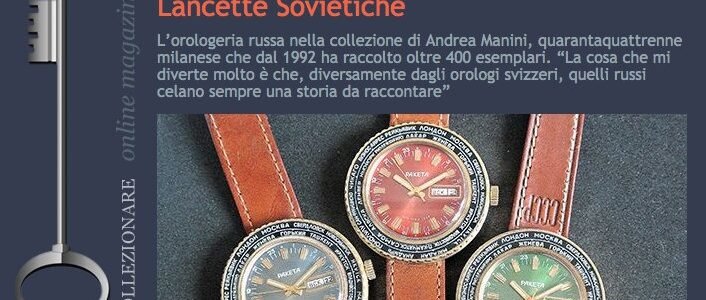
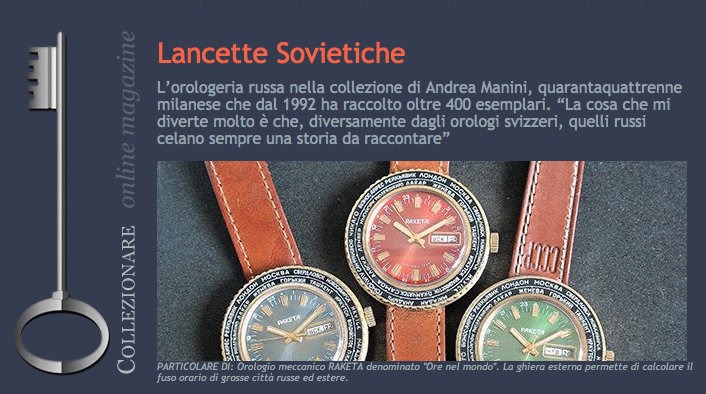
It may seem unusual, but sometimes a collection of Soviet/Russian watches can capture the attention and appreciation of even those who are not experts in the field. This intriguing niche of collecting has recently been highlighted in an interview published by the magazine “Collezionare,” available in both print and digital formats (www.collezionare.com).
The Magazine “Collezionare”
The magazine “Collezionare” is a specialized publication focused on the world of collecting, offering in-depth articles, news, and interviews on a wide range of collectible items. From vintage to antiques and modern collectibles, the magazine serves as an authoritative and up-to-date resource for enthusiasts. Available in both print and online versions, “Collezionare” stands out for the quality of its content and the passion with which it tells the stories of collectors and their unique collections.
Two years ago, I contacted several journals related to collecting to promote my father’s Pirelli advertisement collection, including “Collezionare”. The interview with my father can be found at this link. Given the existing contact, a couple of months ago I reached out again to the journalist who conducted the interview, suggesting she might also be interested in my collection of Soviet/Russian watches. A few days later, she contacted me to schedule a phone interview.
On April 14, 2018, the online version of the interview was published and can be read at this link.
Soviet Watches
In the interview, Andrea Manini, a 44-year-old from Milan who has been collecting since 1992, shares insights into his collection of over 400 Russian watches. “What I really enjoy is that, unlike Swiss watches, Russian ones always have a story to tell.”
The Stories Behind Soviet Watches
Many stories surround Soviet watchmaking, particularly those involving Yuri Gagarin, the first man in space. The watch he wore during the 1961 mission is still a mystery. Some claim it was a PoljotSturmanskie, produced by the First Moscow Watch Factory, often referred to as the Russian equivalent of the Speedmaster used by Armstrong and Aldrin on the moon. Others believe it was the Type One by Sturmanskie, citing a photo where Gagarin wears this model over his red suit. “But who can say for sure? Maybe it was just a training shot,” says Andrea, emphasizing the mystery that often surrounds these famous timepieces.
The Influence of History on Soviet Watchmaking
The end of the Soviet Union in the early 1990s marked the beginning of a new era for Russian watchmaking in Italy. Andrea, like many other enthusiasts, started his collection in 1992, the year after the USSR’s dissolution. “1992 is my year zero, the year I began to appreciate these beautiful watches. That year, the first after the dissolution of the Soviet Union, all the unique goods from the former USSR became very sought after, including Russian watches, which started appearing in our jewelry stores. Over the years, I have expanded my collection to about 400 pieces.”
Early Discoveries
Andrea’s first purchase was a VostokKomandirskie wristwatch. “The military look and the rocket on the dial attracted me, and only later did I discover that it was a Vostok Komandirskie model, with the Vostok 1 rocket that Gagarin used to orbit the Earth in 1961.”
Collection Categories
Russian watches are categorized in various ways. Andrea focuses on Russian space adventures and Soviet watches made for the Italian market. Other themes include Soviet polar explorations and Russian railways, particularly the BAM line.
The History of Russian Watchmaking
Russian watchmaking has a complex history intertwined with the country’s social, political, and military developments. During the Tsarist era, watches were mainly produced by artisanal workshops. With the advent of the Soviet Union, watch production became essential for both civilians and the military. Initially, pocket watches were produced, but gradually, wristwatches became the focus.
Watch Factories
Numerous companies arose in the Soviet Union, named after war or space adventures. “The First Moscow Watch Factory, later named Poljot (which means flight), Raketa (rocket), Pobeda (victory, dedicated to WWII), and Chaika (seagull, which was Valentina Tereshkova’s code name during her space flight).”
Export and Marketing
In the 1960s and 70s, Soviet watches were exported at low prices to promote sales. This was a state-imposed strategy. In Italy, Russian watchmaking has often been underrated due to its proximity to Switzerland. However, the Russians understood the importance of marketing and created watches with logos for export or specific models for certain markets.
Rare Models
Among the rarest models in Andrea’s collection is a Raketa Big Zero with a nephrite dial, a green stone similar to jade. Finding rare models is challenging, especially online where many fakes and assembled pieces are sold.
Tips for Collectors
To avoid buying fakes, Andrea advises consulting more experienced and reliable collectors. “Today, there are many forums and groups where you can exchange opinions and advice.”
This collection of Soviet/Russian watches, with its rich history and intriguing models, continues to captivate not only enthusiasts but also newcomers to the world of collecting.
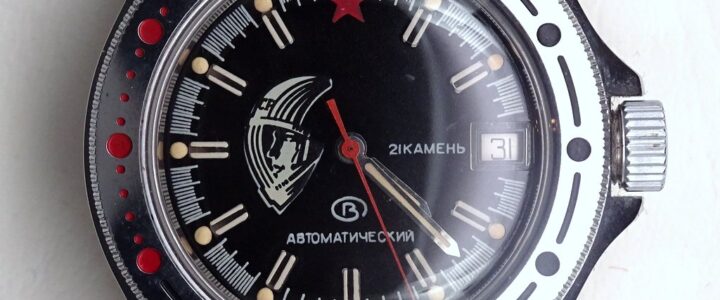
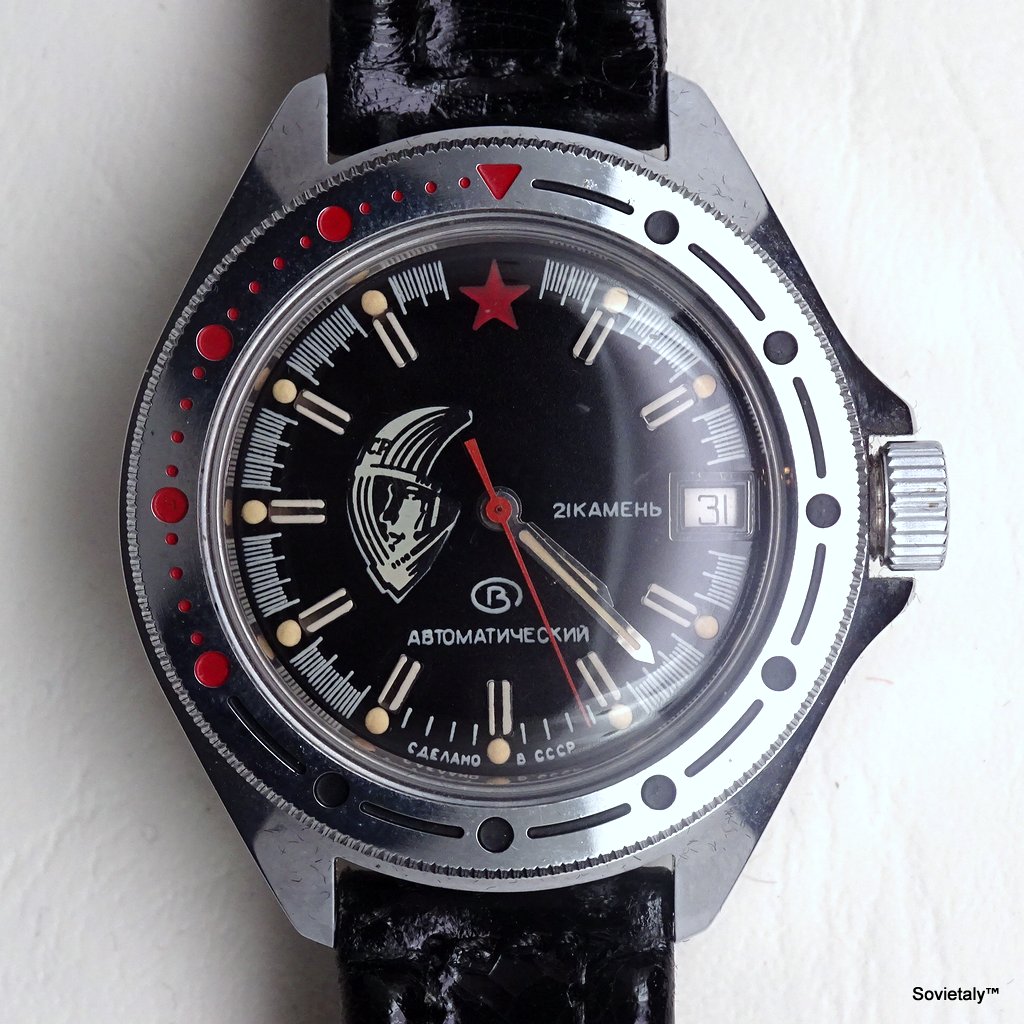
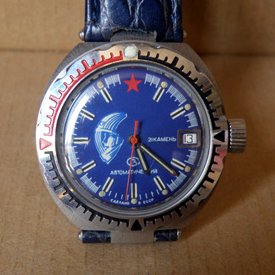
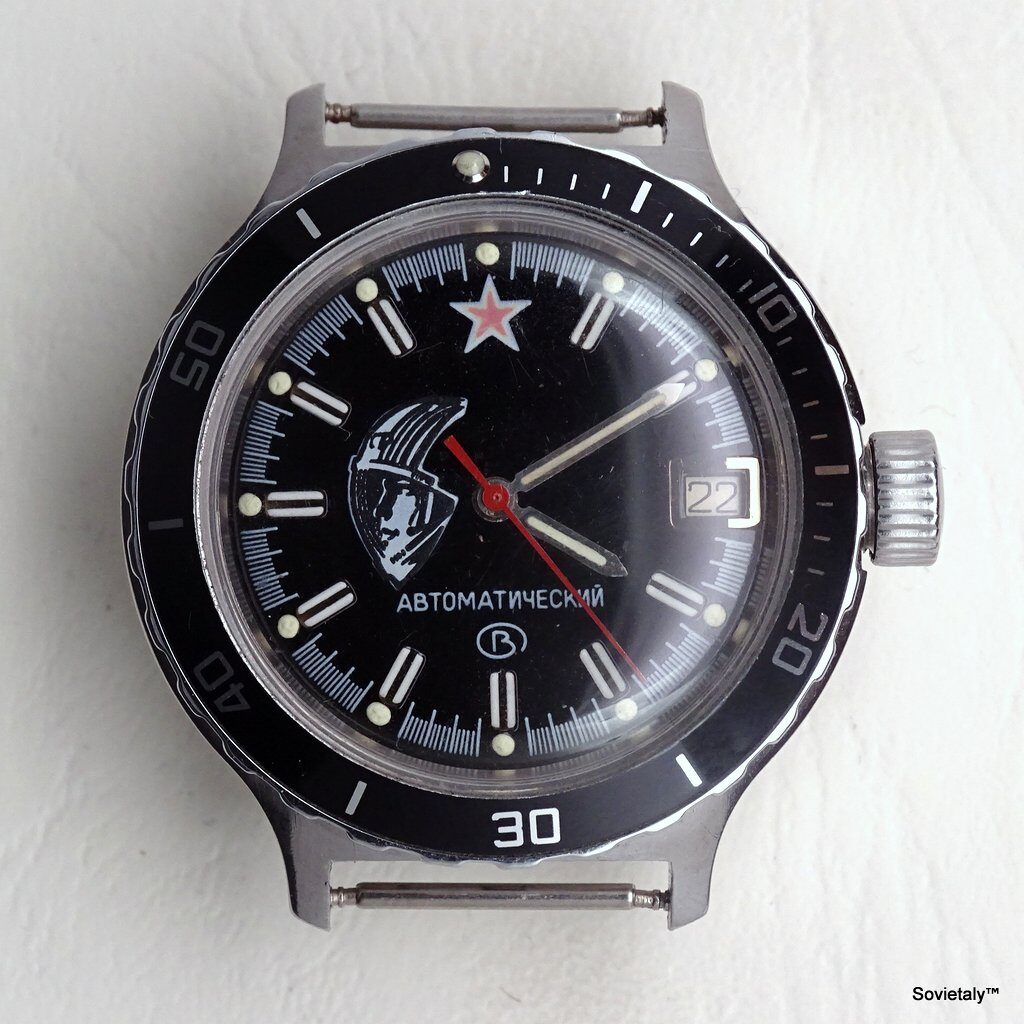
The Vostok Cosmonaut, also improperly known as the Vostok Astronaut, is a highly sought-after Soviet watch among collectors worldwide. Its charm lies in the dial that depicts the profile of a cosmonaut inside a space suit helmet. But who is actually depicted? Let’s explore the various theories and the different versions of this iconic watch.
Versions of the Vostok Cosmonaut
There are primarily three variants of the Vostok Cosmonaut watch: two from the Soviet era and one from the post-Soviet transitional period. Additionally, there are different types of cases and bezels that add to the variety of this model.
Soviet Era Versions
Black Dial The black dial version is usually housed in a chromed Generalskie 091xxx case, with the Vostok automatic caliber 2416b. Produced in the 1980s, it was mainly destined for the Italian and German markets. This model is easily recognizable by its typical unidirectional bezel with small dots.
Blue Dial The blue dial version, much rarer, is set in a Neptune case and features a Vostok automatic caliber. Despite the color differences, the dial design remains substantially identical to the black version.
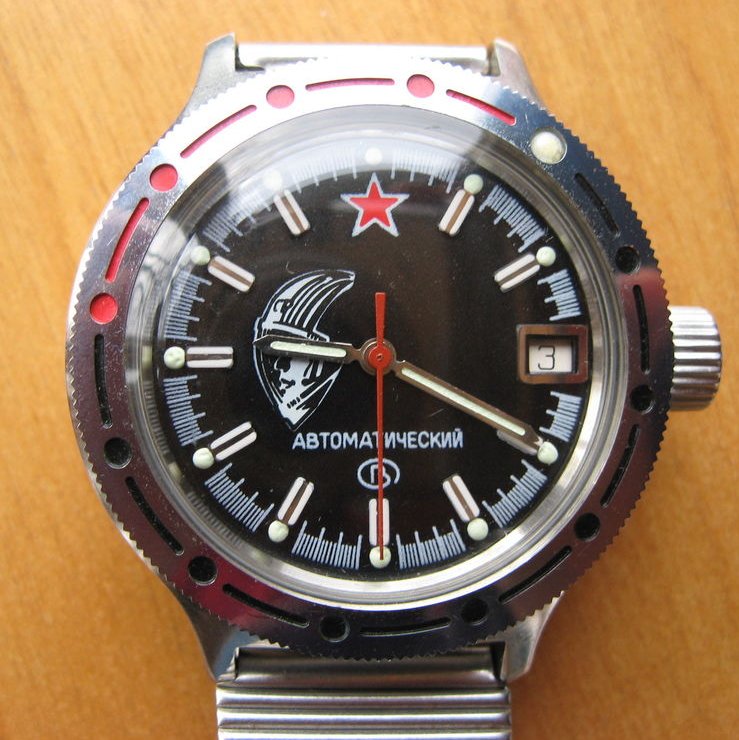
There is also a post-Soviet version of the Vostok Cosmonaut. This variant, often marketed as Amphibia, follows the success of the Soviet versions with a very similar dial. The main differences lie in the case and bezel, as seen in the following images.
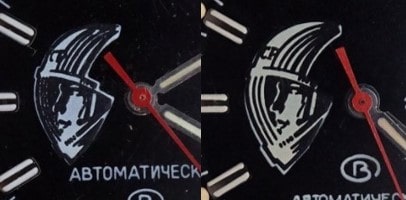
The most distinctive part of the watch is undoubtedly the dial, which depicts the profile of a cosmonaut with a helmet against a backdrop evoking deep space. The Soviet and transitional versions are very similar but present some differences in graphic details.
At first glance, it’s not easy to notice the differences between the two versions. However, by carefully comparing the reflections on the helmet and visor, distinctive details can be identified. Just take the position of the “P” on the helmet as a reference.
There are three main theories regarding the identity of the cosmonaut depicted:
Yuri Gagarin The most common theory is that the cosmonaut is Yuri Gagarin, the first man to travel into space. The delicate features of the depicted face resemble those of Gagarin, as seen in historical photos (Astronomy Scope) (Night Sky Pix).
Anna Lee Fisher Some suggest that the image might be inspired by American astronaut Anna Lee Fisher. Although it’s unlikely for an American astronaut to be depicted on a Soviet watch, the resemblance to some photographs of Fisher is striking (Difference Wiki).
Valentina Tereshkova The most fascinating and perhaps most probable theory is that the face depicted is that of Valentina Tereshkova, the first woman to travel into space. Her historic mission aboard Vostok 6 in 1963 makes her an icon of the Soviet space era (Astronomy Scope) (WorldAtlas).
Does the Vostok Cosmonaut Have Clones?
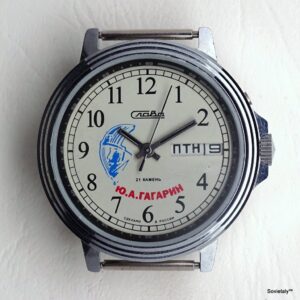
There is a similar, though less prestigious, version of the Vostok watch. It is a Slava model with manual winding and caliber 2428. The light gray/white dial features the profile drawing of the cosmonaut but with less definition compared to the original Vostok. Curiously, the bottom of the dial bears the name Yuri Gagarin in Cyrillic (Ю. А. ГАГАРИН), which might support the theory that the cosmonaut depicted is Gagarin.
The Vostok Cosmonaut, with its various versions, is a milestone in any collection dedicated to the space era and Soviet watches. The simplicity of the design and the cleanliness of the dial make it one of the best Soviet watches of the 1980s. Regarding who is depicted on the dial, the mystery adds an additional layer of charm. Whether it is Gagarin, Tereshkova, or a generic cosmonaut, the Vostok Cosmonaut continues to celebrate those brave men and women who paved the way for space exploration.
Difference Between Cosmonaut and Astronaut
The term “cosmonaut” is used to refer to space travelers trained by the Russian or Soviet space agency, while “astronaut” is used for those trained by U.S., European, Canadian, or Japanese space agencies (StarLust) (Astronomy Scope) (Night Sky Pix). The distinction originated during the Cold War and reflects the independence and competition between the U.S. and Soviet space programs.
Cosmonaut: Derived from the Greek words “kosmos” (universe) and “nautes” (sailor), meaning “sailor of the universe.”
Astronaut: Derived from the Greek words “astron” (star) and “nautes” (sailor), meaning “sailor of the stars.”
Fun Facts About Anna Lee Fisher
Anna Lee Fisher was the first mother to fly into space and worked as a chemist and astronaut for NASA. She was married to William Frederick Fisher, also an astronaut, and together they represented one of the few married couples to have both flown into space (Difference Wiki).
Insights on Yuri Gagarin and Valentina Tereshkova
Yuri Gagarin: The first man in space, on April 12, 1961, completing an orbit of the Earth with the Vostok 1 mission. His achievement represents a milestone in the history of space exploration (WorldAtlas) (Night Sky Pix).
Valentina Tereshkova: The first woman in space, flew on June 16, 1963, aboard Vostok 6. Her mission lasted almost three days and marked a significant advancement in the inclusion of women in the space program (WorldAtlas) (Night Sky Pix).
Per fornire le migliori esperienze, utilizziamo tecnologie come i cookie per memorizzare e/o accedere alle informazioni del dispositivo. Il consenso a queste tecnologie ci permetterà di elaborare dati come il comportamento di navigazione o ID unici su questo sito. Non acconsentire o ritirare il consenso può influire negativamente su alcune caratteristiche e funzioni.
Funzionale
Always active
L'archiviazione tecnica o l'accesso sono strettamente necessari al fine legittimo di consentire l'uso di un servizio specifico esplicitamente richiesto dall'abbonato o dall'utente, o al solo scopo di effettuare la trasmissione di una comunicazione su una rete di comunicazione elettronica.
Preferenze
L'archiviazione tecnica o l'accesso sono necessari per lo scopo legittimo di memorizzare le preferenze che non sono richieste dall'abbonato o dall'utente.
Statistiche
L'archiviazione tecnica o l'accesso che viene utilizzato esclusivamente per scopi statistici.L'archiviazione tecnica o l'accesso che viene utilizzato esclusivamente per scopi statistici anonimi. Senza un mandato di comparizione, una conformità volontaria da parte del vostro Fornitore di Servizi Internet, o ulteriori registrazioni da parte di terzi, le informazioni memorizzate o recuperate per questo scopo da sole non possono di solito essere utilizzate per l'identificazione.
Marketing
L'archiviazione tecnica o l'accesso sono necessari per creare profili di utenti per inviare pubblicità, o per tracciare l'utente su un sito web o su diversi siti web per scopi di marketing simili.
Per fornire le migliori esperienze, utilizziamo tecnologie come i cookie per memorizzare e/o accedere alle informazioni del dispositivo. Il consenso a queste tecnologie ci permetterà di elaborare dati come il comportamento di navigazione o ID unici su questo sito. Non acconsentire o ritirare il consenso può influire negativamente su alcune caratteristiche e funzioni.
Funzionale
Always active
L'archiviazione tecnica o l'accesso sono strettamente necessari al fine legittimo di consentire l'uso di un servizio specifico esplicitamente richiesto dall'abbonato o dall'utente, o al solo scopo di effettuare la trasmissione di una comunicazione su una rete di comunicazione elettronica.
Preferenze
L'archiviazione tecnica o l'accesso sono necessari per lo scopo legittimo di memorizzare le preferenze che non sono richieste dall'abbonato o dall'utente.
Statistiche
L'archiviazione tecnica o l'accesso che viene utilizzato esclusivamente per scopi statistici.L'archiviazione tecnica o l'accesso che viene utilizzato esclusivamente per scopi statistici anonimi. Senza un mandato di comparizione, una conformità volontaria da parte del vostro Fornitore di Servizi Internet, o ulteriori registrazioni da parte di terzi, le informazioni memorizzate o recuperate per questo scopo da sole non possono di solito essere utilizzate per l'identificazione.
Marketing
L'archiviazione tecnica o l'accesso sono necessari per creare profili di utenti per inviare pubblicità, o per tracciare l'utente su un sito web o su diversi siti web per scopi di marketing simili.