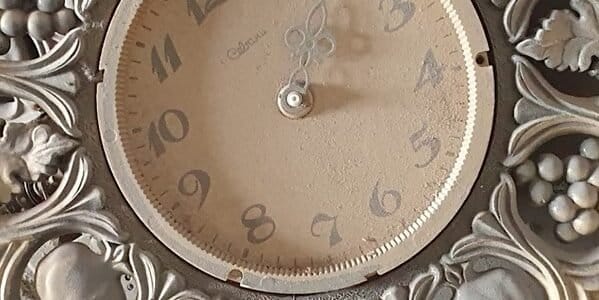
The Molnija Watch Factory in Chelyabinsk

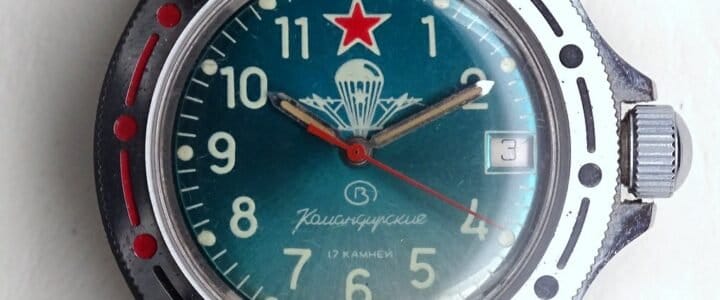
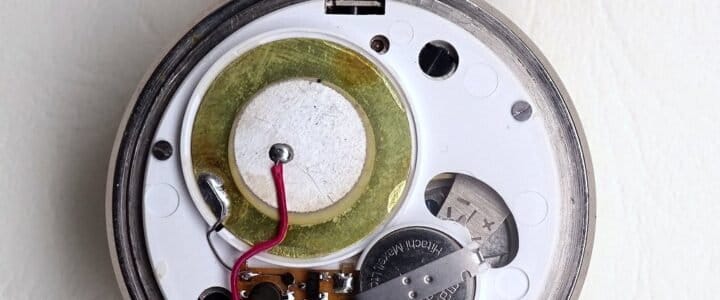
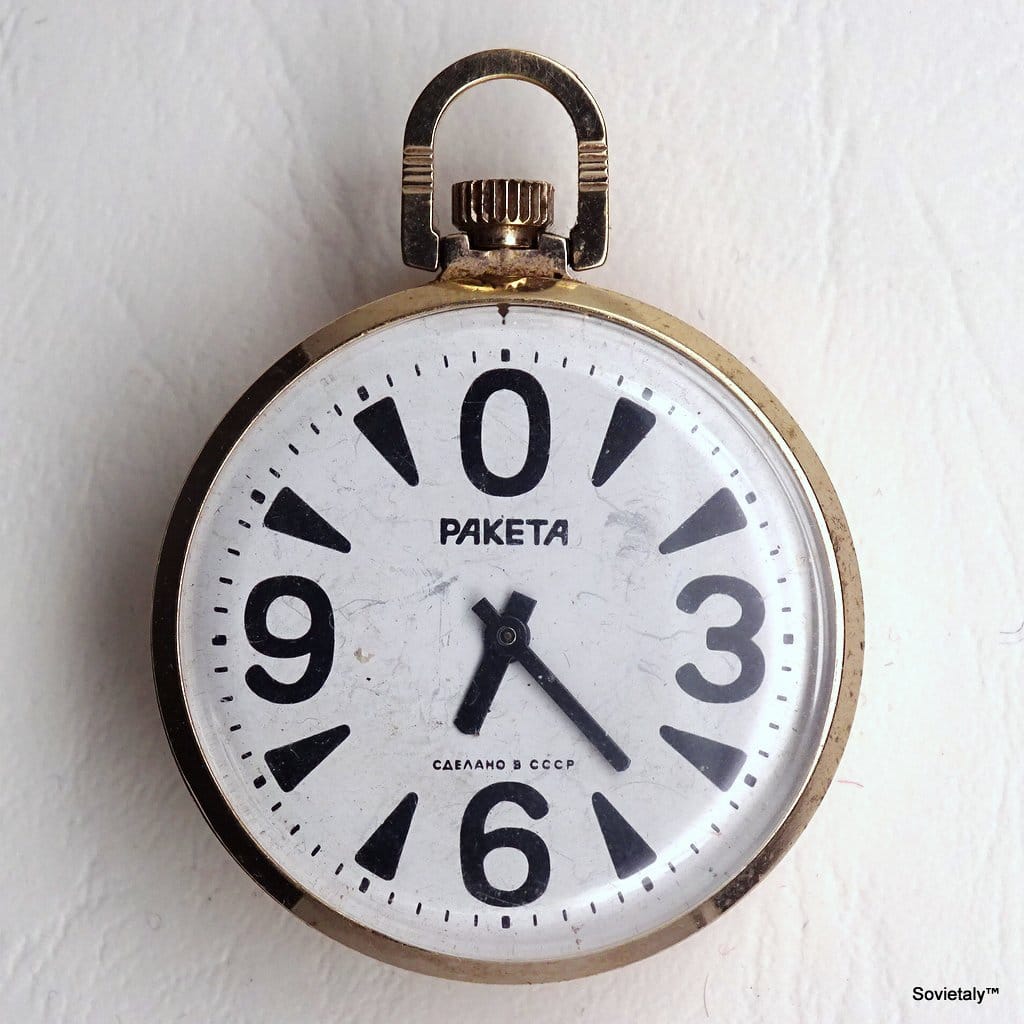
russian watch Molnija Elektronica music pocket watch - electronic

History, Production, and Collaborations

The Molnija watch factory (Челябинский часовой завод «Молния»), located at ul. Tsvillinga 25/1 in Chelyabinsk (Russia), is an iconic Russian manufacturer of mechanical watches founded in 1947 during the Soviet era. Over the course of more than seven decades, Molnija experienced a golden age in the 20th century, mass-producing pocket watches and timekeeping instruments for both civilian and military use, and later adapted to market changes in the post-Soviet years. In this report, we will explore the entire history of the Molnija factory, from its founding (and earlier origins) up to the present day, examining the period of peak production, the main products and technical innovations, the industrial collaborations (such as the one with Elektronika for a musical pocket watch), and the ties with the heavy, light, and defense industries. All information is corroborated by reliable sources – including archival Russian documents (in Cyrillic) – and enriched with chronological timelines and tables to facilitate understanding, as this report will be used for the writing of an academic essay.

  • 1929–1930: Origin of the Soviet Watchmaking Industry

    A Soviet delegation purchases in the USA the entire equipment of the Dueber-Hampden watch factory, laying the groundwork for the USSR’s first state-run watch plants. In 1930, the First and Second State Watch Factories are established in Moscow, launching domestic watch production.

  • 1941–1945: Evacuation and Wartime Directives

    During the Great Patriotic War (World War II), the Soviet watch industry is converted to military production, and many factories (including the First Moscow factory) are evacuated far from the front, to the Urals (for example, to Zlatoust). On April 19, 1945, with the war still ongoing, the Soviet government issues a decree (GKO No. 8151с) to rebuild the watch industry after the war: among its measures, the creation in Chelyabinsk of “Plant No. 834” dedicated to producing a new caliber-36 pocket watch named “Molnija”.

  • November 17, 1947: Founding of the Molnija Factory

    The first production line of the new Chelyabinsk plant is put into operation. This date – 17/11/1947 – is considered the official birth of the Molnija Watch Factory. The company is housed in a monumental neoclassical Soviet-style building (originally intended as a public library) in central Chelyabinsk.

  • Late 1940s: First Products and Military Use

    From the very start, the Defense Ministry is the main client: the factory begins producing chronographs and onboard instruments for military jet aircraft (first installed on the MiG-15 fighter), as well as special clocks for tanks, armored vehicles, and Navy ships. In parallel, production of the new caliber-36 “Molnija” pocket watch is launched, with its prototype even presented in Switzerland in 1947 to wide acclaim by Swiss experts. Thanks to collaboration between Soviet factories (which did not compete with each other), the very first Molnija watches were assembled by the Second Moscow Watch Factory in 1947, based on that factory’s “Salut” caliber design, until Chelyabinsk ramped up to full capacity by decade’s end.

  • 1950s: The Golden Age – Peak Production and Expansion

    In the 1950s, Molnija reaches its period of maximum prosperity. Over 5,000 personnel are employed and each year about 30,000 special timepieces for aviation/army and over 1,000,000 civilian watches (mostly pocket watches) are manufactured. This output covers the entire domestic Soviet demand and is exported to more than 30 countries (primarily in the socialist bloc). During these years Molnija becomes a true “industrial giant”: besides pocket watches, it expands its range to include souvenir table clocks, mechanical taxi meters for cars, and other timing devices.

  • Early 1960s: “Molnija” – Rebranding and Standardization

    In step with a reorganization of the Soviet watch industry, the Chelyabinsk plant formally adopts the name “Molnija Watch Factory” and a new logo. Molnija means “lightning” in Russian, an apt name for the sturdy pocket watches produced. At the same time, the main mechanical movement is renamed from ЧК-6 (“ChK-6”) to caliber 3602 (18 jewels), while the shock-resistant version becomes caliber 3603. The production process is also simplified: the early ChK-6 movements had decorative finishes (Geneva stripes, polished bridges), but after 1960 such embellishments were eliminated to improve efficiency and reduce costs.

  • 1960s–80s: Diversification and Continued Output

    Throughout the rest of the Soviet era, Molnija continues to churn out millions of pocket watches and thousands of technical devices each year, maintaining recognized quality (in 1974 it earns the State Quality Mark). Various special pocket watch editions are developed: models for railway workers, versions with Braille dials for the blind, extra-rugged models for miners, and commemorative watches with custom logos and engravings (Molnija produced, for instance, special series for national anniversaries, such as the edition marking the 60th anniversary of the October Revolution in 1977). In the military field, the factory produces AChS-1M aircraft clocks (panel instruments installed on many Soviet aircraft) and onboard chronographs for planes like the MiG-21/23 and bombers, for helicopters (Kamov series) and for land vehicles; they even build timepieces destined for submarines and space vehicles during the space race. This broad activity makes Molnija a crucial player in both the light industry (consumer goods like civilian watches) and the heavy/defense industry (precision instruments for military hardware and strategic infrastructure).

  • 1990s: Crisis, Transformation, and Unusual Collaborations

    The collapse of the USSR in 1991 leads to a drastic drop in demand and state funding. Molnija, now a joint-stock company, enters a difficult period, despite some international accolades: its products win quality awards like the “Golden Globe” (1994) and “Golden Eagle” (1997), showing foreign appreciation. During this time, the factory experiments with unconventional collaborations: for example, it introduces “musical” pocket watches, equipped with a small electronic circuit (developed in partnership with Elektronika industries) that plays a melody – typically the Russian national anthem – upon opening the lid. These hybrid watches, produced between the late 1990s and early 2000s, combine traditional Molnija mechanics (3602/3603 movement) with a quartz sound module powered by a battery. Most production, however, remains focused on mechanical watches and military orders, as the factory waits for market recovery.

  • 2007: Temporary Halt of Civilian Production

    In October 2007 Molnija suspends the production of watches for the consumer market due to persistent financial troubles. The company, having reached its 60th anniversary, limits activities to special orders and maintenance, avoiding outright closure. Despite the commercial shutdown, the factory remains formally operational (it is part of the national defense-industrial complex) and retains its machinery and know-how, awaiting better times.

  • 2015–2018: Revival and Production Relaunch

    After an ~8-year pause, Molnija comes back to life: in 2015 new management restarts pocket watch production. Initially, to return to the market quickly, watches are assembled using imported movements (e.g. Chinese ST-2650S calibers for pocket watches and Japanese Miyota quartz movements for some AChS-1 wrist models). Meanwhile, work proceeds to reactivate the historic mechanical line: by 2016 all original machinery and tooling are back in service, enabling in-house production of the iconic Molnija 3603 caliber once again. This marks a revival of the traditional manufacturing: the 3603 caliber (directly descended from the 1940s design) is ticking again inside new Molnija watches.

  • 2019–2023: Innovation, Modern Collections, and Achievements

    In recent years, Molnija has invested heavily in modernization and product development. An internal technical department (never present before) is set up to design new calibers and complications. The factory remains one of the very few in Russia to manufacture complete mechanical movements in-house (alongside Poljot-Raketa and Vostok). Along with producing aeronautical instruments and classic pocket watches (which today feature elaborate hand-engraved lids for 80% of their workmanship), 18 new wristwatch collections with contemporary designs are launched: some models reinterpret historical elements (e.g. the AChS-1 Pilot line echoes cockpit clocks) while others introduce genuine technical innovations. In 2022, for the company’s 75th anniversary, the celebratory “Raritet” series is released, with a decorated open-view 3603 movement and premium finishing, which wins the “Legacy” award as the best Russian watch of 2023 at the Moscow Watch Expo. Another notable release is the “Regulator” collection, based on a modified 3603 movement (denoted 3603S) with a regulator complication – a rarity in Russia – launched in series production to great interest from collectors. Internationally, Molnija regularly showcases its creations at industry fairs (such as the 2023 Hong Kong Watch & Clock Fair) to reclaim foreign markets. In 2023, the historic facility on Tsvillinga Street was put up for sale and production is being moved to a modern site, while the old premises have become a company museum open to the public.

Origins and Foundation of the Molnija Factory (1920s–40s)

The story of the Molnija factory has its roots in the Soviet program to build a national watchmaking industry. In the 1920s, the USSR had no large-scale domestic watch production; to bridge this technological gap, in 1929 the government sent emissaries to the United States to acquire machinery and expertise. In 1930, the entire production line of the American company Dueber-Hampden, which had gone bankrupt during the Great Depression, was purchased and transferred to Moscow. From that operation, the 1st and 2nd State Watch Factories were established, producing the first made-in-USSR timepieces (brands like “Победа” – Pobeda, among others).

When World War II broke out in 1941, these factories were converted to wartime production (precision instruments for the Red Army). The German advance towards Moscow forced the disassembly and evacuation of strategic industrial plants: the First State Watch Factory was evacuated to Zlatoust, in the Urals, to keep it safe from the enemy. In Zlatoust, emergency production of watches and chronometers for the army continued through the war.

Towards the end of the war, with victory on the horizon, the Soviet leadership planned the reconstruction and expansion of the watch industry. A decree by the State Defense Committee (GKO) on April 19, 1945, signed by Stalin, outlined the creation of new watch models and the construction of new factories. Among these, it was decided to establish a plant in Chelyabinsk (a major industrial city already nicknamed “Tankograd” for its tank factories) that would produce a new high-quality pocket watch named Molnija (“lightning”). In 1946 the government officially approved the creation of “Watch Factory No. 834” in Chelyabinsk for this purpose.

Specialists and resources were drawn from all over the USSR: over 100 skilled workers and 30 engineers – many from the Zlatoust factory – relocated to Chelyabinsk, bringing heavy machinery and expertise acquired during the war. A large building in the city center was repurposed as the factory (initially built between 1935 and 1948 as a public library, in Soviet classical style). After a little more than a year of work, on November 17, 1947 the first production line went into operation and the plant was officially inaugurated. This date is considered Molnija’s birthday. In the very early phase, the factory was still gearing up: to meet immediate orders, part of the Molnija pocket watch production was temporarily carried out in Moscow, at the Second Watch Factory, which actively collaborated by sharing designs and components (a usual practice in the planned economy with no internal competition). By 1949–50, the Chelyabinsk factory could produce the Molnija movements independently and fully took over from its Moscow colleagues.

The name Molnija (“Молния”) initially referred to the main product – a robust, precise pocket watch – but soon became synonymous with the entire factory. Interestingly, the mechanical movement underpinning it was derived from a Swiss caliber: Soviet designers had taken inspiration from the Cortébert 620, a well-known Swiss pocket watch movement, adapting it to local needs. This Soviet movement was designated ЧК-6 (“ChK-6”), where ЧК stood for часы карманные (pocket watch) and 6 likely indicated an internal category. The ChK-6 movement had 15 jewels and was immediately well-received: in 1947 it was presented to a delegation of Swiss watch experts, who gave very favorable reviews, confirming that the USSR was now capable of producing mechanisms comparable to Western ones.

From its inception, Molnija had a dual vocation: on one hand, it needed to satisfy civilian demand for watches (especially pocket watches, which were widely used in the USSR at the time); on the other, it served technical-military needs, supplying timekeeping instruments for various branches of state industry. By the late 1940s, besides pocket watches, the factory was already manufacturing aeronautical chronographs on order from the Defense Ministry – intended for the new jet fighters and helicopters – as well as special clocks for tanks, tracked vehicles, and the Navy. The first aircraft equipped with a Molnija clock was the MiG-15 fighter: in the cockpit of this jet, which entered service around 1949, there was a panel clock produced in Chelyabinsk. Similar devices began to appear on other military vehicles on land and sea at the end of the 1940s, marking the start of a close partnership between the Molnija factory and the military industry.

Peak and Expansion: Production in the 1950s and 1960s

In the 1950s and 1960s, the Molnija factory reached the height of its production capacity and became one of the pillars of the Soviet watch industry. During the 1950s, the plant was expanded and modernized, and the workforce exceeded 5,000 employees. The combined annual output was impressive: about 30,000 technical instruments (dashboard chronographs, special clocks) for aviation, navy, and ground forces, and over one million civilian watches (primarily Molnija pocket watches) per year. This extraordinary volume meant that Molnija fully covered domestic demand for watches in the USSR and could export the surplus to over 30 countries, mostly allied nations in the socialist bloc. The reputation for precision and durability of Molnija movements supported exports: for example, many Molnija pocket watches were marketed in North America under the “Marathon” brand (notably in Canada and the US), a rare case of USSR-to-West commerce in the midst of the Cold War.

On the military-industrial side, Molnija cemented its role as a key supplier of clocks and chronographs for Soviet vehicles. In the 1950s, a standard aircraft chronograph known as AChS-1 (Russian acronym for “Aircraft Clock Seconds-1”) went into production for airplane and helicopter dashboards: these panel-mounted mechanical clocks became ubiquitous on Soviet military (and many civilian) aircraft. The AChS-1 and its later iterations (like the AChS-1М) were designed and produced in Chelyabinsk, and were installed in subsequent years on famous fighter jets such as the MiG-21 and MiG-29, on strategic bombers like the Tu-160 Blackjack, on combat helicopters (Kamov Ka-50 Black Shark and Ka-52), and even on Soyuz spacecraft. Simultaneously, the factory produced clocks for tanks and submarines, built to keep time under extreme conditions inside armored vehicles or submarines. This integration with the defense industry led to Molnija being formally included among the enterprises of the Soviet (and later Russian) defense-industrial complex. Nonetheless, administratively the company was categorized under precision instruments industry, straddling the line between “heavy” and “light” industry sectors.

Parallel to its military output, Molnija continued to meet Soviet consumers’ needs and tastes with its pocket watches. Molnija watches became a common, reliable item in daily life: known for their toughness, they were favored by workers in various trades. The factory developed special versions to suit specific requirements: for example, pocket watches for miners with reinforced cases and high-visibility dials, able to resist coal dust and shocks in the mines. For railway workers and transport personnel, simplified-dial editions were produced with easily readable seconds (often featuring locomotive emblems on the cover). For the blind, Molnija manufactured pocket watches with Braille dials: the numerals were indicated by raised dots and the crystal could be opened to allow touching the hands safely. These variants show the attention Soviet industry paid to a wide range of users and social needs.

In 1960–61 the Chelyabinsk factory, while maintaining continuity in its production, underwent some organizational and technical changes. As noted in the timeline, in those years the plant was formally renamed to “Molnija” and a new corporate logo was adopted (a stylized lightning bolt). The base ChK-6 movement was upgraded: its quality was improved with additional jewels (18 total) and by adding shock protection to some models, and its designation was changed to caliber 3602/3603 to standardize Soviet movement nomenclature. Remarkably, this caliber 3602 remained the mainstay of Molnija for the next 50 years: the core mechanical design saw no substantial modifications from the mid-20th century until the 2010s. It was a manual-wind movement with 18 jewels, indicating hours, minutes, and a small seconds (at the 9 o’clock position in the typical pocket watch layout), in a large size (16-ligne, ~36 mm diameter) ideal for pocket watches and small desk clocks. Its reliability and ease of manufacture meant Molnija did not feel the need to develop new calibers for decades, unlike other Soviet factories which introduced wristwatch movements, automatics, etc. Molnija remained faithful to the mechanical pocket watch, finding in that niche a steady market even as wristwatches became the norm.

It’s important to note that Molnija did not mass-produce wristwatches during the Soviet period. The vast majority of Soviet wristwatches came from factories like Poljot (1st Moscow), Slava (2nd Moscow), Vostok (Chistopol), and others. Molnija specialized in pocket watches, small clocks, and instruments; however, on special occasions, it assembled some limited runs of wristwatches using movements from other factories, or provided 3602 movements to others who encased them in oversized wristwatch cases. One notable example: in the 1960s, some Molnija movements were used in particular large-diameter wristwatches intended for pilots, though this was not a mass production. In general, up until the 2000s Molnija was almost synonymous with “pocket watch” in the USSR.

Beyond portable timepieces, Molnija became known for certain ancillary product lines. One was the production of souvenir table clocks: beginning in the 1950s, the factory offered a series of elegant mechanical desk clocks, often set in decorative cases or small caskets, meant to be gifted on special occasions or given as presentation awards. These were powered by the same spring-driven movements as the pocket watches but housed in stationary structures of wood or metal, sometimes with personalized dials (city emblems, Soviet republic symbols, etc.). Another product was mechanical taxi meters: Molnija built devices that, connected to a car’s wheels, measured time and distance to calculate taxi fares. These were purely mechanical contraptions in the 1950s–60s (later electro-mechanical), and they highlight the factory’s range of precision engineering beyond traditional watches.

This diversification was possible because Molnija possessed a vast array of manufacturing capabilities (over 60,000 different technological processes mastered, according to internal figures) and produced nearly every component in-house: gears, springs, balance wheels, cases, dials, crystals, etc. Such vertical integration was typical of Soviet factories, and it remains a distinguishing feature of Molnija even today (the company still prides itself on producing even the balance spring of the escapement internally, a capability rare even globally).

In summary, during the 1950s and ’60s Molnija operated at full throttle as a watchmaking powerhouse. On one side, it contributed to the USSR’s industrial and military strength by supplying robust timing instruments for aircraft, ships, vehicles, and installations (links to heavy and defense industry); on the other, it provided the civilian market with millions of pocket and table clocks (in the realm of consumer light industry). The quality, quantity, and variety of its production make this era the “golden age” of the Molnija factory, a key reference point in the study of Soviet horology.

Year Founded

1947

Official opening on November 17, 1947

Workforce (1950s)

≈5,000

Workers and technicians employed during peak years

Annual Output (1950s)

1,000,000+

Civilian watches produced per year (mainly pocket watches)

Military Devices (1950s)

~30,000/yr

Cockpit chronographs and special clocks supplied annually to the armed forces

Technical Innovations and Main Molnija Products

Although Molnija did not create a multitude of different calibers over its history, several technical innovations and design features stand out, as does a summary of the main categories of products manufactured by the factory.

Mechanical Movements and Calibers: The core of Molnija’s production has always been its 16-ligne mechanical movement. As noted earlier, the original 1947 ChK-6 design was based on the Swiss Cortébert model and had 15 jewels with an anchor escapement. In the 1960s this caliber was updated to 3602 with 18 jewels and a frequency of 18,000 beats/hour, with a shock-protected variant (caliber 3603) featuring an Incabloc-type device on the balance staff. Notably, Molnija went on to manufacture the 3602/3603 caliber continuously from around 1960 until 2007, making only minor cosmetic or material tweaks while leaving its fundamentals unchanged. This movement proved to be extraordinarily long-lived and reliable, becoming one of the most-produced mechanical calibers ever (millions of units made).

Technically, the 3602 is a manual-winding movement with 18 jewels, indicating hours, minutes, and small seconds (at 9 o’clock on the pocket watch dial). It boasts a power reserve of about 45 hours and a simple yet robust construction (3/4 plate, large balance wheel). The 3603 version adds shock resistance (crucial for military use and survivability if dropped). Molnija did not implement complications like date, chronograph, or automatic winding on a wide scale in its movements: it preferred to stick with a proven design and focus innovation elsewhere (e.g., cases or dial designs). Only in the 21st century, with the post-2015 revival, did the factory begin developing variants with complications based on the 3603 (such as the 3603S regulator with separated hour/minute hands) and even new calibers in small series, including movements with tourbillon for high-end table clocks.

Design and Finishes: The earliest Molnija watches of the late ’40s and ’50s featured high-grade finishing: bridges decorated with stripes and blued screws, in line with European watchmaking standards. After the 1960 reorganization, the emphasis shifted to mass production, and the finishes were simplified (movements left with plain, undecorated surfaces). This makes the pre-1960 examples highly prized by collectors for their craftsmanship. Generally, on the outside, Molnija pocket watches had cases of chromed brass or steel (sometimes nickel silver or “German silver” for premium issues), typically ~50 mm in diameter. Dials ranged from classic white enamel with Arabic or Roman numerals to black or colored dials for special series. The variety of decorated covers was vast: Molnija produced relief engravings on casebacks with patriotic themes (USSR coat of arms, wartime scenes), portraits of Lenin or Yuri Gagarin, natural motifs (animals, Siberian landscapes), and much more. This aesthetic variety was part of the souvenir lines especially developed from the 1970s, aimed at both the domestic market (commemorations, service awards) and tourist exports.

Special Industrial Timepieces: A hugely important segment of Molnija’s output is its technical clocks and chronographs. Among these, the aforementioned AChS-1 – the standard cockpit clock – stands out, produced in various versions from 1955 onward and still in use in Russian aircraft today. The AChS-1М described in period documents is an 8-day chronograph (very efficient, with a long power reserve) with two coaxial hands (one for seconds, one for chronograph minutes up to 60) and a small subdial for hours. Another device was the tank clock: every Soviet tank was equipped with a special in-vehicle clock, often a model derived from the AChS adapted for that environment, or a simple rugged 12-hour clock. Molnija produced thousands of these, built to tolerate strong vibrations and extreme temperatures. Even submarines and Soyuz spacecraft were equipped with Molnija timepieces modified for their purposes – for submarines, for example, these were water-tight clocks designed for high pressure conditions.

An unusual product line was mechanical taxi meters: Molnija made mechanisms which, attached to the rotation of a vehicle’s wheels, measured time and distance to calculate cab fares. These were entirely mechanical in the ’50s–’60s, later electro-mechanical, demonstrating the factory’s technical versatility beyond watchmaking alone.

Collaboration with Other Watch Factories: In the watch industry, Molnija never operated in isolation. From its founding, as we’ve seen, it was supported by the 2nd Moscow factory and staff from Zlatoust. During the Soviet era, there was constant interchange of ideas and components among the various manufacturers: for example, many components of the Molnija caliber were partly made in other cities or derived from shared standards. Conversely, Molnija supplied parts and movements to other facilities for specific needs. A notable case is cooperation with the Penza watch factory to produce Braille watches: it seems the tactile dials were developed jointly, then mounted on Molnija movements in Chelyabinsk. Furthermore, in the 1990s, Molnija partnered with Elektronika, the state electronics conglomerate, to incorporate musical circuits into its watches (as detailed shortly).

In essence, Molnija was both a beneficiary and a contributor to the Soviet watchmaking network: it was born thanks to know-how from Moscow and the evacuated Zlatoust plant, but it in turn became a center of excellence that collaborated with places like Penza, Minsk (Luch factory), and others on special projects. This synergy among factories was facilitated by the planned economy, where each plant had its specialization but also the ability to support the others when needed, with no commercial competition.

A particularly notable example was collaboration with the electronics industry in the late 20th century. In the 1980s, digital watches and novelties like melody alarm watches (watches with musical alarms) became popular worldwide. The USSR had a broad “Elektronika” brand for various electronic products including digital watches, calculators, and toys. Riding this trend, Molnija developed a hybrid product: mechanical pocket watches with an integrated electronic musical module. The electronic circuit (battery-powered) was likely supplied or co-designed by labs under Elektronika, while Molnija handled the mechanical movement and final assembly. The result was pocket watches with a traditional appearance but which played a melody (like the national anthem or patriotic songs) when the lid was opened. These models appeared on the Russian market in the late 1990s and early 2000s, often as limited commemorative editions (for example, a watch dedicated to the Il-76 transport aircraft with a musical module). Technically, the electronic module was completely independent of the mechanical movement – powered by a small battery, it activated via a microswitch when the cover was opened – and did not interfere with the hand-wound watch mechanism. Enthusiasts have confirmed that this musical module was a factory-original feature in some late-’90s Molnija watches (not an aftermarket addition), highlighting how the factory sought to innovate its product and keep it attractive. While these musical watches represent more of a curiosity than a high-volume product, they exemplify Molnija’s capacity to collaborate with other industries (electronics) by integrating new technology into a traditional timepiece.

Below is a summary table of the main product lines of Molnija and their key characteristics, providing an at-a-glance overview of the factory’s hallmark productions over time:

Main Product Lines of Molnija

Product CategoryDetails and Characteristics
Molnija Pocket WatchesCore product since 1947. Metal cases (50 mm), hand-wound mechanical movements (caliber ChK-6 originally, later 3602/3603) with 18 jewels. Mass-produced with peaks of over 1 million/year in the 1950s. Numerous aesthetic variants (dials, engravings) including models tailored for specific groups:
Railway workers: easy-to-read dials, often with a locomotive motif on the cover.
Miners: reinforced, shock-resistant cases; luminous indices and hands.
Visually impaired: Braille dot dial (with opening crystal).
Commemorative: custom logos for events, national emblems; e.g., “Marathon” series for North America.
In the 1990s, also hybrid “musical” models, featuring an electronic melody module that plays when opened (developed with Elektronika).
Technical & Military TimepiecesSpecialized output since the 1940s, around 30,000 units/year in the 1950s. Includes:
AChS-1 cockpit chronographs (8-day movements for aircraft/helicopter dashboards) – first use on MiG-15 (1949); later installed on MiG-29 fighters, Tu-160 bombers, Ka-50/52 helicopters, etc., up to the present.
Clocks for armored vehicles: panel clocks for tanks and land vehicles (Defense Ministry); built to withstand shocks and vibration.
Naval and submarine clocks: timepieces for ships and submarines, with specially sealed cases.
Timers and control devices: the factory also contributed to timing mechanisms for missiles and military equipment (details often classified). Molnija remains listed among defense sector enterprises.
Desk Clocks and Other CivilianAlongside pocket watches, Molnija also produced other consumer timepieces:
Souvenir desk clocks: mechanical clocks in decorative casings, often given as corporate or official gifts (popular in the 1960s–80s).
Pendulum and wall clocks: to a lesser extent, assembled especially in early years (among the first products in 1947).
Mechanical taxi meters: devices for taxis in the ’50s–’60s, utilizing Molnija mechanisms to measure time and distance.
Wristwatches (21st century): only in recent decades has Molnija launched wristwatch lines, often with skeletonized designs or instrument-inspired dials. As of 2024, it offers 18 wristwatch collections, using both in-house mechanical movements (modernized cal. 3603) and some external automatic/quartz calibers for certain models. Many current collections hark back to its heritage (e.g., “Tribute 1984” models featuring the traditional Molnija movement).

Note on industrial collaborations: The table illustrates how the Molnija factory acted as a nexus among various sectors: closely working with the Defense Ministry for military instruments, with civilian/light industry for consumer watches, and even with the electronics sector for the musical modules. One particular collaboration example was with the Moscow MELZ electronics plant, which likely provided components for the musical watch modules (though this isn’t explicitly documented, it’s suggested by technical sources). Additionally, it bears repeating the exchange with other watch factories: Molnija received design help from Moscow and repaid the favor by sharing movements and spare parts with other workshops. This network enabled the Soviet watch industry to grow rapidly in the 1950s, even with limited resources.

The Post-Soviet Decline and the 21st-Century Revival

With the end of the Soviet Union in 1991, Molnija – like many state enterprises – faced a severe crisis. The shift to a market economy caused a collapse in guaranteed state orders, while a flood of cheap quartz watches from abroad drastically reduced demand for domestic mechanical timepieces. In the early 1990s, pocket watch production did not cease immediately (Molnija continued making smaller quantities, looking for alternative markets). The factory became a joint-stock company, officially PAO “ChChZ Molnija”. During this period, efforts were made to maintain high quality to attract foreign buyers: indeed, its products received some international quality awards, e.g. the “Golden Globe” in 1994, “Golden Arc” in 1995, “Golden Eagle” in 1997 for assortment and quality, and others into the 2000s. Despite these accolades, financial difficulties persisted due to the ruble’s collapse and the shrinkage of the domestic market.

One strategy was to diversify product offerings: as noted, Molnija introduced pocket watches with electronic features (the musical models in collaboration with Elektronika during the ’90s), and explored making wristwatches to appeal to a younger demographic. A few Molnija wristwatch models came out in the 1990s and 2000s, often using the 3602 movement in large cases (essentially converting pocket watch movements into big pilot-style wristwatches). Unfortunately, the impact of these initiatives was limited.

The lowest point arrived around 2007, when factory leadership decided to suspend watch production for the consumer market indefinitely. The machinery fell silent and many skilled watchmakers retired or moved on. It’s important to mention that formally the factory was never completely shut down: some special orders (especially defense-related) or repair work continued minimally, and the company survived as a legal entity. This meant that, officially, there was no declared “closure” of operations – as local sources note, the plant never stopped production entirely even for a single day – though in practice, for nearly eight years, no new watches were made for retail.

In 2015, a turnaround began: thanks to private investments and a renewed interest in vintage mechanical watches, Molnija reopened energetically. A new management team (led by entrepreneur Aleksandr Medvedev) took the helm with the intent to revitalize the historic brand. Capitalizing on the retro trend and with support from local authorities (keen to save a piece of the Urals’ industrial heritage), some of the old master watchmakers were rehired and a new generation trained. By 2016 the factory announced it had reactivated all its original machinery and equipment, resuming production of its signature 3603 mechanical movement in-house. To quickly get products to market, initially Molnija offered models assembled with imported movements (likely Chinese Sea-Gull movements, clones of the Cortébert) and wristwatches with Japanese quartz movements (Miyota, by Citizen) – this allowed having saleable products while the in-house manufacturing pipeline was being restored.

From 2017 onward, Molnija once again began showcasing its creations at watch fairs and securing sales channels. A notable achievement is that the factory is once more among the very few in the world to produce the balance spring internally – the tiny spring of the balance wheel, the beating heart of a mechanical watch. This component is notoriously difficult to make; even many high-end Swiss brands source it from specialized suppliers. Molnija’s ability to fabricate it in-house underscores the company’s drive for complete control over the quality of its movements.

We have also seen a change in production philosophy: whereas in Soviet times volume often had priority over finish, today Molnija emphasizes craftsmanship and niche appeal. Approximately 80% of the work on certain models (for example, engraved pocket watches) is done by hand by artisans; the company offers limited, numbered editions aimed at collectors. A sign that this strategy is paying off is the award won in 2023 by the “Raritet” series as the best Russian watch in the “heritage” category – in which the 3603 movement is lavishly decorated with blued screws and Côtes de Genève (reviving exactly the kind of finishing that was dropped in 1960!).

Today the Molnija factory produces a variety of items:

  • Classic pocket watches (with the revived in-house 3603 movement), featuring dozens of different case designs (e.g., series dedicated to historical figures, series with military insignia for military enthusiasts, series with natural motifs for the tourist market).
  • Mechanical and quartz wristwatches: ranging from military-style pieces to elegant dress watches. Some lines are equipped with Molnija’s own mechanical movements (including a caliber with a tourbillon for an ultra-luxury series); others use reliable Swiss or Japanese movements to ensure precision and cost-effectiveness. For instance, the AChS-1 Pilot collection still uses a Molnija manual movement and a design inspired by cockpit clocks, whereas others like Baikal incorporate Miyota automatic movements to offer modern features. As of 2024 Molnija boasts over 18 distinct wristwatch collections, evidence of significant design and marketing effort in its resurgence.
  • Industrial timing instruments: The production of aircraft and vehicle clocks for the aviation and defense industry (within Russia) continues on a contract basis. For example, it’s very likely that modern Russian fighter jets (like the Su-35 and Su-57) feature updated versions of Molnija’s cockpit clocks, given the company’s historical role, although such details aren’t publicly disclosed.
  • High-end desk clocks: With renewed interest in vintage and luxury mechanics, Molnija has also begun making pendulum and table clocks of prestige, enhanced with complications like tourbillon and using fine materials, aimed at collectors and aficionados.

Institutionally, the factory remains a symbol of Chelyabinsk. In 2012 a Museum of Time and Molnija Clocks was opened at the historic site, displaying hundreds of pieces produced over the decades (over 600 items, from Braille pocket watches to 1950s aircraft chronographs to modern prototypes). In 2023, after reaching 76 years of operation, the company decided to relocate production to a new, more modern facility on the outskirts of Chelyabinsk, putting the iconic building on Tsvillinga Street up for sale (the structure is protected as a regional architectural heritage site). This move indicates a desire to forge into the future with upgraded infrastructure, while still preserving its historical legacy through the museum and by safeguarding the original building.

In conclusion, the full history of the Molnija factory offers a fascinating snapshot of Soviet industrialization and its vicissitudes: born from the post-war determination to build a precision instrument industry, it lived through a golden period when its watches accompanied millions of Soviet citizens and kept time in airplanes, trains, and tanks, then went through the crisis of economic transition, and finally was reborn as a niche enterprise that fuses tradition with innovation. The connections with the military industry are still evident in its technical product lineup and the enduring robustness of its movements; the legacy in the consumer industry is reflected by the mass popularity its watches once enjoyed (and still enjoy today among collectors). The industrial collaborations – from sharing technology with other Soviet watch plants to synergy with the electronics sector to create something as unique as the musical pocket watch – show how Molnija has always been open to integrating diverse expertise.

Today, Molnija stands as a revitalized yet proudly historic Russian company, capable of producing high-quality mechanical watches that represent both a piece of history (the 3603 caliber remains practically unchanged from its original design) and contemporary, competitive products (as demonstrated by awards and renewed international interest). For a historian or timepiece enthusiast, the Molnija factory provides a rich case study: from the heights of Soviet planned economy and state-run manufacturing, through the challenges of globalization, to the rediscovery of the value of craftsmanship in the modern era.

Sources: This research drew on a broad range of sources, including official historical pages in Russian, Russian Wikipedia articles, specialized sites like Watches of the USSR (Mark Gordon’s archive), watch enthusiast forums in Russian and English, as well as local Chelyabinsk publications. These sources have allowed every detail to be verified, providing a detailed and reliable overview of the Molnija factory from its founding to the present day.

December 25, 1991: Gorbachev Announces the End of the USSR

Introduction. On the late afternoon of Christmas Day 1991, millions of Soviet citizens watched in astonishment as a historic announcement was made: Mikhail Gorbachev, speaking live on television, declared he was ending his tenure as President of the USSR and thereby effectively pronouncing the end of the superpower born in 1922. This event marked the culmination of a dissolution process that had begun at least two years earlier, a watershed moment that radically transformed the world’s geopolitical balance. From the vast Soviet empire, 15 independent states emerged; even specific sectors like the Soviet watch industry experienced a sudden shock: the great watch factories (Poljot, Raketa, Vostok, etc.), long accustomed to central planning, suddenly found themselves without state support, forced to navigate the market economy on their own.

🚀 The Last Soviet Citizen

In December 1991 cosmonaut Sergei Krikalev was aboard the space station Mir. Launched into space as a Soviet citizen, he returned to Earth in March 1992 as a Russian citizen: during his mission the Soviet Union had ceased to exist. This anecdote vividly illustrates the epochal magnitude of that historical change.

In this article, we recount—without political judgments—the key events from 1989 to 1991 that led to the USSR’s collapse, then explore the birth of the Commonwealth of Independent States (CIS) and its subsequent failure. We will use authoritative historical sources and official documents (including the full text of Gorbachev’s famous speech in the original Russian and an English translation) to ensure accuracy and depth.


The Premises (1989–1990): From Eastern Europe to Internal Secessionist Pressures

The “end” of the Soviet Union did not happen overnight, but was the culmination of reforms and tensions that had been building for years. In 1985 Gorbachev launched the policies of perestroika (economic restructuring) and glasnost (political openness) in an attempt to renew the Soviet system. These reforms, while relaxing repression and easing the Cold War, also exposed the severe economic problems and national tensions that had long been suppressed.

  • 1989: The year of revolutions in Eastern Europe. The USSR’s satellite states in Eastern Europe abandoned their communist regimes one after another. The iconic event was the fall of the Berlin Wall (November 9, 1989), which signaled the beginning of the collapse of the Soviet bloc in Europe. Gorbachev chose to not intervene militarily in the Warsaw Pact countries in revolt, breaking with the interventionist doctrine of the past. This decision earned the USSR international respect but also encouraged independence aspirations within the Union. By the end of ’89, the climate in the USSR had changed: on one side, reformers pushing for more change; on the other, conservatives alarmed by the disintegration of the system.
  • 1990: The Soviet republics move toward autonomy. Within the USSR, the republics began proclaiming their own sovereignty. On March 11, 1990, Lithuania unilaterally declared independence – the first Soviet republic to do so (followed in the subsequent months by Estonia and Latvia). Moscow initially deemed these declarations illegal, but the signal was clear. In the months that followed, other republics also pushed for greater autonomy: for example, on June 12, 1990, the Russian Soviet Federative Socialist Republic (Russia) adopted a Declaration of State Sovereignty, asserting the primacy of its laws over those of the Union; a few weeks later Ukraine did the same. In practice, while Gorbachev tried to negotiate a new federative pact to hold the USSR together, many parts of the federation were already paving the way for independence.

These centrifugal forces were accompanied by the sunset of the Soviet imperial order on the international stage. In 1990 the USSR consented to the reunification of Germany and severed the remaining ties of the old bloc: in 1991 both the Comecon (the communist economic alliance) and the Warsaw Pact were formally dissolved. Meanwhile, within the USSR, elements of democracy were introduced: in March 1990, relatively free elections were held in the republics, and the Communist Party lost its monopoly in several areas. Gorbachev himself, in March 1990, assumed the newly created position of President of the USSR (a role established for him) in an attempt to give the state a more presidential and less party-driven structure. Despite the international prestige he gained (Nobel Peace Prize in 1990), Gorbachev faced growing internal difficulties: a grave economic crisis, with shortages of consumer goods and inflation, undermined public confidence, while the republics pressed to break away and party hardliners accused him of having weakened the Union.


1991: Coup d’État and the Dissolution of the Soviet Union

The year 1991 was decisive. Events unfolded rapidly, from the dramatic August coup to the final collapse in December. Let’s review them in chronological order:

  • March 1991: Referendum on the Union. In an effort to find legitimacy for a “renewed Soviet Union,” Gorbachev called a nationwide referendum on March 17, 1991. Citizens were asked whether they wanted to maintain the USSR as a federation of sovereign republics. Nine republics participated (the six most secession-minded – the three Baltic states, Armenia, Georgia, and Moldova – boycotted the vote). The outcome apparently favored unity: about 76% of voters supported a reformed Soviet Union. This result showed that, despite everything, a large part of the population (especially in Russia, Belarus, Central Asia) feared disintegration. However, the apparent popular support for the Union was not enough to stop the course of events.
  • June 1991: Yeltsin becomes President of Russia. Another sign of change came with the first popular presidential election in the Russian republic. On June 12, 1991, Boris Yeltsin – a reformist politician and outspoken critic of Gorbachev – was elected President of the RSFSR (Russian Federation) with 57% of the vote, defeating Gorbachev’s preferred candidate (Nikolai Ryzhkov). For the first time, Russia – the key republic of the USSR – had a president elected by popular vote, separate from and a rival to the Union’s president. Yeltsin became the champion of Russian sovereignty and of further market-oriented economic reforms. The Gorbachev–Yeltsin dualism grew increasingly tense: Gorbachev sought to save the Union via a new Union Treaty, scheduled for August 1991, which would have transformed the USSR into a looser federation; Yeltsin aimed to transfer powers from Moscow to the individual republics, defending the interests of the newly sovereign Russia.
  • August 1991: Hardliners’ coup (“August Putsch”). On the eve of the new Union Treaty’s signing (set for August 20, 1991), the unexpected happened: on August 19, 1991, a group of high-ranking conservative Soviet officials attempted a coup in Moscow to halt the breakup of the USSR. Vice President Gennady Yanayev, Prime Minister Valentin Pavlov, Defense Minister Dmitry Yazov, KGB chief Vladimir Kryuchkov, and others formed a State Committee for the State of Emergency, declaring that Gorbachev (vacationing in Crimea at the time) was “incapacitated”. Tanks rolled through the streets of Moscow and a state of emergency was announced. The plotters belonged to the hardline wing of the regime, fearful that the new treaty would decentralize too much power and cause the Union to implode. The popular resistance and Yeltsin’s stance, however, doomed the coup: thousands of citizens flooded the streets of Moscow, erecting barricades to protect the White House (the Russian parliament) where Yeltsin had set up headquarters. In a famous scene, Yeltsin climbed atop a tank to rally the crowd and denounce the coup as illegal. The army hesitated to fire on the protesters; after three days (by August 21) the putsch collapsed. The coup leaders were arrested and Gorbachev returned to power, but he was now gravely delegitimized. The failed coup effectively ended the CPSU’s political dominance (Communist Party of the Soviet Union): the party was suspended and later banned in Russia, and Gorbachev’s authority – even though he had been the plotters’ victim – was irreparably undermined. As Gorbachev himself acknowledged in his final speech, “the August putsch brought the crisis to a head” and what followed – the dissolution of the Soviet state – was its most destructive consequence.
  • Autumn 1991: The republics declare independence. In the aftermath of the failed coup, real power swiftly shifted to the republic leaders. Yeltsin, in Russia, assumed control of central institutions (he even ordered the red flag to be lowered from the Russian parliament building and Soviet symbols to be removed). The Union republics, one after another, declared their independence: on August 24, 1991, Ukraine proclaimed independence (confirming it later in a popular referendum on December 1, in which over 90% of Ukrainian citizens voted to leave the USSR). By the end of August, Belarus, Moldova, Azerbaijan, Kyrgyzstan, and Uzbekistan had also declared independence; in September, Armenia, Tajikistan and the three Baltic states followed suit (their separation was finally recognized by Moscow on September 6, 1991). In short, within weeks the Soviet Union ceased to exist as a political entity: Moscow no longer exercised authority over the republics, which were now acting as independent states. Gorbachev made one last desperate attempt to maintain at least a minimal confederation among the new states, but the die had been cast.
  • December 8, 1991: The Belavezha Accords – the USSR ends, the CIS is born. The final blow came at the beginning of December. On December 8, 1991, at a dacha in the Belavezha Forest (in Belarus), the leaders of Russia (Boris Yeltsin), Ukraine (Leonid Kravchuk), and Belarus (Stanislav Shushkevich) met secretly. They signed the Belavezha Accords, which formally declared the Soviet Union dissolved and announced the creation of a new entity, the Commonwealth of Independent States (CIS). The joint statement read: “The USSR, as a subject of international law and a geopolitical reality, has ceased to exist.” It was an effectively revolutionary act: three founding republics of the USSR (Russia, Ukraine, Belarus) were renouncing the 1922 Union Treaty and sealing the end of the Soviet state. Gorbachev had not even been invited to this decisive meeting, a sign that his role was by then marginal. A few days later, on December 12, the Russian Supreme Soviet ratified the agreement and recalled the Russian deputies from the Union’s Supreme Soviet, completing the Russian secession from the USSR (in effect, the act that made the Union’s continued existence impossible).
  • December 21, 1991: Alma-Ata Protocol. The Belavezha Accords invited all former Soviet republics to join the new CIS. On December 21, 1991, in Alma-Ata (Almaty, Kazakhstan), another eight leaders – including those of Kazakhstan, Kyrgyzstan, Tajikistan, Turkmenistan, Uzbekistan, Armenia, Azerbaijan, and Moldova – joined the Commonwealth by signing the Alma-Ata Protocols. Thus, 11 of the 15 ex-republics became part of the CIS (the only ones excluded were the three Baltic states, which had chosen an entirely independent, pro-Western path, and Georgia, which was then embroiled in internal conflicts and joined later in 1993). In these protocols, beyond expanding the CIS, the signatories confirmed the end of the USSR and agreed on principles of cooperation among the newly independent states.
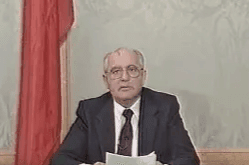
  • December 25, 1991: Gorbachev resigns on live TV. At this point the facts on the ground were accomplished: only the final formal act remained. On the evening of December 25, 1991, at 7:00 p.m. Moscow time, Mikhail Gorbachev appeared on central television to announce his resignation as President of the USSR. In his solemn address, broadcast worldwide, Gorbachev declared: “In consideration of the situation that has developed with the formation of the CIS, I hereby cease my activities as President of the USSR.”. He lauded the successes of the reforms and democratization since 1985 but expressed regret at the dismemberment of the Soviet state, stating he could not endorse that choice imposed by events. It was a historic and emotional moment: after nearly 70 years, for the first time there was no Soviet President and no Union government. That same evening, at 6:35 p.m., the red flag of the Soviet Union was lowered from the Kremlin and in its place the tricolor flag of the Russian Federation was raised. The USSR, born from the 1917 Revolution, effectively no longer existed.
  • December 26, 1991: Official dissolution of the USSR. The next day, December 26, the final legal act took place: the Soviet of the Republics, the upper chamber of the Soviet parliament, passed a resolution formally dissolving the Soviet Union and abolishing all its institutions. At the same time, it recognized the independence of all the former republics. The largest country in the world by area had peacefully fragmented into a constellation of independent states. Fortunately – as Gorbachev would later emphasize – this happened without a full-scale civil war, a very real danger given the nuclear arsenal and ethnic tensions involved. The Soviet armed forces were placed under joint CIS command (temporarily) and then gradually under the control of the individual new states. Within days, all the former Soviet republics had achieved independence and the international community rushed to recognize them diplomatically.
  • 9 November 1989 – Fall of the Berlin Wall

    The barrier dividing East and West Berlin is torn down. It becomes the symbol of the collapse of communist regimes in Eastern Europe and foreshadows the end of Soviet influence in the region.

  • 11 March 1990 – Lithuania declares independence

    Lithuania, followed shortly by Estonia and Latvia, proclaims the restoration of its independence from the USSR. It is the first Soviet republic to do so, openly defying Moscow.

  • 17 March 1991 – Referendum to save the USSR

    A referendum is held in 9 republics: 76.4% of voters approve the proposal to maintain a “Union of Sovereign States.” The Baltic republics, Georgia, Armenia, and Moldova boycott the vote.

  • 12 June 1991 – Yeltsin elected President of Russia

    Boris Yeltsin wins the first presidential elections of the Russian Republic with 57% of the vote, defeating Gorbachev’s favored candidate. Russia thus asserts its political autonomy within the USSR.

  • 19–21 August 1991 – Failed coup in Moscow

    A group of hardline communist officials attempts a putsch to stop Gorbachev’s reforms. The population and Yeltsin resist: after three days the coup fails. The Communist Party is banned in Russia.

  • 8 December 1991 – Belavezha Accords

    Russia, Ukraine, and Belarus sign an accord that declares the Soviet Union dissolved and establishes the Commonwealth of Independent States (CIS). The other former republics are invited to join.

  • 25 December 1991 – Gorbachev resigns

    In a televised address to the nation, Mikhail Gorbachev announces his resignation as President of the USSR and the end of the Union. The red flag over the Kremlin is lowered and replaced by the Russian tricolor.

  • 26 December 1991 – Legal end of the USSR

    The USSR’s Supreme Soviet officially declares the Soviet Union dissolved. The 15 republics are now fully independent states, marking the formal conclusion of the USSR’s history.

  • 21 December 1991 – Alma-Ata Protocol (chronologically earlier than 25/12)

    (Occurs just before 25/12) Eight other ex-republics (including Kazakhstan, Uzbekistan, Armenia) join the CIS by signing the Alma-Ata Protocols. The CIS thus initially has 11 members, excluding the Baltic states and Georgia.

  • 1992–1993 – Birth of the CIS and early frictions

    The CIS members approve a Charter (January 1993) but Ukraine and Turkmenistan refuse to ratify it, opting for an associate status. This weakens the Community’s cohesion from the start.

  • August 2009 – Georgia leaves the CIS

    Following its conflict with Russia (the 2008 South Ossetia war), Georgia formally withdraws from the CIS. It is the first country to leave the organization, underscoring its fragility.

  • May 2018 – Ukraine exits the CIS

    Years after limiting its participation, Ukraine (the second most populous ex-USSR republic) ends all involvement in the CIS. By now the Commonwealth, without Ukraine and Georgia, has lost much of its original significance.

The Commonwealth of Independent States (CIS): birth and decline

Objectives and early period. The Commonwealth of Independent States (CIS) was born, as we have seen, immediately after the dissolution of the USSR, with the expectation of maintaining a cooperative bond among the former Soviet republics. Initially, 11 states joined (all the former republics except the three Baltic states and Georgia, which would enter in 1993). The CIS was conceived as an international organization to manage the orderly transition of the post-Soviet space: to coordinate economic policies, oversee the division of the Soviet military and nuclear arsenal, facilitate trade relations, and possibly develop common policies in certain areas. Its administrative headquarters was set in Minsk (Belarus), and Russian was adopted as the organization’s official working language. In those early months, one urgent priority was ensuring control over the Soviet nuclear arsenal: warheads stationed in Ukraine, Belarus, and Kazakhstan were swiftly brought under unified oversight (and later transferred to Russia in the following years). On the economic front, efforts were made to prevent a complete collapse of interdependence: a de facto free-trade area was maintained, and members committed to cooperate so as not to abruptly sever the industrial supply chains developed in the Soviet era.

From the start, however, significant internal divisions emerged. Ukraine, for example, sought to limit its participation: although it took part in founding the CIS, it never ratified the CIS Charter adopted in January 1993, in part because it did not accept Russia being recognized as the sole successor state of the USSR (for instance, maintaining the USSR’s seat at the UN). Similarly, Turkmenistan did not ratify the charter, opting for a more loose “associate member” status. This meant that from the outset some key republics viewed the CIS not as a binding supranational entity, but rather as a voluntary forum.

The limits and failure of the CIS. Despite initial hopes, the CIS never developed into a deep political or economic union. By the mid-1990s it was clear that the organization was struggling to achieve its main objectives. According to many observers, even the CIS’s limited goals proved difficult to realize: the Commonwealth showed itself incapable of stanching the centrifugal forces and the conflicts among the former allies. For example, within a few years of independence, local conflicts erupted (the war in Nagorno-Karabakh between Armenia and Azerbaijan; the civil war in Tajikistan; the secessionist conflict in Transnistria in Moldova; the separatist wars in Georgia) without the CIS being able to do much to resolve them. Moreover, no common foreign or defense policy ever materialized: each country pursued its own national interests. Russia formed separate military alliances (like the Collective Security Treaty Organization, from which some countries later withdrew) and bilateral agreements, but the CIS as such remained politically weak.

It should be noted that some aspects of the CIS were functional: more than a purely symbolic entity, the Commonwealth did serve as a platform for dialogue and technical cooperation. On the economic front, for example, the major tangible achievement was the creation of a free trade area among many of the member countries, formalized through agreements implemented by 2005. The CIS also facilitated cooperation in areas like transportation, telecommunications, immigration policy, and the fight against organized crime. Remarkably, even at the 1992 Barcelona Olympics, athletes from the former Soviet republics competed together under the CIS flag, honoring commitments made by the USSR before its dissolution. These positive elements, however, could not reverse the broader trend toward fragmentation.

During the 2000s, the CIS further waned in relevance. Georgia withdrew entirely from the organization in 2009, following its conflict with Russia, viewing CIS membership as incompatible with its pro-NATO orientation. Ukraine, which had always been a member in only a nominal sense, decided in 2018 to formally end its participation in the Commonwealth amid the ongoing crisis with Russia. Today (2025), the CIS mainly includes Russia and a number of Eurasian states (such as Kazakhstan, Belarus, Uzbekistan, and others), and serves an almost purely consultative role. In practice, the CIS never succeeded in achieving the political integration or strategic cohesion that some had envisioned in 1991, remaining a rather weak organization. Many of the former republics charted their own paths: the three Baltic states joined the European Union and NATO; Georgia and Ukraine pursued closer ties with the West; other countries engaged in alternative structures led by Russia (such as the Eurasian Economic Union, established in 2015).

In conclusion, Gorbachev’s announcement of December 25, 1991 was the culmination of a peaceful yet turbulent process of dissolution. That speech – which we present in full below, in Russian with an English translation – remains a moving testament to the end of an era. Gorbachev spoke of achievements and mistakes, of hope for democracy and anguish over the country’s breakup, and he wished the peoples of the former Soviet Union a prosperous and free future. Although the Commonwealth of Independent States that arose from the USSR’s ashes never became the integrated successor that some hoped, the fact that the Soviet colossus imploded without immediately descending into widespread chaos is an outcome many attribute to the measured leadership of figures like Gorbachev.

Below, we present the complete transcript of Mikhail Gorbachev’s December 25, 1991 address, in the original Russian with an English translation, as an invaluable primary source document.


The Speech of Mikhail Gorbachev – December 25, 1991 (original text and translation)

(Source: «Российская газета», December 26, 1991; Wikisource archive. English translation by the author, based on the official AP translation.)[rbth.com]

Original text (Russian):

«Дорогие соотечественники! Сограждане!

В силу сложившейся ситуации с образованием Содружества Независимых Государств я прекращаю свою деятельность на посту Президента СССР. Принимаю это решение по принципиальным соображениям.

Я твердо выступал за самостоятельность, независимость народов, за суверенитет республик. Но одновременно и за сохранение союзного государства, целостности страны.

События пошли по другому пути. Возобладала линия на расчленение страны и разъединение государства, с чем я не могу согласиться. И после Алма-Атинской встречи и принятых там решений моя позиция на этот счет не изменилась.

Кроме того, убежден, что решения подобного масштаба должны были бы приниматься на основе народного волеизъявления.

Тем не менее я буду делать все, что в моих возможностях, чтобы соглашения, которые там подписаны, привели к реальному согласию в обществе, облегчили бы выход из кризиса и процесс реформ.

Выступая перед вами последний раз в качестве Президента СССР, считаю нужным высказать свою оценку пройденного с 1985 года пути. Тем более что на этот счет немало противоречивых, поверхностных и необъективных суждений.

Судьба так распорядилась, что, когда я оказался во главе государства, уже было ясно, что со страной неладно. Всего много: земли, нефти и газа, других природных богатств, да и умом и талантами Бог не обидел, а живем куда хуже, чем в развитых странах, все больше отстаем от них.

Причина была уже видна – общество задыхалось в тисках командно-бюрократической системы. Обреченное обслуживать идеологию и нести страшное бремя гонки вооружений, оно – на пределе возможного.

Все попытки частичных реформ – а их было немало – терпели неудачу одна за другой. Страна теряла перспективу. Так дальше жить было нельзя. Надо было кардинально все менять.

Вот почему я ни разу не пожалел, что не воспользовался должностью Генерального секретаря только для того, чтобы „поцарствовать“ несколько лет. Считал бы это безответственным и аморальным.

Я понимал, что начинать реформы такого масштаба и в таком обществе, как наше, – труднейшее и даже рискованное дело. Но и сегодня я убежден в исторической правоте демократических реформ, которые начаты весной 1985 года.

Процесс обновления страны и коренных перемен в мировом сообществе оказался куда более сложным, чем можно было предположить. Однако то, что сделано, должно быть оценено по достоинству:

– Общество получило свободу, раскрепостилось политически и духовно. И это – самое главное завоевание, которое мы до конца еще не осознали, а потому, что еще не научились пользоваться свободой. Тем не менее, проделана работа исторической значимости:

– Ликвидирована тоталитарная система, лишившая страну возможности давно стать благополучной и процветающей.

– Совершен прорыв на пути демократических преобразований. Реальными стали свободные выборы, свобода печати, религиозные свободы, представительные органы власти, многопартийность. Права человека признаны как высший принцип.

– Началось движение к многоукладной экономике, утверждается равноправие всех форм собственности. В рамках земельной реформы стало возрождаться крестьянство, появилось фермерство, миллионы гектаров земли отдаются сельским жителям, горожанам. Узаконена экономическая свобода производителя, и начали набирать силу предпринимательство, акционирование, приватизация.

– Поворачивая экономику к рынку, важно помнить – делается это ради человека. В это трудное время все должно быть сделано для его социальной защиты, особенно это касается стариков и детей.

Мы живем в новом мире. – Покончено с „холодной войной“, остановлена гонка вооружений и безумная милитаризация страны, изуродовавшая нашу экономику, общественное сознание и мораль. Снята угроза мировой войны.

Еще раз хочу подчеркнуть, что в переходный период с моей стороны было сделано все для сохранения надежного контроля над ядерным оружием.

– Мы открылись миру, отказались от вмешательства в чужие дела, от использования войск за пределами страны. И нам ответили доверием, солидарностью и уважением.

– Мы стали одним из главных оплотов по переустройству современной цивилизации на мирных, демократических началах.

– Народы, нации получили реальную свободу выбора пути своего самоопределения. Поиски демократического реформирования многонационального государства вывели нас к порогу заключения нового Союзного договора.

Все эти изменения потребовали огромного напряжения, проходили в острой борьбе, при нарастающем сопротивлении сил старого, отжившего, реакционного – и прежних партийно-государственных структур, и хозяйственного аппарата, да и наших привычек, идеологических предрассудков, уравнительной и иждивенческой психологии. Они наталкивались на нашу нетерпимость, низкий уровень политической культуры, боязнь перемен. Вот почему мы потеряли много времени. Старая система рухнула до того, как успела заработать новая. И кризис общества еще больше обострился.

Я знаю о недовольстве нынешней тяжелой ситуацией, об острой критике властей на всех уровнях и лично моей деятельности. Но еще раз хотел бы подчеркнуть: кардинальные перемены в такой огромной стране, да еще с таким наследием, не могут пройти безболезненно, без трудностей и потрясений.

Августовский путч довел общий кризис до предельной черты. Самое губительное в этом кризисе – распад государственности. И сегодня меня тревожит потеря нашими людьми гражданства великой страны – последствия могут оказаться очень тяжелыми для всех.

Жизненно важным мне представляется сохранить демократические завоевания последних лет. Они выстраданы всей нашей историей, нашим трагическим опытом. От них нельзя отказываться ни при каких обстоятельствах и ни под каким предлогом. В противном случае все надежды на лучшее будут похоронены.

Обо всем этом я говорю честно и прямо. Это мой моральный долг.

Сегодня хочу выразить признательность всем гражданам, которые поддержали политику обновления страны, включились в осуществление демократических реформ.

Я благодарен государственным, политическим и общественным деятелям, миллионам людей за рубежом – тем, кто понял наши замыслы, поддержал их, пошел нам навстречу, на искреннее сотрудничество с нами.

Я покидаю свой пост с тревогой. Но и с надеждой, с верой в вас, в вашу мудрость и силу духа. Мы – наследники великой цивилизации, и сейчас от всех и каждого зависит, чтобы она возродилась к новой современной и достойной жизни.

Хочу от всей души поблагодарить тех, кто в эти годы вместе со мной стоял за правое и доброе дело. Наверняка каких-то ошибок можно было бы избежать, многое сделать лучше. Но я уверен, что раньше или позже наши общие усилия дадут плоды, наши народы будут жить в процветающем и демократическом обществе.

Желаю всем вам всего самого доброго».

English translation:

“Dear compatriots, fellow citizens!

In light of the situation which has developed with the formation of the Commonwealth of Independent States, I am ceasing my activity in the post of President of the USSR. I take this decision for reasons of principle.

I have firmly stood for the independence and self-rule of peoples, for the sovereignty of the republics. But at the same time, I have fought to preserve the union state and the country’s unity.

Events have taken a different course. The policy of dismembering the country and disuniting the state has prevailed – something I cannot agree with. Even after the Alma-Ata meeting and the decisions taken there, my stance on this issue has not changed.

Moreover, I am convinced that decisions of such magnitude should have been made on the basis of a popular expression of will.

Nevertheless, I will do everything in my power to ensure that the agreements signed there lead to genuine accord in society and facilitate the way out of the crisis and the continuation of reforms.

Addressing you for the last time as President of the USSR, I find it necessary to share my assessment of the path we have traveled since 1985 – especially since there are many contradictory, superficial, and unfair judgments on this subject.

Fate willed that when I found myself at the helm of the state, it was already clear that something was wrong in the country. We had plenty of everything – land, oil and gas, other natural riches, and God endowed us with intelligence and talent – yet we lived much worse than the developed countries, falling further and further behind them.

The reason was already evident: society was suffocating under the grip of the command-bureaucratic system. Condemned to serve ideology and carry the terrible burden of the arms race, it had reached the limits of its capacity.

All attempts at partial reform – and there were many – failed one after another. The country was losing perspective. We could not go on living like that. Everything had to be changed radically.

That is why I have never for a moment regretted that I did not use my position as General Secretary merely to “reign” for a few years. I would have considered that irresponsible and immoral.

I understood that initiating reforms of such scale in a society like ours was an extremely difficult and even risky undertaking. But even today I am convinced of the historical rightness of the democratic reforms that were begun in the spring of 1985.

The process of renewing the country and of profound changes in the world community turned out to be far more complex than could be anticipated. However, what has been accomplished should be given its due:

– Society has obtained freedom; it has been liberated politically and spiritually. This is the most important achievement, one we have not yet fully grasped because we have not yet learned how to use freedom. Nonetheless, work of historic significance has been done:

– The totalitarian system, which had long deprived the country of the opportunity to become prosperous and affluent, has been eliminated.

– A breakthrough has been achieved on the road to democratic transformation. Free elections, freedom of the press, religious freedoms, representative bodies of power, multi-partisanship – all have become realities. Human rights have been recognized as the highest principle.

– Movement toward a diversified economy has begun, and the equality of all forms of ownership is being affirmed. As part of land reform, the peasantry has begun to revive; private farming has appeared; millions of hectares of land are being given to rural and urban people. Economic freedom for the producer has been legalized, and entrepreneurship, joint-stock companies, and privatization have gained momentum.

– In turning the economy toward the market, it is important to remember that this is being done for the sake of the people. In this difficult time, everything must be done to protect the social well-being of the people – especially the elderly and children.

We are living in a new world. The “Cold War” is over; the arms race has been stopped, as has the insane militarization of the country that had distorted our economy, public consciousness, and morals. The threat of world war has been lifted.

I want to emphasize again that, during this transition period, everything necessary was done on my part to maintain reliable control over nuclear weapons.

– We have opened up to the world, renounced interference in others’ affairs, and renounced the use of troops outside our country. And in response, we have been met with trust, solidarity, and respect.

– We have become one of the main pillars in the restructuring of modern civilization on peaceful, democratic foundations.

– Peoples and nations have obtained a real freedom to choose the path of their self-determination. The search for a democratic reform of our multi-national state had brought us to the threshold of signing a new Union Treaty.

All these changes demanded immense exertion; they took place in sharp struggle, amid growing resistance from the old, obsolete, reactionary forces – from the former party-state structures and the economic apparatus, and also from our own habits, ideological prejudices, and leveling, dependent mentality. They encountered our intolerance, our low level of political culture, our fear of change. That is why we lost a lot of time. The old system collapsed before the new one had time to begin functioning, and the crisis in society grew even more acute.

I am aware of the dissatisfaction with the current grave situation, the sharp criticism of the authorities at all levels and of my own actions. But once again I want to stress: radical changes in such a vast country, especially given its legacy, cannot occur painlessly, without difficulties and upheavals.

The August coup brought the general crisis to its ultimate limit. The most devastating aspect of this crisis is the disintegration of statehood. And today I am troubled by the fact that our people have lost the citizenship of a great country – the consequences could be very grave for everyone.

I consider it vitally important to preserve the democratic achievements of recent years. They have been paid for through all our history and our tragic experience. We must not abandon them under any circumstances or pretexts; otherwise all our hopes for a better future will be buried.

I speak of all this honestly and directly. It is my moral duty.

Today, I would like to express my gratitude to all the citizens who supported the policy of renewing the country, who got involved in implementing the democratic reforms.

I am grateful to the statesmen, political and public figures, and to millions of people abroad – to all those who understood our aspirations, supported them, and came to meet us in sincere cooperation.

I leave my post with concern, but also with hope, with faith in you, in your wisdom and strength of spirit. We are the heirs of a great civilization, and now the revival of that civilization to a new, modern and dignified life depends on each and every one of us.

I want to thank from the bottom of my heart those who, over these years, stood with me for what is right and good. Certainly, some mistakes could have been avoided and many things could have been done better. But I am convinced that, sooner or later, our common efforts will yield fruit, and our peoples will live in a prosperous and democratic society.

I wish all the best to all of you.” [rbth.com]


Conclusion. The end of the Soviet Union, formalized by Gorbachev’s announcement on December 25, 1991, remains one of the pivotal events of the 20th century. In a few months, a chapter that had lasted seventy years was closed, and another opened, filled with uncertainties. For enthusiasts of Russian and Soviet horology, that moment was also a dividing line between two eras in manufacturing: the watch factories of the former USSR suddenly had to face a new reality on their own – some shut down or transformed, while others found ways to survive and continue their proud tradition (for instance, the First Moscow Watch Factory – Poljot – was privatized in the 1990s; the Raketa factory in Saint Petersburg sought out new markets, etc.). On the broader historical level, the dissolution of the USSR occurred in a relatively orderly and peaceful manner – a result that was by no means guaranteed, made possible by both the sense of responsibility of leaders like Gorbachev (who refused to use force to hold together an empire that was falling apart) and by the willingness of the republics to cooperate, at least to some extent, within the CIS to avoid total chaos. Although the CIS did not achieve the integration that had been hoped for, that exit of the Soviet Union stands as an example of a tectonic transition managed without sliding into civil war among the former compatriots.

Thirty years later, history books offer varying judgments on the protagonists of those days – Gorbachev revered by some as the architect of freedom, criticized by others as the one who “lost the Empire” – but the importance of understanding the events of 1989–1991 is beyond dispute. We hope this article, rich in documented details and primary sources, provides a useful and authoritative resource for those who wish to delve into that crucial period, which truly was a turning point for Russia, Europe, and the entire world. [en.wikipedia.org]

History of Indian Watchmaking

Orologio vintage con sfondo indiano.

From HMT to Titan — The Evolution of India’s Watch Industry

India boasts a rich tradition in watchmaking, spanning from timepieces introduced during the colonial era to the rise of domestic manufacturing in the late 20th century. The industrial age, in particular, saw the emergence of iconic local brands—most notably HMT (Hindustan Machine Tools)—that became symbols of national pride. This report explores the full historical arc of Indian watchmaking, with a focus on local production (HMT and other Indian brands), key international collaborations, and the more recent phenomenon of counterfeit and assembled watches sold online. Sources in both English and Indian languages have been consulted to provide a comprehensive and authoritative perspective.

⏳ From Maharajas to Early Watch Imports

Even before industrialization, India had a vibrant culture of imported timepieces. As early as the 16th and 17th centuries, mechanical watches arrived via Portuguese and French traders. However, it was in the 19th century, under British colonial rule, that watches became widespread among Indian royalty and colonial officials. British pocket watches dominated the market during the mid-1800s, often featuring elaborate complications and decorative cases.

By the late 19th century, Swiss watches began to replace British ones due to their affordability and ornate designs. Swiss brands like Ferrero and Barbezat Bole gained popularity among Indian nobility, including the Maharajas of Patiala, Mysore, and Hyderabad. In fact, the demand from India and China was so significant that it played a key role in sustaining the Swiss watch industry during that era.

In 1931, Jaeger-LeCoultre even created the iconic Reverso watch specifically for British officers in India, designed to withstand the rigors of polo matches.

  • 1953: HMT is Founded

    Established by the Government of India in Bangalore to produce machine tools and industrial equipment.

  • 1961: Partnership with Citizen

    HMT partners with Japan’s Citizen Watch Co. to launch India’s first domestic watch manufacturing unit in Bangalore.

  • 1963: First HMT Watch Released

    The first HMT watch is presented to Prime Minister Jawaharlal Nehru, who calls it “The Timekeeper of the Nation.”

The first HMT watches were based on Citizen’s reliable 17-jewel mechanical movements. The initial models—HMT Citizen (for men) and HMT Sujata (for women)—were released in 1963. These watches were simple, durable, and affordable, quickly becoming a staple across Indian households.

🇮🇳 “The Timekeeper of the Nation”

When Nehru received the first HMT watch, he famously referred to it as “India’s own watch,” cementing its place in national identity and pride.

🔧 Vertical Integration

By the mid-1980s, HMT was producing nearly 100% of its watch components in-house—from steel cases to tiny springs—achieving full manufacturing autonomy.

HMT’s watches were not just timepieces—they were cultural icons. Models like the Janata, Pilot, Kanchan, and Sona became household names. The Janata, meaning “the people,” was a minimalist hand-wound watch that symbolized simplicity and reliability. The Pilot, originally designed for the Indian Air Force, featured a hacking seconds function for precise time synchronization.

HMT’s watches were often gifted during weddings, retirements, and job promotions. Wearing one was a mark of pride and status, especially in the 1960s and 1970s. The brand’s slogan, “Desh ki Dhadkan” (The Heartbeat of the Nation), reflected its deep emotional connection with the Indian public.

The Golden Age: HMT in the 1960s–1980s — “The Timekeeper of the Nation”

Between the 1960s and 1980s, HMT became synonymous with watches in India. Its simplicity, durability, and affordability made it a household name across cities and villages alike. Receiving an HMT watch as a gift—for a first salary, a promotion, or a wedding—was a rite of passage and a symbol of pride.

⌚ Iconic Models

HMT Janata (meaning “the people”) was a minimalist hand-wound watch known for its reliability. HMT Pilot, originally designed for the Indian Air Force, featured a hacking seconds function for precise time synchronization.

🎁 A Cultural Symbol

HMT watches were gifted at weddings, retirements, and job promotions. Wearing one was a mark of status and national pride.

HMT’s advertising campaigns emphasized its role in Indian life with slogans like “Desh ki Dhadkan” (The Heartbeat of the Nation). The company’s service network extended across the country, and its catalog included everything from wristwatches to pocket watches—even a rare gold-plated “G-10” model produced at the Ranibagh unit.

By the mid-1980s, HMT had achieved full vertical integration, manufacturing nearly all components in-house. This level of self-sufficiency was a major milestone in India’s industrial journey.

However, despite its dominance, HMT couldn’t meet the growing demand. By the late 1970s and early 1980s, it was estimated that up to 80% of watches sold in India were smuggled imports—mainly Swiss and Japanese quartz models. This created a paradox: while HMT was the national watchmaker, the majority of watches on Indian wrists were unofficial imports.

New Players in the 1980s: Allwyn and Titan Disrupt the Market

By the early 1980s, the Indian watch landscape began to shift. Two major developments challenged HMT’s dominance:

  1. The global quartz revolution, which introduced more accurate and affordable battery-powered watches.
  2. The entry of new domestic players—both public and private—who brought fresh design, marketing, and production strategies.

🏭 Hyderabad Allwyn – A Public Sector Challenger (1981)

In 1981, the state-run company Hyderabad Allwyn, already known for manufacturing buses and refrigerators, entered the watch industry through a joint venture with Japan’s Seiko. This collaboration brought Seiko’s precision technology into Indian manufacturing.

🤝 Allwyn + Seiko

Allwyn began producing both mechanical and quartz watches in Hyderabad, blending Japanese engineering with Indian design sensibilities.

🎬 Pop Culture Presence

Allwyn watches appeared in Indian films like Shubh Kaamna (1983) and Lucky Bhaskar (2024), becoming symbols of sincerity and middle-class pride.

Allwyn never reached HMT’s scale but carved out a niche, especially in southern India. Its watches were known for their elegance and featured subtle design elements like the Charminar logo on the dial—a nod to Hyderabad’s heritage.

🕰️ Titan – The Private Sector Revolution (1984)

The real disruption came in 1984 with the launch of Titan, a joint venture between the Tata Group and the Tamil Nadu Industrial Development Corporation (TIDCO). Titan was India’s first major private watch manufacturer and brought a radically different approach.

  • 1984: Titan is Born

    Founded as a Tata-TIDCO joint venture, Titan aimed to create a modern, design-led Indian watch brand.

  • 100% Quartz Strategy

    Unlike HMT and Allwyn, Titan focused entirely on quartz analog watches, avoiding mechanical movements altogether.

  • Design & Branding

    Titan invested heavily in product design and marketing, launching sleek, fashionable watches with memorable ad campaigns—like the iconic “Titan Tune” based on Mozart’s Symphony No. 25.

Titan also pioneered segmentation by launching sub-brands like Sonata (affordable watches) and Fastrack (youth-oriented fashion watches). It was the first Indian brand to create a dedicated line for women’s watches, tapping into an underserved market.

🌍 Global Reach

Today, Titan exports to over 30 countries and is one of the world’s top five integrated watch manufacturers.

🧠 Design-Driven Strategy

Titan’s early success was driven by its focus on aesthetics, affordability, and lifestyle branding—something HMT and Allwyn struggled to match.

By the early 1990s, Titan had overtaken HMT in market share. As one former Titan executive put it:

“HMT was the timekeeper of the nation. Titan became the wrist stylist.”

The Decline of India’s Public Watch Industry (1990s–2000s)

The mid-1990s marked the end of an era. India’s two historic public-sector watchmakers—HMT and Allwyn—entered a period of irreversible decline, while Titan and other private players dominated the market.

📉 Allwyn’s Collapse (1995)

Hyderabad Allwyn began to suffer major financial losses in the early 1990s. By 1993, it was declared a “sick industry” under India’s Board for Industrial and Financial Reconstruction (BIFR). Despite attempts to restructure, the company couldn’t recover.

  • 1993: Declared Financially Unviable

    Allwyn’s accumulated losses exceeded ₹180 crore. The company was referred to BIFR for rehabilitation.

  • 1995: Allwyn Watches Shuts Down

    The watch division was officially closed. The brand faded from the market, remembered only by collectors and enthusiasts.

Allwyn’s closure was attributed to poor management, inability to adapt to market trends, and competition from Titan. Its legacy, however, lives on in vintage watch circles, especially for its elegant designs and cultural significance.

🕰️ HMT’s Slow Decline (1990s–2016)

Unlike Allwyn, HMT survived longer but faced a slow and painful decline. Several factors contributed to its downfall:

⚙️ Resistance to Change

HMT continued focusing on mechanical watches even as the market shifted to quartz. Its quartz offerings were limited and lacked innovation.

📉 Bureaucratic Inertia

As a government-run enterprise, HMT was slow to make decisions. Product development and marketing lagged behind private competitors.

Titan, with its sleek designs and aggressive marketing, captured the aspirations of a new, urban middle class. HMT, by contrast, relied on its legacy and failed to modernize its image or product line.

By the 2000s, HMT’s losses mounted. Several factories were shut down, and thousands of employees took voluntary retirement. Finally, in 2016, the Indian government officially closed HMT Watches and its subsidiary HMT Chinar.

  • 2000s: Factory Closures

    HMT began shutting down its watch manufacturing units due to mounting losses and declining demand.

  • 2016: End of an Era

    The government officially closed HMT Watches. A brand once synonymous with Indian timekeeping became a memory.

Meanwhile, Titan continued to thrive. It expanded into jewelry (Tanishq), eyewear, and even smartwatches. In 2011, Titan acquired the historic Swiss brand Favre-Leuba, symbolically reversing the colonial-era dynamic of importing Swiss watches into India.

Legacy, Collecting, and the Rise of “Mumbai Specials” (2010s–2020s)

Although India’s public-sector watchmaking industry has largely faded, its legacy lives on. Titan continues to thrive as a global brand, while a new generation of microbrands and collectors is rediscovering the charm of vintage Indian watches.

🧭 The Collector’s Renaissance

Even after its closure, HMT remains beloved by collectors. Vintage models like the Janata, Pilot, and Kanchan are sought after for their durability, simplicity, and cultural significance.

🕰️ Nostalgia on the Wrist

For many Indians, an HMT watch is more than a timepiece—it’s a memory of a father, a grandfather, or a milestone moment in life.

🔁 Revival Attempts

In 2019, HMT quietly resumed limited production using leftover parts and imported movements. These watches are sold online through the official HMT website.

Meanwhile, new Indian microbrands like Bangalore Watch Company, Jaipur Watch Company, and Argos are blending heritage with modern design, offering mechanical and automatic watches that appeal to a new generation of enthusiasts.

⚠️ The “Mumbai Special” Phenomenon

With the rise in demand for vintage Indian watches, a parallel market has emerged—one that’s less about heritage and more about profit. Known in collector circles as “Mumbai Specials,” these are watches assembled from mismatched or aftermarket parts and sold online, especially on platforms like eBay.

  • What is a “Mumbai Special”?

    Typically, these are watches with vintage cases and movements, but with newly printed dials—often falsely branded as HMT, Seiko, or Citizen.

  • Why Are They Problematic?

    They mislead buyers into thinking they’re purchasing authentic vintage pieces. In reality, they’re often “Frankenwatches” with no historical provenance.

  • How to Spot Them?

    Collectors warn of inconsistencies in dial printing, incorrect fonts, and suspiciously low prices. Many watches are sold from India with vague or generic listings.

While some buyers knowingly purchase these watches for their aesthetic or novelty value, others are misled. The prevalence of these fakes has sparked debates in online forums and watch communities, with many urging platforms like eBay to crack down on misleading listings.


⏳ Conclusion: A Legacy Worth Preserving

India’s watchmaking journey—from colonial imports to the rise of HMT and Titan, and the current wave of microbrands and collectors—is a story of innovation, pride, and resilience. While the golden age of public-sector watchmaking may have passed, its legacy endures.

🇮🇳 “When even time felt Indian”

This phrase captures the emotional connection Indians had with HMT watches—symbols of a self-reliant, modernizing nation.

🔮 The Future

With renewed interest in heritage and craftsmanship, Indian watchmaking may yet tick again—this time with a blend of nostalgia and innovation.

Why Collect Soviet Watches: 5 Reasons to Get Enthusiastic

Why Collect Soviet Watches: 5 Reasons to Get Enthusiastic

Vintage Soviet watches have become an unlikely favourite among watch enthusiasts around the world. These timepieces don’t just tell the time – they tell stories. Whether you’re a seasoned collector or a casual admirer, Soviet-era watches offer a unique blend of history, engineering, design, and value. Below, we outline five compelling reasons collectors worldwide are getting excited about Soviet watches.

1. Fascinating History in Every Timepiece

Each Soviet watch carries a piece of USSR history. Collecting them is like holding a miniature time capsule from the Cold War era. The Soviet Union’s watch industry was intertwined with its national history – from wartime production drives to space-race triumphs. For example, Yuri Gagarin, the first man in space, wore a Soviet Sturmanskie watch on his 1961 mission. Owning a similar model gives you a tangible link to that milestone. Many Soviet watches were issued to military personnel, cosmonauts, or made to commemorate events (like the 1980 Moscow Olympics or the launch of Sputnik), adding a rich backstory to each piece. This historical aura is a huge draw for collectors: every dial and inscription can spark a conversation about world history. In short, Soviet watches offer more than just vintage style – they offer a direct connection to the stories of the 20th century.

2. Rugged Engineering & Reliable Mechanics

Soviet watches are renowned for their robust engineering and no-nonsense reliability. Built under a utilitarian ethos, they were designed to work in harsh conditions – from the Siberian cold to the depths of the ocean – and keep on ticking. The movements (mechanisms) inside were often simple but built like a tank, prioritising function over fancy finish. A great example is the Vostok Amphibia, a diver’s watch created in the late 1960s for the Soviet Navy. It features an ingenious case design with a compressible gasket that actually seals tighter under pressure, making it reliably water-resistant to 200 metres. These kinds of practical innovations meant Soviet timepieces could take a beating and still perform. Likewise, the Poljot 3133 chronographs – originally made for Soviet Air Force pilots – earned respect for their dependability. Many collectors are pleasantly surprised to find that a 40- or 50-year-old Soviet watch, with a quick wind, springs back to life and keeps good time. This durability and ease of maintenance make them perfect for those who actually like to wear their vintage watches daily, not just display them.

3. Unique Designs Steeped in Nostalgia

If you enjoy watches with character, Soviet designs will not disappoint. These watches have a distinct, sometimes quirky aesthetic that sets them apart from Swiss or Western counterparts. Dials often sport Cyrillic script, Red Stars, or space race motifs, immediately evoking a bygone era. The designs range from starkly utilitarian to boldly commemorative. For instance, the Raketa “Big Zero” is a famous model with a minimalist dial featuring a prominent 0 at the 12 o’clock position – a quirky and iconic design choice that’s deeply nostalgic for the 1980s Soviet style. There are also eye-catching commemorative pieces: from watches celebrating Soviet space achievements (imagine a little Sputnik satellite orbiting on the dial) to those honouring military units or partisan heroes. Even the dressier Soviet watches have a retro charm – clean lines, vintage fonts, and often slightly aged patinas that add character. Wearing one is a great conversation starter; these designs are unique enough that fellow enthusiasts will instantly recognise them. The nostalgia factor is high, yet the appeal isn’t just limited to those who remember the USSR – younger collectors around the globe also appreciate the retro-cool look and distinctive flair of Soviet-era timepieces.

4. Affordability – Vintage Gems on a Budget

Another big reason to get into Soviet watch collecting is that it’s easy on the wallet. Many vintage Soviet models are surprisingly budget-friendly, especially compared to equivalent Swiss or American vintage watches. This affordability means you can start a diverse collection without breaking the bank. For the price of a single mid-range Swiss vintage piece, you might snag several interesting Soviet watches. Common models like a classic Vostok Komandirskie (the rugged field watch originally made for the Red Army) or a simple Raketa or Poljot dress watch can often be found at very reasonable prices – sometimes well under £100 for a well-running example. Even more advanced pieces, like a Poljot chronograph or a specialized dive watch, tend to cost a fraction of what similar Western vintage watches would. This isn’t to say all Soviet watches are cheap – rare models in pristine condition or with historical provenance can fetch higher prices – but generally the value for money is exceptional. Because they were mass-produced and not as widely pursued until recently, there are still plenty of bargains out there. Whether you’re treasure-hunting on eBay, browsing a local flea market, or swapping with other collectors, assembling a meaningful collection of Soviet watches is financially accessible. The affordability factor makes this hobby particularly appealing for new collectors or anyone looking to get a lot of horological bang for their buck.

5. A Growing Global Collector Community

Collecting Soviet watches isn’t a solitary pursuit – there’s a thriving community of enthusiasts worldwide who share this passion. In recent years, interest in Soviet and Russian timepieces has blossomed internationally, connecting people from Moscow to London, New York to New Delhi, all swapping stories and tips. Online forums and social media groups dedicated to Soviet watches are great places to learn and celebrate these pieces. (For example, the Russian watch section of popular watch forums is bustling with collectors eager to help identify finds or recommend reliable models – you’ll even see restoration projects of old Soviet tickers proudly showcased.) There’s also an active marketplace for trading and sourcing parts, so keeping your vintage finds in good nick is made easier by fellow fans. This growing community means that when you dive into Soviet watch collecting, you’re joining a welcoming club. Enthusiasts often help each other authenticate models, find deals, or even trade watches. Around the world, meetups and watch fairs now include Soviet models as a hot topic, reflecting their rising popularity. The camaraderie among collectors can be as rewarding as the watches themselves – after all, half the fun of any niche hobby is sharing it with others. Thanks to this global community, you’ll never be short of inspiration, knowledge, or friendly encouragement as you build your Soviet watch collection.

Conclusion – Embrace the Soviet Charm: Collecting Soviet watches can be a truly rewarding adventure. You get more than just a tick of a clock – you get stories, sturdy craftsmanship, distinctive style, and a circle of fellow enthusiasts to share it all with. Whether it’s the thrill of owning a historical artefact you can wear on your wrist or the simple joy of finding an affordable vintage gem, Soviet timepieces have a special way of winning hearts. So, if you’re looking for something a bit different to spark your horological enthusiasm, consider giving these Cold War classics a chance. Don’t be surprised if a humble Soviet watch becomes one of the most talked-about treasures in your collection – and a daily wearer that continually reminds you why you fell in love with collecting in the first place. Enjoy the hunt, happy collecting, and сломай перо (slomai pero) – break a feather, as the Russians say, good luck!

Beginner’s Guide to Collecting Soviet Watches

Cinque orologi sovietici d’epoca disposti in una scatola di legno, con quadranti colorati (rosso, blu, nero e crema) e sfondo di mappe storiche, evocando il fascino vintage e la storia dell’Unione Sovietica.

Introduction

Vintage Soviet watches are unique collectibles cherished for their Cold War history, utilitarian engineering, and surprising affordability. Unlike luxury Swiss timepieces, Soviet watches were mass-produced by state-owned factories as practical tools first and foremost. In fact, by the 1950s–60s the USSR’s watch output was second only to Switzerland’s, meaning authentic Soviet-era watches remain widely available and budget-friendly for today’s collectors. Each piece offers a tangible link to history – their dials often feature Cyrillic script, military emblems or space-race motifs, making them fascinating artifacts of a tumultuous era in world history. For newcomers, this international guide explains why these “Russian watches” hold such appeal and how to start collecting watches from the Soviet era wisely. [dumarko.com][gearpatrol.com]

Historical Significance

Soviet watches mirror their era – from Red Army Komandirskie military motifs to space-race commemoratives – each timepiece tells a Cold War story.

Robust & Reliable

Built under an ethos of utilitarian durability, USSR watches were engineered to work in harsh conditions. Their simple, in-house mechanical movements are famed for reliability over glamour.

Affordable Vintage

Unlike many vintage Swiss models, most Soviet watches remain very affordable (often well under $300) due to massive production and low western demand.

Recommended Starter Models

Several Soviet watch brands offer great entry points for beginners. Here are three famous brands and models to consider:

  • Raketa – Affordable and Classic:Raketa (Russian for “rocket”) was produced by Russia’s oldest watch factory and became one of the USSR’s best-known brands. Millions of Raketa watches were made for both civilians and the military in the 1970s–80s, so they are common and inexpensive. Raketa is famous for clean, minimalist designs. Notable models include the Raketa “Polar” 24-hour watch made for Arctic expeditions (to distinguish day from night in polar summer) and the “Big Zero”, a classic design with a prominent 0 at the top of the dial. These watches are simple, reliable hand-wound or automatic timepieces – ideal for a first vintage Soviet watch.
  • Vostok – Durable Military Watches:Vostok (meaning “East”) became the official supplier of watches to the Soviet Ministry of Defense in the 1960s, specializing in rugged military and dive watches. The Vostok Komandirskie (“Commander’s”) models, originally made for Soviet officers, feature military crests and tough manual movements. Even more famous is the Vostok Amphibia, an iconic 200m water-resistant dive watch introduced in 1967. The Amphibia’s innovative sealed case design actually improves its water-tightness under pressure, and it remains so popular that modern versions are still sold new for under $100. For collectors, vintage Vostoks offer proven durability – their mechanical movements are easy to service, and parts are plentiful.
  • Poljot – Elegant & Historically Rich:Poljot (Russian for “flight”) was the USSR’s flagship watch brand, known for higher-grade watches including chronographs and pilot timepieces. Poljot originated at the First Moscow Watch Factory and produced both dressy watches and complicated models for the Soviet military. One legendary example is the Poljot Sturmanskie, the pilot’s watch worn by Yuri Gagarin during the world’s first human spaceflight in 1961. Poljot also developed its own chronograph movement (the Caliber 3133, derived from a Swiss Valjoux design) used in watches like the Poljot Okean Navy chronograph. These timepieces are a bit rarer and typically a bit pricier than Raketa or Vostok, but still very accessible. With Poljot, you get a blend of Soviet technical achievement and elegance – an excellent choice for a collector interested in cosmonaut or military history.
russian watch Raketa Copernicus
Raketa Copernicus
soviet watch Vostok Komandirskie Red Star
Vostok Komandirskie Red Star
russian watch Poljot chronograph
Poljot chronograph

Comparison of Key Starter Models

Below is a quick comparison of the three Soviet watch brands discussed, including their key features, typical price ranges, and famous models:

BrandKey FeaturesTypical Price RangeNotable Models
RaketaOldest Russian factory; clean, minimalist designs; some 24-hour dials for polar use~$50–$150 for most vintage piecesBig Zero, Polar 24H (expedition), Copernic (artistic)
VostokMilitary-grade durability; official Soviet Army supplier~$50–$200 for common modelsKomandirskie (officer’s watch), Amphibia (1960s diver)
PoljotHigher-end Soviet brand; chronographs and pilot/space watches~$100–$300 for many; more for rare chronographsSturmanskie (Gagarin’s watch) , Okean (Navy chrono)

Table: A brief comparison of three beginner-friendly Soviet watch brands. Prices are approximate for typical examples in good condition.

Where to Buy Internationally

Thanks to global interest, it’s easy to find Soviet watches for sale worldwide. Here are some reliable avenues for international buyers:

  • Online Marketplaces: Large platforms like eBay and Chrono24 host thousands of Soviet and Russian watches listings at any given time. For example, a search on eBay often yields over 30,000 results for “Soviet watches” ranging from dirt-cheap lots to collector-grade pieces. Similarly, Chrono24 (a major watch marketplace) lists hundreds of Russian/Soviet watches, with filters for brand and price; as of this writing, the UK site shows about 1,281 Soviet-era watch listings (with Poljot chronographs from ~£180, Vostoks from ~£98). These sites offer global reach and allow you to buy from sellers in Russia, Ukraine, the US, and elsewhere. Tip: When using marketplaces, favour listings from sellers with good ratings, clear photos, and detailed descriptions of the watch’s condition and authenticity.
  • Specialist Dealers: A more curated option is to buy from specialist vendors or online shops dedicated to vintage Soviet watches. Some Eastern European sellers (for instance, Ukraine- or Russia-based online stores) refurbish and sell authentic USSR timepieces with warranties. An example is “Soviet Box,” a professional seller that offers fully inspected, original Soviet watches to international buyers. The prices may be a bit higher than eBay, but you get peace of mind that the watch has been vetted (and often serviced) by an expert. Always ensure any dealer is reputable – look for customer reviews or community recommendations.
  • Flea Markets & Antique Fairs: For an hands-on hunting experience, consider local flea markets or antiques shops – particularly in Europe. Collectors report finding Soviet watches in markets across the UK, France, and Spain, where Cold War-era memorabilia often turns up. In cities like London and Paris, vintage watch stalls or militaria dealers may have a few Soviet pieces mixed in. Visiting big flea markets (for example, London’s Portobello Road or Paris’s Marché aux Puces) can be rewarding if you’re willing to search and negotiate. When buying in person, inspect the watch closely and don’t be shy to ask about its origin or to haggle on price, especially if the piece shows its age.
  • Watch Forums and Groups: Online enthusiast communities can also be great places to find watches or get leads on trusted sellers. Forums like the WatchUSeek Russian watches board are frequented by collectors who occasionally sell or trade pieces. There are also Facebook groups and Reddit communities for buying vintage watches safely. These peer-to-peer deals can yield bargains, but exercise caution – verify the seller’s reputation in the group and use secure payment (or meet in person in a safe place if local).

Wherever you choose to buy, remember that international purchases may involve shipping costs and customs duties. Always factor those into your budget. If possible, use platforms that offer buyer protection or escrow services – for instance, Chrono24’s system holds payment in escrow until you confirm the watch arrived as described. With a bit of patience and due diligence, you can confidently source genuine Soviet timepieces from virtually anywhere in the world.

Affordable Price Ranges

One of the biggest attractions of Soviet watch collecting is its affordability. Most vintage Soviet models still sell for a fraction of the cost of comparable Western watches. As a general guide:

  • Entry-Level Prices: The majority of common USSR-era watches trade in the ballpark of $50 to $500 USD on today’s market. On the lower end, simple pieces (like a basic Pobeda or Raketa) can often be found for under $100. Even more feature-rich models rarely exceed a few hundred dollars. In fact, many authentic Soviet watches – including durable automatics or even some minor complications – can be had for under $300. This low cost lowers the barrier to entry for new collectors. For UK buyers, these figures translate roughly to about £40 up to £400. By comparison, a Swiss or Japanese vintage piece of similar age and function might cost several times more.
  • Higher-End and Rare Pieces: Of course, some Soviet watches do fetch higher prices. Historically important or rare models – for example, an original 1960s Sturmanskie issued to a Soviet pilot (identical to Gagarin’s watch), or a mint-condition Raketa Copernic – can command a premium. Collectible chronographs like the Poljot Okean or a military-issued 1970s dive watch can also reach the upper hundreds or into four figures if in exceptional condition. However, “high-end” Soviet watch prices are still modest compared to vintage Rolex or Omega prices. Even the most sought-after USSR pieces often remain under $1,000, unless they have extreme rarity or provenance.
  • What to Expect in Condition: Given their age (most are 40–70 years old), Soviet watches typically show some wear. It’s common to find acrylic crystals with scratches, brass cases with faded plating, or dials with patina. These cosmetic signs of age are expected and often add character. Many affordable specimens will have replacement straps (original bands are rarely intact). Internally, the movements are usually robust but may require a tune-up. If a watch hasn’t been serviced in decades, it likely needs a cleaning and fresh oil to run reliably. The good news is Soviet movements were made to be serviced – parts (new old stock or donor movements) are available, and any competent watchmaker can usually get them ticking again. Always assume a vintage watch might need an immediate service unless the seller explicitly says it was recently overhauled. Even after adding a service cost, the total investment in a Soviet watch still tends to be quite low.

Overall, collecting Soviet watches offers perhaps the best value in vintage watch collecting today. You can assemble a varied collection – spanning dress, diver, military, and novelty watches – on a moderate budget. As long as you buy carefully (and budget for maintenance), you’ll find these pieces punch well above their price in both history and enjoyment.

Tips to Avoid Scams and Buy Safely

While most Soviet watches are cheap, it’s still important to buy smart. The vintage market has its pitfalls, especially online. Here are some essential tips to ensure you get a genuine watch and a fair deal:

  • Do Your Homework: Before purchasing, research the specific model you’re interested in. Learn the correct dial designs, logos, and movement numbers. A little knowledge helps you spot if something is “off.” Enthusiast sites and forums are invaluable – for example, the WatchUSeek forum has an “encyclopedia” of Soviet watches and experts who can answer questions. If possible, compare the listing’s photos to reference images of an original piece.
  • Verify Authenticity:Authentic Soviet watches should have Soviet signatures. Look for Cyrillic markings such as “Сделано в СССР” (“Made in USSR”) on the dial or movement. Original Soviet mechanical movements are usually stamped with a caliber number (e.g. “2414A” for a Vostok, “2609” for a Raketa) – check that these match the model and aren’t blank or replaced. Avoid watches that have modern logos or laser engravings pretending to be Soviet; those are red flags for replicas. If an emblem looks overly crisp or new for a supposed 1970s watch, be skeptical.
  • Beware of Frankenwatches: A “Frankenwatch” is a watch assembled from mismatched parts, and unfortunately the Soviet watch market has plenty of them. Because so many parts exist, unscrupulous sellers may mix dials, cases, and movements from different models (or reprint a fake dial) to create a “new” variant. These hybrids can look attractive but are not original and often less valuable. Be cautious of listings with phrases like “custom dial” or watches that have unusual dial designs that you can’t verify in any reference. Unless you specifically want a project piece, stick to watches in original factory condition. Rule of thumb: if a vintage watch looks too clean or unique for its claimed age, it might be a Frankenstein or heavily refurbished piece.
  • Price Reality Check: If a deal looks too good to be true, it probably is. While Soviet watches are generally inexpensive, extremely low prices (especially on rare models) should raise concern. For instance, a genuine Poljot 3133 chronograph usually fetches a few hundred dollars – if you see one listed for $20, it’s likely a scam or assembled from scrap parts. Be willing to pay a fair market price to get a real item. Scammers often lure buyers with unrealistically cheap offers, but you’ll end up with a disappointment. Check completed sales or ask in forums to gauge typical prices, so you know roughly what’s realistic.
  • Use Trusted Platforms & Safe Payment: Stick to well-known marketplaces or dealers with buyer protections. eBay’s Authenticity Guarantee now covers some watches (mostly higher-end, but it’s expanding), and Chrono24’s escrow system protects your payment until you receive the watch. If you’re buying via a forum or privately, use a secure payment method – PayPal Goods & Services (which offers buyer protection) or an escrow service. Never send money via methods like Western Union or bank transfer to an unknown individual; those offer no recourse if something goes wrong. Also ensure the seller provides a tracking number for shipping and consider insurance for valuable shipments. It’s worth paying a bit extra for peace of mind on a shipment from overseas.
  • Check Seller Reputation: Whether on eBay, Chrono24, or a hobby forum, vet the seller. Read their feedback and reviews. On eBay, a long history of positive feedback specifically for selling watches is a good sign. On specialist forums, see if other members vouch for them. A trustworthy seller will also communicate promptly and answer questions. If a seller is evasive or pushes you to “buy now without questions,” that’s a red flag. Patience and caution upfront can save a lot of hassle later.

By following these precautions, you can avoid most scams and pitfalls. The vast majority of Soviet watch transactions are smooth – enthusiasts are often excited to share these pieces with others. Just remember to stay vigilant, informed, and patient. A bit of care will ensure every addition to your Soviet watch collection is a source of joy, not regret.

Conclusion

Collecting Soviet watches can be an immensely rewarding hobby. You’re not just acquiring a functional timekeeper – you’re also gaining a piece of history and a conversation starter on your wrist. This beginner’s guide covered the core essentials: understanding the unique appeal of Soviet-era watches (their history and value), starting with a few iconic models (like Raketa, Vostok, and Poljot), knowing where to find them, and learning how to buy safely.

As a beginner, it’s wise to start small. Perhaps buy one inexpensive yet interesting model – say, a Vostok Amphibia or a Raketa – and see how it speaks to you. Over time, you can expand to other pieces as you discover what aspects fascinate you most (be it military history, space-themed watches, or simply the vintage aesthetic). Each watch you collect will teach you something new, whether it’s how to decipher a movement caliber or the story of a Soviet factory in 1970s Moscow.

Most importantly, enjoy the journey. The world of Soviet watch collecting is meant to be fun and accessible. Feel free to wear your vintage finds proudly – these watches were built to be used, not locked away. Join online communities to share your excitement and learn from others. With minimal investment, you can gradually build a diverse collection that reflects both your personal taste and an intriguing slice of horological history. So, set the time, wind it up, and let your Soviet watch adventure begin – start collecting, and wear a story from another era on your wrist!

Poljot Drusba: The Soviet Watch of Italian-Soviet Friendship (Teti Editore, 1989)

russian watch Poljot alarm Drusba

In November 1989, during the historic state visit to Italy by Soviet leader Mikhail Gorbachev, an unusual symbol of friendship between the USSR and Italy was born: a wristwatch called Drusba. The name is the transliteration of the Russian word Дружба, which means “friendship” – perfectly reflecting the spirit of this initiative. The Drusba is an elegant unisex mechanical watch, produced in the Soviet Union by Poljot, and released in limited edition on behalf of Milan-based publisher Teti Editore. It was conceived both as a commemorative souvenir of Gorbachev’s visit and, above all, as an exclusive reward for readers of Il Calendario del Popolo, a historic Italian cultural magazine founded by the PCI (Italian Communist Party) after WWII.

A special offer by Il Calendario del Popolo (1989)

By the late 1980s, Il Calendario del Popolo – one of Italy’s longest-running cultural magazines, founded in 1945 – had begun focusing heavily on the Soviet Union and the climate of dialogue initiated by perestroika. In 1989, to boost subscriptions, Nicola Teti Editore launched an original promotional campaign: the Soviet watch Drusba was offered for free to anyone who signed up five new annual subscribers.

The promotion appeared in issues 524, 525, 526, and 527 of the magazine (from August to December 1989), emphasising the special bond between Italy and the USSR. In the August-September double issue, even a prototype of the watch dial was shown, indicating that design work began in early 1989. The offer culminated in issue no. 526 (November 1989), where the back cover proudly proclaimed: “Here is DRUSBA, the souvenir watch of Gorbachev’s visit to Italy… The Drusba watch is not for sale but will be given exclusively as a gift to those who secure five subscriptions to Il Calendario del Popolo (each subscription worth 30,000 lire).”

In practical terms, anyone who collected five subscriptions (for a total of 150,000 lire) received this prestigious commemorative timepiece. The promotional materials highlighted the Drusba’s quality features: “shock-resistant stainless steel round case, 18 jewels, four hands, alarm duration 10 seconds.”

At the time, the Drusba was positioned as a mid-to-high-end Soviet watch, with an estimated retail value between 100,000 and 400,000 lire – far from a budget item. It was made in limited edition, specifically for calendaristi, the loyal promoters of the magazine. Importantly, the Drusba was never sold commercially; it could only be obtained through this subscription campaign, as reiterated again in the December 1989 issue. This makes the Drusba today an exceptionally rare and sought-after piece, especially outside Russia.

russian watch Poljot alarm Drusba
Poljot alarm Drusba

A symbolic design and two known variants

The Poljot Drusba’s dial design conveys its message of friendship clearly. The silver-toned face features the Cyrillic word “Дружба” at the top and “Teti Editore” below it, both written in Cyrillic. Surrounding the dial, instead of standard hour markers, are twelve alternating Italian and Soviet flags – visually reinforcing the spirit of Italian-Soviet solidarity.

The overall aesthetic is tasteful and restrained. The watch has four hands (hours, minutes, central seconds, and a fourth hand for the alarm), housed under a domed plexiglass crystal. The case measures 36 mm, is chromed (promoted as “stainless steel” in contemporary advertising), and has two crowns: the main one at 4 o’clock for winding and setting the time, and a second one at 2 o’clock to wind and set the mechanical alarm.

Two variants of the Drusba are known, distinguishable by small details on the dial and crown:

  • Variant A: The word “Poljot” (Latin or Cyrillic) appears below the Teti Editore logo, with right-angled crowns.
  • Variant B: The word “Poljot” is above the logo, with pointed-end crowns.

These minor differences likely reflect separate production batches or last-minute design adjustments. Both variants feature the engraved caseback inscription “Сделано в СССР” (Made in USSR).

Alarm movement and technical details

Mechanically, the Drusba is a manual wind mechanical watch with an integrated alarm function – known as a svegliarino in Italian horological slang. It is powered by the Poljot 2612.1 calibre, a 17/18-jewel movement derived from the Swiss AS 1475.

This movement beats at 18,000 A/h and integrates a mechanical alarm lasting about 10–12 seconds. Winding the upper crown at 2 o’clock charges the alarm spring, while pulling and rotating the same crown sets the desired alarm time. At the preset time, a tiny internal hammer strikes a metal tab to produce a buzzing sound. In addition to the alarm, the watch displays hours, minutes, and continuous seconds.

Main technical specs:

  • Movement: Poljot 2612.1 (18 jewels, AS 1475 derivative, mechanical alarm)
  • Case diameter: 36 mm (chromed brass, steel caseback)
  • Hands: 4 (hours, minutes, central seconds, alarm)
  • Crowns: 2 (4 o’clock for time, 2 o’clock for alarm)
  • Year of production: 1989 (limited edition for Teti Editore)

Each original Drusba was delivered in a Poljot-branded leather presentation box also marked by Teti Editore. This original packaging, featuring dual branding, is now exceptionally rare and adds significantly to the piece’s collectable value.

“Il Calendario del Popolo” and Teti Editore

The Drusba operation is deeply tied to the legacy of Il Calendario del Popolo and its publisher. Founded in 1945 in Rome under the auspices of the Italian Communist Party, the magazine aimed to spread cultural literacy and historical awareness in a newly-liberated Italy.

Over the decades, it became a prominent outlet for history, science, arts, and social commentary. In 1964, the publication was taken over by Nicola Teti Editore of Milan, who rescued the magazine financially and relaunched it. Teti published Il Calendario del Popolo without interruption for the next 46 years, bringing the magazine to its 75th anniversary in 2020.

Under the leadership of Nicola Teti (later joined by historian Franco Della Peruta), the magazine preserved its encyclopaedic and inclusive approach, often focusing on socialist countries and Soviet cultural output. The Drusba campaign fits naturally into this editorial tradition: a watch that symbolised political ideals and cross-cultural dialogue.

The 1989 campaign was enthusiastically received. The readers who acted as subscription promoters (calendaristi) took pride in wearing the Drusba, with its tricolour flags and the word “friendship”. For many, it was a wearable token of peace and solidarity during the final months of the Cold War. Just two years later, the USSR would collapse. But Il Calendario del Popolo continued its cultural mission into the 21st century, now published quarterly under the direction of Nicola Teti’s son, Sandro Teti.

A rare and meaningful collector’s piece

Today, the Poljot Drusba remains a fascinating historical object – equally compelling to Soviet watch collectors and enthusiasts of political publishing history. As it was never offered to the general market, finding an original in excellent condition is difficult. The appearance of a few NOS (New Old Stock) units, complete with original box, has reignited collector interest.

One such authentic piece is currently available in our online catalogue, offering the chance to own not just a vintage watch, but a true memento of Italian-Soviet friendship.

The Enduring Legacy of the Raketa Big Zero: A Comprehensive Guide to Its History, Models, and Authentication

The Enduring Legacy of the Raketa Big Zero: A Comprehensive Guide to Its History, Models, and Authentication

Introduction: The Soviet Timekeeping Icon

The Raketa Big Zero is far more than a mere timepiece; it represents an iconic symbol of Soviet design and a tangible fragment of history. Its distinctive, minimalist aesthetic, characterised by oversized numerals and a prominent “0” at the 12 o’clock position, has captivated collectors worldwide. This design, initially conceived for practical reasons, transcended its original purpose to become a cultural landmark, particularly during the Perestroika era.  

This report aims to delve deeper into the Raketa Big Zero, exploring its complex history, diverse models, and technical specifications. It intends to uncover lesser-known facts, verify existing information, and provide a comprehensive comparative analysis between vintage and modern iterations. Furthermore, this guide seeks to equip collectors with essential authentication advice, aiding them in navigating the intricate market of Soviet-era watches.

Raketa Big Zero

I. The Petrodvorets Watch Factory: From Imperial Origins to the Birth of Raketa

Foundation and Link to Peter the Great (1721)

The Petrodvorets Watch Factory, the birthplace of Raketa watches, boasts a remarkably long and distinguished history, with its origins tracing back to 1721. It was established by decree of Emperor Peter the Great, initially as a lapidary factory specialising in the processing of precious stones and jewellery. This imperial heritage underscores the factory’s deep roots in Russian craftsmanship and its historical significance, predating many renowned Swiss watch manufacturers. The factory is still housed in its original building in Peterhof (Saint Petersburg).  

The factory’s founding by Peter the Great in 1721 and its continued operation in the historic Peterhof building indicate a strong emphasis on historical continuity and national pride. This is not merely a watch factory; it is an institution deeply intertwined with Russia’s history and achievements. This long and unbroken lineage, which even spanned the Soviet period, bestows a level of prestige and authenticity that many newer brands lack. This characteristic serves as a powerful positioning tool for the modern Raketa brand , also suggesting a deep accumulation of generational skills and knowledge, a distinguishing factor in an industry where many companies outsource production.  

The Naming of “Raketa” in Honour of Yuri Gagarin (1961)

The brand name “Raketa” was established much later, in 1961, to commemorate a pivotal moment in human history: Yuri Gagarin’s first manned space flight aboard Vostok 1. This naming decision, meaning “Rocket” in Russian, directly linked the watches to Soviet innovation and industrial might, positioning them as symbols of national achievement.  

The choice to name the brand “Raketa” in 1961, following Gagarin’s flight, proved to be a strategic branding move during the Cold War. This decision immediately associated the watches with Soviet technological triumphs and national pride. However, this association also generated a negative perception in the West, where “Raketa” was linked to intercontinental ballistic missiles. This dual perception highlights how deeply the brand was intertwined with the geopolitical context of the era, transforming a consumer good into a subtle propaganda tool. This historical context adds significant depth to the brand’s narrative for collectors.  

Raketa’s Role in the Soviet Era: Production for Military, Explorers, and Civilians

During the Soviet era, Raketa watches were not mere consumer goods; they served critical functions for various state entities. They were produced for the Red Army, the Soviet Navy, and for North Pole expeditions, indicating a focus on robustness and reliability in extreme environments. Specialised models like the “Polar” (1969), with a 24-hour movement, were specifically designed for Arctic explorers to distinguish day from night. The factory also holds the world’s largest collection of watch design archives. The “Baikonur” model, designed in collaboration with cosmonaut Sergey Krikalev, featured special functions necessary for space travel. Raketa also collaborated with major aircraft manufacturers like Sukhoi and Tupolev to develop watches for pilots. At its peak in the 1970s, Raketa was among the world’s largest watch manufacturers, producing approximately five million mechanical watches annually.  

The extensive production of watches for the military, navy, and explorers , coupled with the development of specialised models like the “Polar” and “Baikonur” , demonstrates that functionality and durability were absolute priorities in Soviet design, often outweighing luxury or aesthetic embellishments. This approach starkly contrasts with Western watchmaking, which tended to emphasise prestige and elaborate complications. This “function before flourish” philosophy, born out of necessity and state-controlled production, holds a strong appeal for many modern collectors of Soviet watches , offering a unique blend of history and robust engineering. This also implies a high standard of internal quality control, given the critical nature of these watches’ applications.  

Post-Soviet Revival (2010) and Commitment to In-House Production

Following the dissolution of the Soviet Union, Raketa faced significant challenges in adapting to a market economy. However, its fortunes began to change in 2010 with a revival led by British entrepreneur David Henderson-Stewart. Under new management, Raketa adopted modern production methods while preserving its heritage, notably by continuing to produce its mechanical movements entirely in-house, “from A to Z”. This commitment to vertical integration, including the production of hairsprings and escapements , is a rare feat in the global watch industry, distinguishing Raketa from most brands that rely on external suppliers like Nivarox. The factory even attracted former Rolex and Breguet watchmakers to modernise its production.  

The post-Soviet revival led by David Henderson-Stewart and the renewed focus on in-house movement production represent a strategic move to reposition Raketa in the global luxury market. In an industry where “manufacture” status is highly valued, Raketa’s ability to produce its own hairsprings and escapements provides a strong narrative of authenticity and a competitive advantage over brands that merely assemble external components. This commitment to traditional watchmaking, combined with a modern marketing approach, allows Raketa to appeal to both vintage watch enthusiasts and new collectors seeking genuine horological value.  

II. The “Big Zero”: Design Genesis and the Gorbachev Legend

The Original 1970s Design and Its Minimalist Aesthetic

The original design of the Raketa “Big Zero” dates back to the 1970s. Its aesthetic is distinctly minimalist, characterised by a clean, uncluttered dial with oversized numerals for 3, 6, 9, and a prominent “0” at the 12 o’clock position. The other hour markers are typically represented by long, narrow triangles. This bold, almost “brutal” yet functional design, with its high-contrast black and white colour scheme, ensured excellent legibility.  

The “Big Zero” design, originating in the 1970s , with its oversized numerals and the “0” at 12 o’clock, was initially conceived for practical purposes, such as making it easier for visually impaired individuals to read the time or ensuring clear time indication in challenging conditions. This emphasis on legibility and functionality aligns with the broader Soviet design philosophy, where utility often took precedence over ornamental aesthetics. The enduring appeal of the design lies precisely in this radical simplicity, which, ironically, has made it a timeless classic.  

The Philosophy Behind the “0” Instead of “12”: Functionality and Symbolism

The most striking feature, the “0” instead of “12”, is not merely a design quirk. According to seasoned experts from the Raketa factory, it is rooted in a logical principle: “it is simply more logical to start counting time from zero. After all, time, like many aspects of our lives, invariably begins from zero”. This “rebellious concept” challenges traditional timekeeping norms, expressing a philosophical statement about new beginnings.  

While it might appear to be a simple design choice, the “0” at 12 o’clock possesses a deeper, almost subversive utility. It is a pragmatic approach to time-telling that also embodies a philosophical statement about starting anew. This “zero” concept, coupled with the watch’s later association with Perestroika, gives the “Big Zero” a symbolic weight that extends far beyond its mechanical function, making it particularly appealing to collectors interested in the cultural and historical narratives embedded in objects. It is a watch that, literally and figuratively, marked a fresh start.  

The Mikhail Gorbachev Anecdote and “Perestroika”: Analysing the Legend and Its Impact on Popularity

The Raketa “Big Zero” gained considerable international fame due to an anecdote involving Mikhail Gorbachev, the General Secretary of the USSR. During an official visit to Italy in the 1980s , when asked to explain the meaning of “Perestroika” (restructuring), Gorbachev reportedly pointed to his Raketa Big Zero watch and stated: “It’s like my watch: the Soviet people aspire to start everything from zero” or “It expresses the Russians’ determination to start their lives from ‘zero'”. This direct gesture made headlines in Italy and cemented the watch’s status as a legendary design. Although the exact origin of the design predates Gorbachev’s use, the anecdote undeniably boosted its popularity.  

The Gorbachev anecdote transformed the “Big Zero” from a functional timepiece into a cultural icon. This direct link to a central historical figure and a transformative political movement (“Perestroika”) significantly increased its collectability and market value. The story, regardless of its precise historical accuracy regarding the design’s intent, has become an integral part of the watch’s identity, demonstrating how historical narratives and public figures can profoundly influence the perception and desirability of consumer goods.  

Historical Context of Perestroika and Glasnost and Their Influence on Soviet Design

Perestroika (restructuring) and Glasnost (openness) were Mikhail Gorbachev’s reforms aimed at revitalising the stagnant Soviet economy and increasing political openness. These reforms introduced elements of market economics, encouraged private enterprise, and reduced central planning, leading to greater political and cultural freedoms and increased access to Western ideas and consumer goods. However, they also led to economic challenges such as shortages and inflation. The “Big Zero” emerged during this period of significant societal transformation , symbolising the desire for a fresh start.  

The “Big Zero” design, with its symbolism of “starting from zero”, perfectly encapsulated the spirit of Perestroika and Glasnost. This connection goes beyond a mere anecdote; it suggests that even consumer goods like watches could reflect the profound social and political changes underway in the USSR. The watch became a subtle yet powerful representation of a nation grappling with change and aspiring to a new beginning, making it a compelling artefact for understanding the late Soviet era.  

III. Historical Models and Variants of the Raketa Big Zero (Soviet Era)

Distinctive Features: Details on Cases, Dials, and Hands

Vintage Raketa Big Zero watches are most commonly characterised by a cushion-shaped case, particularly reference #51. This case measures approximately 39mm in width (excluding crown), 40.5mm lug-to-lug, and 11mm in thickness. It features a smooth, press-on bezel with a slight bevel towards the crystal and a subtle upward curve in its profile when viewed from the side. The lugs are relatively small, which can sometimes make strap pairing challenging. Some vintage models were also available with a barrel-shaped stainless steel case. The case material was often chrome-plated brass.  

Dials are typically black and white, offering high contrast. The iconic “0” at 12 o’clock, along with the numerals 3, 6, and 9, are oversized. The remaining hour markers are generally represented by long, narrow triangles. A crucial aspect for authentication is that these numerals and triangles are applied markers, appearing as a type of glossy resin or thin metal, rather than simply being printed. The tips of these wedge-shaped markers should be slightly rounded in cushion-cased variants, although some authentic dials from 1980s catalogues may feature sharper tips. The “0” itself is often described as “squarish” rather than a perfect oval.  

The hour and minute hands are characteristically thick and bold, often described as “stubby”, with a slight tip or curve at their ends. The seconds hand is thin but flares slightly at the back end. These specific shapes are important for authentication, as incorrect hands are a common sign of “franken-watches” (watches assembled from non-original parts).  

Vintage Big Zeros typically featured a steeply-domed acrylic (plexiglass) crystal. An authentic Raketa Big Zero crystal is described as “hockey puck”-shaped, with sharp edges that angle up 90 degrees towards a flat surface. This contrasts with modern sapphire crystals.  

The consistency of design elements in vintage Big Zero models, such as the specific case shapes (cushion/barrel), applied numerals with rounded tips , and distinctive hand shapes , suggests a standardised production process within the Soviet system. The use of acrylic crystals instead of sapphire (common in modern versions) indicates the material availability and technological constraints of the era. However, this consistency also makes deviations from these norms critical indicators for identifying fakes or “franken-watches”, highlighting the importance of understanding original production specifications for collectors.  

The 2609.HA Movement: Detailed Technical Specifications, Reputation for Reliability, and Common Issues

The Soviet-era Raketa Big Zero typically housed the mechanical hand-wound Calibre 2609.HA movement.  

Technical Specifications:

FeatureDetail
Calibre NameRaketa 2609.HA
TypeMechanical (Hand-Wound)
Launch YearCirca 1975
Jewels19 (some variants 17)
Frequency18,000 beats/hour (2.5 Hz)
Power Reserve45 hours (some sources indicate 36 hours or 24 hours )
FunctionsHours, Minutes, Central Seconds
Shock ProtectionYes
Dimensions (Overall Diameter)26.65 mm
Height4.4 mm
ReputationReliable, Robust, Durable

Reputation for Reliability: The 2609.HA movement is widely recognised for its durability and robustness. It is described as a “utilitarian, but very robust” movement that “can hold up to a lot”. It was even considered “the most reliable and robust movement in the world” in its time, with Russian watches exported to 38 countries. This reliability was a hallmark of Soviet watchmaking, which prioritised functionality and longevity over planned obsolescence.  

Common Issues and Serviceability: While robust, vintage 2609.HA movements can exhibit issues due to age and lack of servicing. Common problems include low amplitude and inconsistent accuracy, especially when worn, which might indicate a loose hairspring. Setting issues, where the stem moves freely without interacting with the hands, can occur if the cannon pinion binds, causing minute wheel teeth to shear off. Repairs can be costly due to the need for non-standard parts. Servicing these movements requires specific techniques, particularly for delicate parts like the escape wheel jewels. Collectors are advised that antique watches are generally not waterproof and must be protected from moisture, and hands should only be adjusted clockwise to prevent damage.  

The reputation of the 2609.HA calibre as a “robust” and “durable” movement is a direct consequence of Soviet-era production priorities. In a planned economy, the emphasis was on producing reliable, long-lasting goods for the masses and for critical state functions (military, exploration). This contrasts with market economies where planned obsolescence might be a factor. The common issues reported today (low amplitude, setting problems) are primarily age-related, not inherent design flaws, which underscores the movement’s fundamental durability. The difficulty in sourcing non-standard parts for repairs is a direct implication of the shift from a centralised production system to a global market, where parts for defunct Soviet industries are scarce.  

Dial Variants and Markings: Analysing “Paketa” (Cyrillic) vs “Raketa” (English) and “Made in USSR” vs “Made in Russia” as Time and Market Indicators

The markings on the dial of vintage Raketa Big Zero watches provide crucial indicators for authentication and dating.

Logo: The brand logo can appear in two ways: “Paketa” (РАКЕТА in Cyrillic) or “Raketa” (in Latin characters). “Paketa” is characteristic of earlier Soviet-era models intended for the domestic market, while “Raketa” in Latin characters indicates more modern pieces or those produced closer to the collapse of the USSR (around 1992) for export.  

Country Designation: Authentic Soviet-era dials typically feature “Сделано в CCCP” (Made in USSR in Cyrillic) for models intended for the domestic market or “Made in USSR” for export models. A red flag for authenticity is a dial with both “Paketa” (Cyrillic) and “Made in Russia” (English) simultaneously, or a dial with no country designation at all. Later (post-Soviet) models may bear “Сделано в России” or “Made in Russia”.  

Quality Mark: Some vintage Big Zero models, particularly those from 1986 catalogues, might display the USSR state quality seal.  

The variations in dial markings, such as Cyrillic “Paketa” versus Latin “Raketa”, and “Made in USSR” versus “Made in Russia” , serve as fundamental linguistic and historical markers. They reflect the Soviet Union’s evolving relationship with the global market and its subsequent dissolution. The shift to Latin script and “Made in Russia” signalling a post-Soviet era of increasing internationalisation and a move away from the more insular Soviet identity. For collectors, these subtle textual changes are vital for dating a watch and assessing its authenticity and market origin.  

Special and Rare Editions

The Raketa Big Zero did not only exist in its most common form but also saw the production of various rare and special variants that add complexity and allure to its lineage.

The “Big Zero Geiger”: This is a particularly unique and mysterious variant. It is said to have been assembled in Italy by an import company named “Mirabilia” in the late 1980s, using original Raketa Big Zero parts but adding a “unique local touch”. The most intriguing aspect is the intentional misspelling “Geigher” instead of “Geiger”. The theory suggests this was done to avoid negative associations with Geiger counters and radioactivity, especially after the Chernobyl incident in 1986, when public sensitivity to radioactivity was high. The Big Zero Geiger exists in two main variants: black and ochre, and black and grey. Both are extremely rare and highly sought after by collectors for their rarity, Soviet-Italian connection, and the mystery surrounding the name error.  

Raketa Caution Contact Gaigher

Stone Dials (e.g., Jade) and Their Rarity: Raketa also produced Big Zero models with dials crafted from natural stone, such as jade. These dials, typically 0.5mm thick, boast unique and unrepeatable textures, making each watch a one-of-a-kind piece. They were produced in limited quantities, often by special order, and primarily intended for the Italian market. Cases for these models could be chrome-plated brass or titanium nitride (for yellow dials). These stone dial watches are now considered rare collectible items.  

soviet watch Raketa Big Zero Nephrite
Raketa Big Zero Nephrite

The Pocket Watch Version: A pocket watch variant matching the “Big Zero” design also existed, with catalogue images dating back to 1986. These “Big Zero” pocket watches typically feature a white dial with oversized black numerals and are powered by the Raketa 2609.HA hand-wound mechanical movement.  

soviet watch Raketa Big Zero Pocket
Raketa Big Zero Pocket

The existence of the “Big Zero Geiger” and the stone dial variants , particularly their Italian market orientation, reveals Raketa’s efforts to adapt to specific market demands and create niche products even during the Soviet era. The “Geigher” misspelling is a fascinating example of how external geopolitical events (Chernobyl) could directly influence product naming and marketing, highlighting a reactive and perhaps cautious approach to international sales. These rare variants demonstrate that Soviet production was not entirely monolithic and could respond to perceived market opportunities, adding layers of complexity to the brand’s history.  

Raketa Pocket Watches: Finishes and Sailboat Engravings

In addition to wristwatches, Raketa also produced pocket watches with distinctive features. These pocket watches were generally powered by the Raketa 2609.HA hand-wound movement and featured typical dimensions of approximately 44mm overall diameter with the crown and 11.1mm thickness. Cases were often made of brass with chrome plating or, in some instances, gold-plated.  

A notable aesthetic element on some Raketa pocket watches is the “caseback with a bas-relief in the form of a sailing ship”. This motif, variously described as “Raketa SHIP” or “Navy Brigantine” , was often paired with white dials featuring a matte surface and thin black Roman numerals, complemented by black, straight, thin hands. The sailboat likely symbolised Russia’s maritime heritage and naval power, given Raketa’s historical connection to the Soviet Navy and its location in Saint Petersburg.  

It is important to note that while Raketa produced both “Big Zero” pocket watches and pocket watches with sailboat engravings , current research does not indicate the existence of an original factory Raketa “Big Zero” pocket watch that combines both features (a “Big Zero” dial and a sailboat engraving on the caseback). Descriptions of sailboat pocket watches consistently refer to dials with Roman numerals , suggesting these were distinct design lines. Therefore, a pocket watch claiming to combine a “Big Zero” dial with a sailboat engraving should be examined with extreme caution, as it may be a “frankenwatch” or a non-original assembly.  

Table 1: Technical Specifications of the Raketa 2609.HA Movement

The following table provides a consolidated reference for the mechanical heart of vintage Big Zeros. For collectors, verifying movement specifications is crucial for authentication and understanding the watch’s performance characteristics. The inclusion of variations (e.g., 17 or 19 jewels, power reserve discrepancies) highlights the nuances of Soviet production and helps manage expectations regarding the performance of vintage pieces. It also serves as a direct comparison point for modern automatic movements, illustrating the Big Zero’s technical evolution.

FeatureDetail
Calibre NameRaketa 2609.HA
TypeMechanical (Hand-Wound)
Launch YearCirca 1975
Jewels19 (some variants 17)
Frequency18,000 beats/hour (2.5 Hz)
Power Reserve45 hours (Note: some sources indicate 36 hours or 24 hours )
FunctionsHours, Minutes, Central Seconds
Shock ProtectionYes
Dimensions (Overall Diameter)26.65 mm
Height4.4 mm
ReputationReliable, Robust, Durable

Table 2: Historical Dial Variants and Markings of the Big Zero

This table is an essential authentication tool. It systematically categorises key visual cues on the dial, hands, and case that distinguish authentic vintage Big Zeros from fakes or “franken-watches”. By presenting these variations and their implications (e.g., time indicators, market origin), it empowers collectors to make informed purchasing decisions and appreciate the subtle historical evolution of the watch’s aesthetic.

FeatureAuthentic CharacteristicsImplicationsRed Flags
Dial Logo“Paketa” (РАКЕТА in Cyrillic) or “Raketa” (Latin)Cyrillic for earlier domestic Soviet market; Latin for later Soviet or export models Mix of Cyrillic logo and “Made in Russia” (English)
Country Designation“Сделано в CCCP” (Cyrillic) or “Made in USSR” (English)Cyrillic for domestic Soviet market; English for export models. “Made in Russia” for post-Soviet era No country designation; Mix of Cyrillic logo and “Made in Russia” (English)
Hour Marker Shape (Triangles)Rounded tips (for cushion case); some 1980s catalogues show sharper tips Key detail for cushion-cased model authentication Pointy/sharp tips on cushion-cased models
Numeral ApplicationApplied markers (glossy resin or thin metal, slightly raised) Indicates higher quality and original production Flat/printed numerals
HandsThick, bold, “stubby” hour/minute hands with slight tip/curve; thin seconds hand with slight flare at back Specific proportions and shapes are crucial for originality Hands with incorrect shapes or proportions
CrystalAcrylic, “hockey puck” shape (sharp 90-degree edges towards flat top) Reflects original Soviet-era materials Domed or overly rounded crystal

IV. The Raketa Big Zero in the Modern Era: Continuity and Innovation

The Contemporary Re-edition of the Big Zero: Models 0283 (White), 0296 (Black), 0297 (Grey), and the “Arabic” Edition

Raketa has successfully re-issued the iconic Big Zero in contemporary collections, maintaining its distinctive design while incorporating modern materials and movements.  

Current Models:

  • Big Zero 0283 (White): Features a matte white dial with multi-layered lacquered black numerals and indices, paired with a black leather strap. It was launched in 2022.  
  • Big Zero 0296 (Black): A black dial variant with white numerals, launched in late 2023, featuring highly luminescent numerals and indices.  
  • Big Zero 0297 (Grey): Introduced for the first time with a stainless steel bracelet, it features a grey dial that changes shade from taupe to metallic depending on the light. It also boasts bright Superluminova-coated hands and large numerals for optimal night readability. This was a limited production of 200 pieces in its launch year.  
  • Big Zero Arabic: Reimagined specifically for the Middle East, this limited edition (initially 100 pieces) features Eastern Arabic numerals on a black and white dial, with the Raketa logo in Arabic script designed by renowned calligrapher Mohammad Sharaf. This collaboration reflects a growing interest in foreign watch brands in the Middle East and Raketa’s strategy to combine Russian watchmaking history with regional cultural elements.  

Common Technical Specifications (Modern Models):

  • Movement: Raketa 2615 in-house automatic calibre.
    • Jewels: 24 jewels (some sources indicate 27, potentially an earlier variant of the 2615).  
    • Frequency: 18,000 beats/hour (2.5 Hz).  
    • Power Reserve: 40 hours.  
    • Winding: Bi-directional automatic winding with a stopper system for manual winding.  
    • Accuracy: -10/+20 seconds per day.  
    • Decoration: Laser engraving, Neva waves, and often a red rotor visible through the transparent caseback.  
    • Material Origin: All metal and the 24 ruby stones of the movement come from Russia, with the hairspring cast from a secret Soviet alloy, contributing to a distinctive acoustic signature.  
  • Case: Stainless steel, cushion shape, 40mm diameter, 14.05mm thickness, 43mm lug-to-lug. Crown with a ruby stone underneath.  
  • Crystal: Sapphire on the front, mineral on the transparent caseback.  
  • Water Resistance: 10 ATM / 100 metres.  
  • Luminosity: Hands and indices with Superluminova coating.  

The modern re-editions of the Big Zero (0283, 0296, 0297, Arabic) demonstrate Raketa’s successful strategy in modernising its brand while retaining its fundamental design identity. The shift from the hand-wound 2609.HA movement to the automatic 2615 movement , the upgrade to sapphire crystal, and increased water resistance reflect contemporary market expectations for luxury watches. However, the retention of the iconic “Big Zero” dial and the commitment to in-house movement production (even with Russian materials) highlight a deliberate effort to maintain authenticity and appeal to both new and traditional collectors. The limited editions and regional variants (like the Arabic dial) further showcase a sophisticated marketing approach to cater to diverse global markets.  

Comparison Between Vintage and Modern Models: Technical and Philosophical Evolution

The comparison between vintage and modern Raketa Big Zero models reveals a significant evolution both technically and philosophically, while maintaining a strong connection to the original design identity.

Movement: The most significant transition is the shift from the hand-wound 2609.HA calibre (vintage) to the automatic 2615 calibre (modern). While the 2609.HA was known for its robustness and simplicity in an era of mass production , the 2615 offers the convenience of automatic winding, a 40-hour power reserve, and more elaborate decoration visible through the transparent caseback.  

Materials and Finishes: Modern models utilise stainless steel for the case and sapphire crystal for the front, enhancing durability and scratch resistance compared to the chrome-plated brass and acrylic crystal of vintage pieces. The addition of a ruby in the crown on modern models adds a touch of luxury.  

Water Resistance: Vintage models were generally not waterproof , whereas modern ones offer 10 ATM / 100 metres of resistance, making them suitable for daily wear and light swimming.  

Design Philosophy: Although the iconic “Big Zero” design remains faithful to the original, the transition from a functional, mass-produced Soviet-era watch to a collectible, luxury piece in the modern era is evident. Modern models are positioned for an audience that appreciates both history and in-house craftsmanship, with an average price point of around €1,200. The limited production of some modern editions (e.g., 200 pieces for the grey, 100 for the Arabic) underscores their exclusivity.  

The comparison reveals a clear evolution from a utilitarian, mass-produced item (the vintage Big Zero) to a collectible luxury item (the modern Big Zero). This transformation is driven by technological advancements (automatic movement, sapphire, water resistance) and a strategic brand repositioning in a global market. The modern Raketa leverages its historical authenticity and in-house production capabilities to justify a higher price point and attract discerning collectors. This shift reflects broader trends in the watch industry, where historical brands adapt to new consumer expectations while preserving their unique heritage.

Table 3: Comparison Between Vintage and Modern Raketa Big Zero Models

The following table offers a concise and direct comparison highlighting the key differences and improvements between vintage and modern Big Zero models. It helps readers quickly grasp the watch’s evolution and provides practical information for collectors interested in both eras. It also reinforces the narrative of modernisation while preserving heritage.

FeatureVintage ModelsModern Models
EraSoviet (1970s – early 1990s)Post-Soviet (Revival from 2010 onwards)
MovementCalibre 2609.HA (Hand-Wound) Calibre 2615 (Automatic, In-House)
Case MaterialChrome-plated Brass Stainless Steel
Crystal MaterialAcrylic (Plexiglass) Sapphire (Front), Mineral (Caseback)
Water ResistanceGenerally Not Waterproof 10 ATM / 100 Metres
Dial Numerals/IndicesApplied, triangle tips typically rounded (cushion case) Multi-layered lacquered, Superluminova coating
Approximate Price Range$80 – $400+ (depending on condition, rarity, “franken” status) €1,200 – €2,200+ (based on models like 0283, 0297, Amphibia)

V. Authentication and Collecting Guide

Identifying Fakes and “Franken-watches”: Red Flags on Dials, Hands, Cases, and Movements

The market for vintage Soviet watches, including the Raketa Big Zero, contains a significant number of fakes and “franken-watches” (pieces assembled from non-original parts). Collectors must be vigilant.  

Dials: This is the most commonly faked component.  

  • Marker Shape: Authentic Big Zeros (especially cushion-cased ones) feature triangular hour markers with slightly rounded tips. Fakes often have pointy or sharp wedges. However, some authentic 1980s catalogues show sharper tips, so this is not a definitive standalone criterion.  
  • Numeral Shape: The “0” and other numerals (3, 6, 9) should appear “squarish” rather than perfectly oval, with subtle variations in thickness.  
  • Application: Authentic numerals and triangles are applied markers (glossy resin or thin metal, slightly raised), not simply flat printed. Flat printing is a major red flag.  
  • Print Quality: Fakes often exhibit poor print quality, with “hairy” or uneven edges on the numerals.  
  • Logo and Country Designation:
    • “Paketa” (Cyrillic) is for the domestic Soviet market; “Raketa” (Latin) for later Soviet or export models.  
    • Authentic country designations are “Сделано в CCCP” (Cyrillic) or “Made in USSR” (English).  
    • A mix of Cyrillic logo and “Made in Russia” (English) on the same dial, or the absence of any country designation, are strong red flags.  

Hands: Incorrect hands are a common issue for “franken-watches”. Authentic hour and minute hands are thick and “stubby” with a slight tip/curve, while the seconds hand is thin but flares slightly at the back. Deviations from these specific shapes are warning signs.  

Cases: The authentic Big Zero (cushion) case features a smooth, press-on bezel with a slight bevel and a continuous curve from the case midpoint to the lug tips. Many “franken-watches” feature incorrect case shapes or lugs. Vintage cases were often chrome-plated brass, which may show signs of wear over time.  

Crystal: An authentic vintage Big Zero crystal is acrylic and “hockey puck”-shaped (sharp 90-degree edges towards a flat top), not a dome.  

Pocket Watches: For pocket watches, it is crucial to verify the consistency between the dial and the caseback. While Raketa “Big Zero” pocket watches exist and Raketa pocket watches with sailboat engravings (typically with Roman numeral dials) are also found, the combination of a “Big Zero” dial with a sailboat caseback is not documented as original factory production. Therefore, a pocket watch exhibiting both these features should be considered a “frankenwatch” or a non-original assembly.  

Movement: While the 2609.HA is robust, it is important to ensure it is the correct movement for the model. Some 24-hour dials might be paired with a 2609.HA, which makes the watch a “fake” for a 24-hour watch, unless it is a third-party conversion.  

The proliferation of fakes and “franken-watches” in the Soviet watch market is a direct consequence of their increasing popularity and affordability. The detailed authentication points (dial markings, hand shapes, case contours) become critical tools for collectors. This situation reflects the challenges of collecting items from a defunct political-economic system, where original documentation might be scarce and parts supply irregular, creating a fertile ground for deceptive practices. Understanding these nuances is essential to preserving the historical integrity of a collection.  

Advice for Collectors: What to Look For, Where to Buy, Importance of Condition and Documentation

For collectors interested in the Raketa Big Zero, it is crucial to adopt an informed approach to ensure the authenticity and value of acquired pieces.

Authenticity: Always verify authenticity by checking for matching serial numbers, correct caseback engravings, and original dials. Be wary of overly polished or altered pieces.  

Condition: While patina can add character, watches with minimal modifications and original parts are more desirable. Overly restored or repainted dials can diminish collectability.  

Where to Buy: Online platforms like eBay and Chrono24 are common sources, but caution is advised due to the presence of fakes. Reputable Russian watch forums (e.g., the Russian Watch Forum on Watchuseek.com) are excellent resources for information and advice from the community. Direct purchases from official Raketa stores (physical or online) guarantee authenticity for modern models.  

Pricing: Vintage Big Zero wristwatches can range from under $105 to over $160, with some rare variants fetching higher prices (e.g., “Big Zero” Peterhof CCCP full set NOS at $370, or “Salmon Dial” at $416). Raketa pocket watches with sailboat engravings can be found in the range of approximately $55-$70 , while Raketa “Big Zero” pocket watches are priced between approximately $89 and $176. Modern re-editions are significantly higher priced, around €1,200 – €2,200. The value of Soviet watches is increasing due to their historical depth, unique appeal, and the growing scarcity of well-preserved pieces.  

Serviceability: It is important to be aware that vintage mechanical watches often require servicing. While the 2609.HA is robust, repairs can be costly due to non-standard parts. It is advisable to seek out competent hobbyists or specialised watchmakers for maintenance.  

The advice for collectors, including authenticity checks, condition assessment, and seeking reliable sources, highlights the evolving nature of the Soviet watch market. What was once a niche, affordable segment is gaining increasing attention, leading to rising values and a greater presence of fakes. The community aspect, through forums, plays a crucial role in knowledge sharing and combating fraud. This market dynamic underscores the transformation of Soviet watches from mere utilitarian objects to highly sought-after historical artefacts, whose value is increasingly tied to their verifiable originality and historical narrative.

Conclusions

The Raketa Big Zero stands as a compelling testament to Soviet horological ingenuity and design philosophy. Its journey from a functional timepiece born in the 1970s to a global cultural icon, deeply intertwined with the Perestroika era, underscores its unique historical significance. The original design, prioritising legibility and practicality, has resonated through the decades, influencing both vintage collecting and modern re-editions.

The enduring legacy of the Petrodvorets Watch Factory, from its imperial founding to its commitment to in-house movement production today, provides a robust foundation for the Raketa brand’s authenticity. The technical robustness of movements like the 2609.HA in vintage models, contrasted with the modernised automatic 2615 in contemporary versions, showcases a brand that respects its heritage while embracing innovation.

For collectors, the Raketa Big Zero offers a rich and rewarding pursuit, though it demands careful attention to authentication details. The proliferation of “franken-watches” necessitates a thorough understanding of historical dial markings, hand shapes, and case characteristics, including the distinction between wristwatch and pocket watch variants. Awareness that “Big Zero” pocket watches and those with sailboat engravings are separate design lines is crucial to avoid non-authentic pieces. The market’s appreciation for these watches continues to grow, driven by their unique blend of history, design, and mechanical integrity.

Ultimately, the Raketa Big Zero is more than a time-telling device; it is a tangible narrative of Russian history, technological ambition, and societal change, making it a truly distinctive piece in the world of horology.

Poljot 2414 and Its Swiss Reference Movement: History and Technical Comparison

Movimento svizzero FHF 96, calibro manuale prodotto a Bienne, dettaglio ponte bilanciere con foro di lubrificazione – riferimento per Poljot 2414

In the world of Russian watches, the Poljot 2414 stands out as one of the most reliable and respected mechanical movements. What many collectors may not know is that its technical design closely follows Swiss movements made in Bienne, particularly the renowned FHF 96, which served as a technical benchmark for much of mid-20th-century European watchmaking.

Origins: Swiss Technology in the USSR

Following the establishment of its major watch factories, the Soviet watch industry often adapted Swiss designs to create efficient and easily serviceable movements. The Poljot 2414 is a prime example—a hand-wound movement with a small seconds sub-dial at 6 o’clock, engineered for long-term reliability and straightforward maintenance, just like its Swiss counterpart.

Technical Comparison: Poljot 2414 vs. FHF 96

The architectural similarities between the Poljot 2414 and the Swiss FHF 96 movement are striking:

  • The bridges, wheel layout, and balance wheel placement are almost identical
  • Both movements use a screw balance
  • Component arrangement and finishing are very similar
Movimento Poljot 2414, calibro meccanico russo, vista del ponte bilanciere, senza foro di lubrificazione – orologio sovietico anni '60-'80
Movimento svizzero FHF 96, calibro manuale prodotto a Bienne, dettaglio ponte bilanciere con foro di lubrificazione – riferimento per Poljot 2414

The key differences are:

  • Markings: The Poljot 2414 always features a clear reference and Soviet factory signature, while the Swiss FHF 96 is usually marked “Bienne” or “FHF.”
  • Lubrication hole: The FHF 96 features a dedicated oiling hole on the balance bridge, allowing lubrication without disassembly. The 2414 lacks this feature, requiring the bridge to be removed for oiling.
  • Finishing: The Swiss movement often boasts finer finishing, but the 2414 is celebrated for its legendary robustness and longevity.

A Common Practice in Soviet Watchmaking

The Poljot 2414 is not an isolated example; many other Soviet calibres were adapted from Swiss or French designs, including:

  • Molnija (based on Cortebert 616)
  • Pobeda (inspired by Lip R-26)
  • Zarya, Chaika, Zvezda (adapted from Swiss or French ebauches)

Conclusion

The story of the Poljot 2414 and its Swiss reference movement demonstrates the Soviet factories’ ability to take the best of European watchmaking technology and adapt it for mass production. Today, the Poljot 2414 is recognized as one of the most reliable and enduring manual movements ever produced in Russia.


Acknowledgments
Special thanks to Aleksandr Brodnikovskiy for his YouTube video “Александр Бродниковский-Полет 2414 1МЧЗ и его швейцарский прототип,” which clearly explains the technical differences between these movements and offers an in-depth comparison for collectors and enthusiasts.

Russian Watches: A Fascinating Journey Through History, Technology, and Symbolism

Russian Watches: A Fascinating Journey Through History, Technology, and Symbolism

This article aims to make valuable content, often inaccessible to non-native Russian speakers, readily available. We will be drawing from the insightful book “Московские часы” (Moscow Clocks), authored by B. Radchenko and published in Moscow by “Московский рабочий” (Moscow Worker) in 1980. This captivating volume serves as a guide, exploring the most intriguing timepieces located on buildings and structures across Moscow, as well as those exhibited in the capital’s museums. Let’s embark on this temporal journey together to uncover the rich heritage of Russian watches.

A Chronological Compendium of Russian Timepieces: Over Six Hundred Years of History

Radchenko’s book offers a comprehensive overview of the evolution of time-measuring instruments in Russia, from early rudimentary solutions to modern mass production.

  • Introduction (Page 3): The text opens with Moscow’s ultimate symbol of time: the Kremlin’s Spasskaya Tower clock, whose chimes mark the day and the precise time for the nation. It highlights the remarkable progress of the Russian watchmaking industry, which, from being almost non-existent before the revolution, became capable of meeting domestic demand for high-quality timepieces.
  • Часы на башнях. Первые на Руси (Clocks on Towers. The First in Rus’) (Pages 4-16): This section takes us to the origins of Russian horology. In 1404, the Serbian monk Lazar installed the first tower clock in Moscow for Prince Vasily, a true marvel for its era that even showed moon phases. While chronicles don’t always identify the craftsmen, the emergence of other clocks in cities like Novgorod (1435) and Pskov (1476) is documented. The book describes the oldest surviving clocks, such as the Solovetsky Monastery clock (1539) by master Semyon Chasovik, an example of forged iron clockmaking. It also mentions clocks from the Pafnutiev-Borovsky Monastery (18th century) and the Kolomenskoye palace, including Pyotr Vysotsky’s (1673) with mechanised figures. Finally, a carillon clock by Ivan Yurina (1863) illustrates early factory productions with musical mechanisms.
  • Кремлевские куранты (Kremlin Chimes) (Pages 17-26): This section is crucial for understanding the quintessential Russian timepiece. We will delve deeper into this part shortly.
  • Часы столицы (Clocks of the Capital) (Pages 27-39): Beyond the Kremlin, Moscow boasts countless other public and tower Russian watches. The book takes us through the clocks of major railway stations (Kursky, Belorussky, Kiyevsky, etc.), many of which were modernised in the Soviet era, becoming landmarks and symbols of the stations themselves. It also discusses the clocks on the majestic Stalinist skyscrapers (the “Seven Sisters”), such as those of Moscow State University (MSU) and the Ministry of Foreign Affairs, noted for their imposing size. Mentions are also made of clocks on public and commercial buildings, like the GUM store clock in Red Square, and the timepiece of the renowned Bolshoi Theatre.
  • В музеях Москвы (In Moscow’s Museums) (Pages 40-54): Moscow houses a rich collection of antique and rare Russian watches. The State Historical Museum displays table, pendulum, and pocket watches from the 17th-19th centuries, often of Russian production, true decorative art pieces with intricate inlays and enamels. The Polytechnic Museum, on the other hand, provides an overview of technological development, from early weight-driven clocks to modern chronometers. This section highlights the description of Ivan Kulibin’s astronomical clock (18th century), a masterpiece of precision and astronomical complexity.
  • Наши дни (Our Days) (Pages 55-64): The final section focuses on the Soviet watchmaking industry and its success, which we will examine in more detail below.

In-Depth: The Iconic Kremlin Clock (Pages 17-26)

The Spasskaya Tower Clock, the beating heart of Moscow’s time, is far more than a mere mechanism. It is a silent witness to Russian history, and its evolution is a fascinating example of engineering and adaptation.

  • After Lazar: Galloway’s Ornament (1625): The first significant clock on the Spasskaya Tower, following the 15th-century one, was installed in 1625. It was the work of the English master Christopher Galloway, who collaborated with the Russian Ivan Zharukhin. This timepiece was a true innovation: it featured a rotating dial with Arabic numerals and a fixed hand. The chimes struck the hours and quarter-hours, and, spectacularly, there were animated figures that appeared and disappeared, adding an element of wonder and entertainment.
  • Peter the Great’s Modernisation (1705): Driven by Peter the Great’s push for Westernisation, Galloway’s clock was replaced in 1705 with a new mechanism imported from Holland. This marked the adoption of the more common design with a fixed dial and moving hands.
  • Damage and Replacements (1737-1767): A devastating fire in 1737 damaged the clock, which was later repaired by the famous inventor I. Polzunov. Subsequently, in 1767, the Dutch mechanism was replaced with another from the Kremlin’s Palace of Facets, made by F.N. Polonsky in 1625, adapted with a specific musical chime.
  • The Current Clocks: The Butenop Brothers’ Masterpiece (1848-1851): The Russian watches that now dominate Red Square are the creation of the Butenop brothers from St. Petersburg. Installed between 1848 and 1851, these clocks are an engineering marvel. The complete mechanism weighs approximately 25 tonnes and includes a 9-metre pendulum weighing 32 kg. The musical chime is managed by a complex system of musical cylinders with pins, which activate hammers to strike the bells. The melody has changed throughout history, from the Internationale to the current Russian Federation Anthem. Their precision is legendary, maintained through meticulous care, ensuring that Moscow’s time is always exact.

In-Depth: Russian Watches in the Modern Era (Pages 55-64)

This section of the book, “Наши дни” (Our Days), traces the evolution of Russian watchmaking from an artisanal craft to a mass industry, a true symbol of Soviet progress.

  • From Imports to National Production: Before the Revolution, Russia relied almost entirely on imported timepieces. The establishment of a national watchmaking industry became a strategic priority for the new Soviet state, not only to meet civilian demand but also for industrial, military, and scientific needs.
  • Acquisition of Know-how: To accelerate the process, the USSR adopted a forward-thinking strategy: it acquired advanced watchmaking factories and technologies from leading countries in the sector, such as the United States and Switzerland. This allowed them to rapidly overcome the technological gap.
  • The Birth of the First Moscow Watch Factory (1 МЧЗ): 1930 marked a milestone with the founding of the First Moscow Watch Factory. This factory became the engine of Soviet watch production, starting with pocket and wristwatches, then expanding its range to include table and wall clocks. Here, legendary brands like “Poljot” (meaning “flight,” a tribute to Soviet space achievements and, notably, the watches worn by Yuri Gagarin on the first space flight) and “Slava” (meaning “glory”) were born, becoming synonymous with robustness, reliability, and accessible precision.
  • Mass Production and Accessibility: The Soviet watchmaking industry was geared towards mass production, with the aim of making timepieces accessible to every citizen. This contributed to a greater organisation of time in daily and working life. Russian watches gained a reputation for their durability and precision, earning popularity both domestically and internationally.
  • Other Notable Factories and Specialisations:
    • The Second Moscow Watch Factory (2 МЧЗ): Another key player in the sector, also producing the “Slava” brand, it distinguished itself with a wide range of models, including automatic watches and those with complications.
    • The Petrodvorets Watch Factory: Located near Leningrad (now St. Petersburg), it is famous for the “Raketa” (meaning “rocket”) brand. These watches were particularly valued for their robustness and precision, finding use also in military and professional fields.
  • Beyond Civilian Consumption: The Russian watches industry was not limited to civilian timepieces alone. It was also crucial for the production of precision instruments for aviation, the navy, and the armed forces, including chronographs and on-board instruments, highlighting the high quality and reliability achieved.
  • The Legacy of Precision: The final section celebrates the success of the Soviet watchmaking industry. In just a few decades, Russia transformed an almost non-existent sector into a powerful productive force, supplying millions of reliable and precise watches. This helped reinforce the idea that time precision is a fundamental element for progress and the organisation of modern society. Russian watches are, ultimately, a tangible symbol of a nation’s engineering skill and productive capacity.

This fascinating journey through time, guided by B. Radchenko’s book, reveals how Russian watches are much more than mere indicators of hours and minutes: they are custodians of history, culture, and technological innovation, reflecting the transformations of an entire country.

Vostok Titanium: Technical Analysis of Vostok Amphibia Titanium Cases (1992–1995)

russian watch Vostok Amphibia titan

Introduction: The Vostok Titanium Case Phenomenon

The phrase “Vostok titanium” refers to one of the most unique and sought-after production runs in Russian horology of the 1990s. Especially, the Amphibia titanium models are distinguished by their larger, rounder cases, noticeably lighter weight, and physical properties distinct from standard stainless steel Vostok watches. This article offers a rigorous technical analysis of which titanium alloy was likely used for Vostok titanium cases, drawing from historical context, metallurgical data, and a comparative study of available Soviet and Russian materials from the era.

russian watch Vostok Amphibia titan
Vostok Amphibia titan

1. Historical and Industrial Context: Why a Series of Vostok Titanium?

Between 1992 and 1995, Chistopol Watch Factory (Vostok) experimented with a limited series of “titanium” watches. This was enabled by the post-Soviet market conditions:

  • Military and aerospace stockpiles were liquidated, providing a surplus of commercial VT1-0 titanium in bars, sheets, and tubes.
  • Product innovation needs: Vostok sought to diversify its offering and target export markets with Amphibia titanium and select Komandirskie models.
  • Budget constraints: The economic crisis of the time made it impossible to invest in new production lines or use high-grade alloys.

Production was not mass-market but rather a restricted run, likely outsourced to specialist workshops equipped for titanium work.


2. Metallurgical Analysis: Which Alloy for Vostok Titanium?

A) Commercial Titanium VT1-0 (ASTM Grade 1–2): The Most Plausible Option

Key technical data:

  • Chemical composition (GOST 19807-91):
    • Titanium (Ti): 98.6–99.7%
    • Iron (Fe): ≤0.3%
    • Silicon (Si): ≤0.1%
    • Oxygen (O): ≤0.3%
    • Carbon (C): ≤0.07%
  • Density: 4.5 g/cm³ (compared to 7.9 for stainless steel 12X18H10T)
  • Brinell hardness: 131–163
  • Mechanical properties:
    • Tensile strength: 240–350 MPa
    • Modulus of elasticity: 105–120 GPa
  • Corrosion resistance: excellent, both in freshwater and saltwater
  • Magnetic behaviour: completely non-magnetic
  • Workability: good, especially relative to higher-grade titanium alloys

Why is VT1-0 plausible for Vostok titanium?

  • Broad historical availability in Russia during the 1990s (Wikipedia RU – VT1-0, MatWeb VT1-0)
  • Lower cost than aerospace alloys like VT6 (Ti-6Al-4V)
  • Compatible with existing manufacturing lines
  • Physical properties (reduced weight, matte colour, non-magnetic) fully match the original Vostok Amphibia titanium pieces seen by collectors

B) Other Possible Alloys (less likely)

VT6 (Ti-6Al-4V, ASTM Grade 5)

  • Composition: Ti ≈ 90%, Al ≈ 6%, V ≈ 4%
  • Density: 4.43 g/cm³
  • Hardness: 300–350 HB
  • Usage: aerospace sector, rarely seen in civilian watchmaking
  • Downsides: much harder to machine, higher cost, highly unlikely for 1990s Russian consumer products

Titanium-stabilised stainless steels (e.g., 12X18H10T)

  • Density: 7.9 g/cm³
  • Note: Used for classic steel models, but not for “titanium” cases; weight and magnetic properties are very different.

3. Technical Comparison Table: Vostok Titanium, Amphibia Titanium, and Steel

MaterialDensity (g/cm³)Hardness (HB)MagneticCorrosion resistanceWorkabilityColourComposition
VT1-0 (Vostok titanium)4.50131–163NoneExcellentGood (with basic machines)Matte greyTi ≥98.6%, Fe, Si, O, C
VT6 (Ti-6Al-4V)4.43300–350NoneExcellentDifficultPale greyTi+Al+V
12X18H10T (steel)7.90150SlightVery goodExcellentBright silverFe+Cr+Ni+Ti

4. How to Verify a Vostok Titanium Case

Non-destructive practical tests

  • Weight and density:
    • Calculate density by weighing the empty case and measuring volume.
    • Density ≈4.5 g/cm³ = titanium; ≈7.9 g/cm³ = steel.
  • Magnet test:
    • Pure titanium (VT1-0) is totally non-magnetic.
  • Visual aspect:
    • Titanium cases develop a characteristic matte patina over time, unlike the persistent shine of stainless steel.

Laboratory analysis

  • XRF spectrometry:
  • SEM/EDS microscopy:
    • Microstructural and chemical point analysis, for professional labs.

soviet watch Vostok Amphibia Titan Modded
Vostok Amphibia Titan Modded

5. Why VT1-0 Is the Most Probable Choice for Vostok Titanium

  • Availability: widely stocked in post-Soviet Russia
  • Manufacturing compatibility: no need for new machines
  • Cost: lower than high-performance alloys
  • Empirical results: all physical characteristics observed in Vostok Amphibia titanium match VT1-0 data

6. References, Technical Sources, and Bibliography


Conclusion: The Technical and Historical Value of Vostok Titanium

Considering the historical data, physical properties, metallurgical documentation and empirical analysis, the most probable alloy for the “Vostok titanium” and “Amphibia titanium” cases produced between 1992 and 1995 is commercial VT1-0 titanium (ASTM Grade 1–2).
This solution was the only one truly sustainable in the Russian context of the time: light, resistant, cost-effective, and manufacturable with standard equipment.
For those wishing to authenticate a Vostok titanium, testing by weight, magnetism, or—ideally—XRF spectrometry is the most reliable method.

Do you own a Vostok Amphibia titanium and want to contribute technical test data? Get in touch or share your experience in the comments!


Meta Description SEO (159 char)

Technical deep dive into Vostok titanium and Amphibia titanium watch cases. Alloy, history, properties and verification methods. Learn more at sovietaly.it.


If you need a more concise summary, a table for download, or a FAQ snippet for Rank Math, just ask!

Vympel: A Soviet Watchmaking Story

russian watch Vympel Vostok Operation Desert Shield

Key Moments in the History of the Vympel Brand

The Birth of Vympel in the Soviet Era (1961–1964)

Vympel, whose name translates as “pennant” in Russian (Вымпел), was launched in 1961 by the First Moscow Watch Factory (1MWF), at a time when the Soviet Union was determined to prove its technical excellence not only in space but also in everyday life. The brand was named after the pennants placed on the Moon by the Luna 2 mission, and its logo reflected the space race spirit, showing a trajectory from Earth to the Moon.

The Vympel watch was developed as a dress watch—remarkably thin and refined, directly rivalling the best that Swiss and Western watchmakers could offer at the time. Its beating heart was the calibre 2209, a hand-wound movement measuring just 2.9mm thick but still featuring a central seconds hand and shock protection. With 23 jewels, it was among the thinnest and most advanced movements in the world. The entire watch, including its flat crystal, was only about 6.5mm thick—a feat that was celebrated with a gold medal at the Leipzig Fair in 1963.

Vympel watches were always classified as “1st class” timepieces according to Soviet GOST standards, and they were presented in particularly elegant packaging, with a level of finishing unusual for the time. The cases were usually gold-plated (20 microns), although some special editions were made entirely in solid gold. The dial came in three main variants, always with very thin dress-style hands and a short seconds hand—necessary due to the minimal tolerance between the dial and the flat crystal.

Despite their technical sophistication and success (even Western observers described Vympel as “by far the most elegant and thinnest mass-produced men’s wristwatch in the world” at the time), the brand was short-lived. In 1964, a reorganisation saw the First Moscow Watch Factory adopt the new Poljot brand, under which the Vympel line disappeared. However, the innovative calibre 2209 continued to be manufactured—mainly by the Luch factory in Minsk—well beyond the Soviet period, becoming the base for many other ultra-thin Soviet dress watches, some even sold under the Sekonda name abroad.

Genuine Vympel watches from this brief period (1961–1964) are now considered rare collector’s items, highly prized for their history and technical achievement.

The Post-Soviet Era: Decline and the Use of Tongji Movements

After the collapse of the Soviet Union, the Vympel name was revived in a very different context. The Vitebsk Watch Factory in Belarus, which had previously supplied cases for other Soviet brands, started producing complete watches under the Vympel brand in the 1990s. At first, these used leftover Soviet Luch movements, but as resources dwindled, the factory switched to Chinese Tongji mechanical movements. The Tongji movement, standardised in China since the 1970s, was inexpensive and easy to source, but lacked the technical prestige of the original Soviet calibre 2209.

As a result, post-Soviet Vympel watches are far less refined than their predecessors. The use of Chinese movements, often identifiable by the “double pennant” Vympel logo stamped on the bridge, marked a clear break with the original ethos of the brand. By the early 2000s, the Vitebsk factory was in serious decline, and production of both complete watches and spare parts was almost entirely discontinued.

Collector’s Notes and Cautions

A word of warning for collectors: many watches labelled as Vympel found on the secondary market are not original 1960s pieces. Forums such as Watchuseek and Watch.ru frequently report examples of “Frankenwatches”—timepieces assembled from mismatched parts and falsely sold as authentic Vympels. Additionally, it is common to see any ultra-thin Soviet watch with a 2209 calibre (even if made by Luch, Poljot, or other brands) incorrectly described as a Vympel.

True Soviet Vympel watches remain rare and desirable, while post-Soviet models, particularly those with Tongji movements, are best regarded as a separate, less prestigious chapter in the history of the brand.


Sources:
(Watches of the USSR: https://mroatman.wixsite.com/watches-of-the-ussr/vympel),
(Watchuseek: https://www.watchuseek.com/threads/vympel-watch.4645513/),
(Watch.ru: https://forum.watch.ru/showthread.php?t=10399),
(SafonaGastroCrono: https://www.safonagastrocrono.club/poljot-2209-vympel-english/),
(Watch-Wiki: https://watch-wiki.org/index.php?title=Vympel)

Samara – A City of Time, History and Soviet Watches

Facciata storica della fabbrica di orologi ZIM a Samara, simbolo dell’orologeria sovietica. Historic facade of the ZIM watch factory in Samara, a symbol of Soviet watchmaking.

Welcome to Samara, a captivating Russian city nestled on the majestic banks of the Volga River. This travel guide will take you on a journey through the ages, exploring Samara’s rich past and, above all, its unexpected connection to Soviet watchmaking. From tsarist fortresses to post-war industrial giants, from the ticking legacy of ZIM wristwatches to monumental landmarks, Samara is a hidden gem waiting to be explored by watch collectors, history lovers and curious travellers alike.

A Brief History of Samara – From Fortress to Soviet Metropolis

Founded in 1586 as a military outpost to guard the Volga’s trade routes, Samara was originally built to protect Russia’s southern border after the conquest of the Kazan and Astrakhan khanates. By 1688, it officially gained city status, and despite losing it briefly in the 18th century, it eventually became a booming hub for commerce and river traffic thanks to its strategic location. Throughout the 19th century, Samara evolved into a lively provincial capital, filled with wide boulevards, Orthodox churches, and riverfront promenades.

In the Soviet era, Samara’s importance grew significantly. Renamed Kuibyshev in 1935 after the Bolshevik leader Valerian Kuibyshev, it became a major industrial centre. During World War II, it was even designated the USSR’s “second capital” in case of Moscow’s fall, hosting embassies, the Bolshoi Theatre, and a secret underground Stalin bunker, built 37 metres below ground. Post-war, Kuibyshev flourished with heavy industry, aerospace engineering, and—most importantly for us—watch manufacturing.

In 1991, with the fall of the USSR, the city reverted to its historic name: Samara. Today, it blends centuries of architecture and culture, offering the perfect backdrop for discovering Soviet watch history.

ZIM – Samara’s Watchmaking Legacy

Let’s tick into gear: time to explore ZIM, the watchmaking pride of Samara.

The Maslennikov Factory, better known by its Soviet acronym ZIM (Zavod Imeni Maslennikova), has a story worthy of a Cold War novel. It was founded in 1911 not to make watches, but fuses and artillery shells for the Imperial Russian Army. During WWI, it produced millions of fuses annually, and after the Revolution, it limped on producing domestic goods like irons and cooking mortars.

By the 1930s, as the USSR accelerated industrialisation, the government sought to establish a home-grown watch industry, independent of foreign imports. Samara was chosen as one of the three major Soviet cities to host a watch factory—alongside the First and Second Moscow Watch Factories. From 1935 to 1939, with the help of French engineers from LIP, Samara’s ZIM factory began producing pocket watches, rugged and simple, suited to the needs of Soviet workers and soldiers.

In 1950, the factory shifted gears: it launched serial production of the iconic Pobeda wristwatch (“Victory”), celebrating triumph in WWII. Soon after, watches marked ZIM began rolling off the lines, known for their durability, reliability and affordability. For over 50 years, ZIM produced millions of mechanical watches, many exported across the USSR and allied nations.

At its peak, ZIM employed over 30,000 workers and produced not only watches, but a dizzying array of consumer and military goods—from fishing reels and sewing machines to aeronautical parts and tractor components. It was a true Soviet industrial titan.

The 1990s – Crisis and Creativity

After the collapse of the Soviet Union, ZIM—like many state-owned giants—faced hard times. Monthly production plummeted from 200,000 units to around 30–35,000, and quality began to suffer. Yet, the factory didn’t give up easily.

During the 1990s, ZIM released creative and colourful commemorative models, some made through a German-Russian joint venture called Optim-Maveg, which briefly replaced the ZIM logo with a new stylised signature. These hybrid timepieces, now rare, reflect the factory’s last attempts to stay relevant in a rapidly changing market.

Despite efforts, ZIM stopped producing watches in the early 2000s. However, former technicians and enthusiasts continued assembling pieces from leftover stock for some years. The original factory buildings still stand today—some abandoned, others converted—like the former Building 155, now home to the Zakhar Trade Centre, a post-Soviet shopping mall that carries the memory of industrial greatness.

ZIM Watches – Simplicity, Style and Soviet Identity

ZIM wristwatches weren’t luxury items, nor were they cutting-edge in terms of mechanics. They featured manual wind movements with 15 jewels, mostly based on an old French LIP design. Cases were usually brass with chrome plating, and accuracy was average. But they were affordable, reliable and, above all, widely loved.

What makes ZIM watches special is their incredible variety of dials and cases. Over 20 case styles were used across decades, and hundreds of dial designs were produced—from minimalist Bauhaus-inspired layouts to vibrant red stars, commemorative slogans, and even portraits of local monuments.

Some ZIM watches proudly displayed the Monument of Glory—a towering figure of a worker lifting wings skyward, honouring Samara’s aerospace industry—directly on their dials. Others featured patriotic themes, stylised typography, and playful visual motifs that reflected Soviet aesthetics and optimism. In many ways, each ZIM watch is not just a timekeeper, but a tiny work of ideological art.

What to See in Samara – A Watch Lover’s Guide

If you’re planning a visit to Samara, here’s a curated itinerary with historical landmarks and orological charm:

  • Monument of Glory – This 40-metre tall sculpture near the Volga riverfront celebrates aviation workers. Its figure of a man lifting metallic wings is one of Samara’s most iconic images—and yes, it appeared on several ZIM watch dials!
  • Stalin’s Bunker – A Cold War secret unearthed in 1991. Descend into a fully preserved underground command centre built for Stalin during WWII. It’s eerie, impressive and a unique piece of history you won’t find anywhere else.
  • Kuibyshev Square – One of the largest public squares in Europe, framed by Stalinist architecture and the grand Samara Academic Opera and Ballet Theatre. A great spot for people-watching and historical immersion.
  • Volga Embankment – Samara’s riverfront promenade is among Russia’s longest and most picturesque. Stroll along the water, enjoy cafes, sculptures, and local music. Ideal for reflecting on time—with or without a ZIM on your wrist.
  • Samara Regional History Museum (Alabin Museum) – A must for anyone interested in Samara’s evolution. Exhibits include archaeological finds, Soviet artefacts, and occasionally vintage watches among daily life displays.
  • ZIM Factory Area (Maslennikov Site) – While no longer operational, the area around Maslennikova Street still houses buildings from the original watch factory. Some are decaying; others have been modernised. For collectors, it’s like walking through Soviet industrial nostalgia.
  • Samara Space Museum – Though not watch-related, it reflects the city’s engineering legacy. Stand beneath a real Soyuz rocket, built right here in Samara. Perfect for fans of science, history—and time travel.

What to Eat in Samara – Fuel for Watch Hunting

Exploring Samara is hungry work. Here are some must-try local dishes:

  • Zharkoye – A hearty stew of meat, potatoes, onions and carrots. Comfort food for Soviet souls.
  • Kulebyaka – A layered pie stuffed with salmon, cabbage or mushrooms. Rich and satisfying.
  • Samara Pryaniki – Local gingerbread-style biscuits, sweet and spiced with cinnamon and honey. Ideal with tea.
  • Belyashi – Fried dough parcels filled with spiced minced meat. A perfect street snack.
  • Samara Kvass – A traditional fermented drink made from rye bread. Slightly fizzy, slightly sour, very refreshing in summer.
  • Volga Fish – Samara boasts excellent river fish. Try zander in cream sauce or smoked catfish with herbs.
  • Raki & Zhiguli Beer – Crayfish and local beer, often served riverside, are a Samara summer tradition. Salted fish snacks (taranka) make a bold souvenir.
  • Rossiya Chocolate – Samara is home to one of Russia’s largest chocolate factories. Sample Soviet-era sweets for a nostalgic sugar rush.

So whether you’re drawn by the flowing Volga, Soviet history, or the rhythmic tick of a vintage watch, Samara has something to offer. It’s a city where time moves slowly, but where history is alive in every square, factory and river breeze.

And remember—every time you glance at a ZIM watch dial, somewhere deep inside it still beats the pulse of Samara.

Happy travels—and don’t forget to wind your watch!