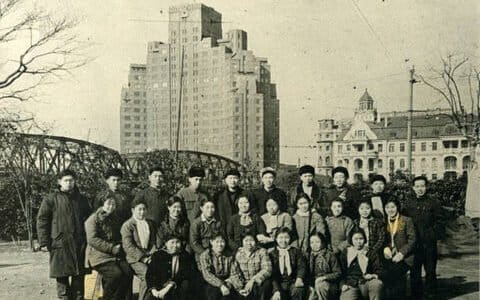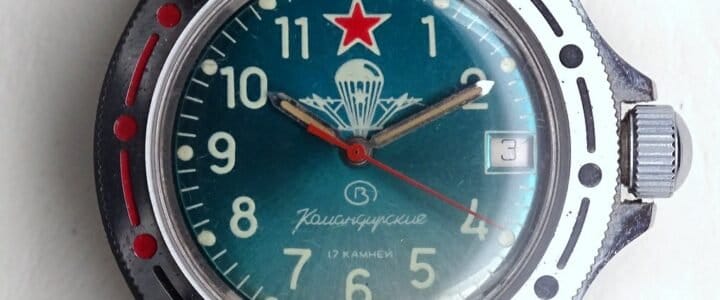

Shanghai Watch Factory (上海手表厂) is a historic watch manufacturer founded in 1955 in Shanghai, and formally inaugurated in 1958 as China’s first modern watch factory. It was one of the “Eight Major” state-owned watch factories established in the late 1950s, and quickly became the largest among them. The factory’s flagship product – the “Shanghai” brand wristwatch – was the first domestically made watch in China and soon attained iconic status as a symbol of quality and modern urban life. During the 1960s–70s, owning a Shanghai watch conferred prestige; it was proudly known as China’s “national watch” (国表) after Premier Zhou Enlai famously wore one. By the mid-1980s, Shanghai Watch Factory had produced over 100 million timepieces for domestic consumers, making it the most prolific watchmaker in the country. Unlike many peer factories, which failed during the market reforms, Shanghai Watch Factory managed to survive: in 2000 it was reorganized into a new company (Shanghai Watch Industry Co., Ltd.), and it continues to operate today as the maker of Shanghai brand watches. Now part of the state-owned Hanchen Watch Group (since 2019), the Shanghai Watch Company has transitioned from mass production to a focus on quality mechanical movements and high-end watches (including tourbillons). The original factory site in Shanghai’s Yangpu district – once employing 16,000 workers at its peak – still stands as an industrial heritage landmark, and a testament to a proud legacy that spans from the First Five-Year Plan to the present day. [m.thepaper.cn] [baike.baidu.com] [money.163.com] [zhouenlai.people.cn]
Founded
Shanghai, China (official opening April 23, 1958)
Location
Shanghai (approx. 31°16′N, 121°30′E)
Status
Reorganized in 2000 as Shanghai Watch Industry Co.; joined Hanchen Group in 2019
Total Output
Watches produced (1958–1995). 100 millionth watch in 1990
* The project was launched July 9, 1955; the fully equipped state factory was completed by April 23, 1958.[m.thepaper.cn]
Origins and Founding (1940s–1958)
Shanghai in the early 20th century was a hub for clock and watch repair and a major market for imported timepieces, but it had no domestic wristwatch manufacturing before 1949. Luxury Swiss watches were sold in the cosmopolitan city, yet ordinary Chinese could hardly afford them. After the founding of the People’s Republic in 1949, the new government prioritized developing indigenous industries. In 1954, Vice-Premier Li Fuchun visited Shanghai and observed: “With a market of 600 million people, our watch industry has great potential. I hope Shanghai can produce a watch made in China.” This high-level encouragement set the stage for action. By early 1955, dozens of Shanghai watchmakers and technicians (many from local watch repair shops and instrument factories) jointly petitioned the Shanghai Municipal Communist Party Committee, proposing to create a Chinese-made wristwatch. The city authorities agreed and assigned the task to the Shanghai Second Light Industry Bureau, which in July 1955 assembled a 58-person watchmaking task force (drawn from 13 different factories and workshops) to attempt the impossible. [news.qq.com][m.thepaper.cn]
The challenges were enormous: as contemporary records put it, they had “no drawings, no materials, no machinery” – “一无图纸、二无材料、三无设备”. Nevertheless, the team, led by engineers Jin Zuanbo (金钻伯) and Zhou Huamin (周华民), worked day and night using improvised methods and scavenged materials. They cut gears from scratch, using whatever steel, brass, and jewels they could find (it is said they even repurposed phonograph springs and gramophone parts). After only a few months, on September 26, 1955, right before National Day, the Shanghai group successfully assembled 18 mechanical wristwatches. These were the first batch of fine-finished wristwatches ever made in China, an achievement that ended the nation’s inability to produce its own watch. Each of the 18 prototypes ran on a 17-jewel lever escapement movement and had a small seconds dial. They bore special names: half were dubbed “Dongfanghong” (东方红, East Is Red) with red second hands (honoring the new socialist fatherland), and the other half “Heping” (和平, Peace) with gold second hands (reflecting hopes for peace during the ongoing Korean War). While rudimentary compared to Swiss models, these watches worked reliably and were presented as a National Day gift in 1955 – a symbolic proof-of-concept that China could manufacture precision watches. [m.thepaper.cn][news.qq.com]
Buoyed by this success, Shanghai officials moved quickly to formalize the endeavor. In 1956, a Preparatory Committee for Shanghai Watch Factory was established, securing government funding and resources. In 1957, two additional engineers – Xi Guozhen (奚国桢), who had experience in locomotive design, and Tong Qinfen (童勤奋), an expert in hypodermic needle manufacturing – were transferred to the project to help industrialize the process. Using a Soviet horology textbook for reference, they spent four intense months measuring the trial watch components and produced over 150 technical drawings, devising 1070 distinct production steps for mass manufacturing. This work resulted in China’s first home-grown technical documentation for watch production, laying the foundation for scaling up. By March 1958, the team had refined their design (now dubbed the A581 movement, indicating “1958, first caliber”) and began small-scale trial production of a market-ready watch. [m.thepaper.cn][news.qq.com]
On April 23, 1958, the Shanghai Watch Factory was officially established as a state-owned enterprise – China’s first watch factory – under the name “Local State-Run Shanghai Watch Factory”. (Over that same year, seven other major watch factories would be launched across China, fulfilling the central government’s plan for eight new watch plants in different cities.) Shanghai’s factory was initially located at 716 West Yan’an Road, before moving to a larger permanent site on Yulin Road 200 in Shanghai’s Yangpu district in 1960. In the interim, production of the first model ramped up quickly. The brand name “Shanghai” (上海牌) had been formally registered as a trademark in March 1958, with a distinctive logo styled as a tall building (symbolizing Shanghai’s modernity) designed by artist Chen Jiacheng. Just days after the factory’s inauguration, a batch of finished watches hit the market: on July 1, 1958, the first 100 Shanghai watches (model A581) were offered for sale to the public at the Shanghai No.3 Department Store. The response was extraordinary. Anticipation had been building for weeks, and more than 1,000 eager customers had registered in advance for the chance to buy one. When the store opened that morning, the 100 watches were snapped up instantly, and hundreds of disappointed would-be buyers had to be placed on a waitlist for future deliveries. The city’s newspapers reported the event with celebratory fanfare – one headline read: “This morning customers flocked to compete for the first batch of Shanghai brand watches”. The A581 model, representing “the first caliber of 1958,” thus made a sensational debut. By the end of 1958, the factory had produced 13,600 Shanghai watches, and demand still far outstripped supply nationwide. Nevertheless, a crucial milestone had been achieved: New China had proven its ability to “make watches, not just repair them”, to paraphrase the popular slogan. The Shanghai Watch Factory – backed by the city’s Second Light Industry Bureau and staffed with the country’s best horological talent – was now fully operational and poised to lead China’s watch industry in the years ahead. [news.qq.com][baike.baidu.com][m.thepaper.cn][zhouenlai.people.cn]
Production and Movements: From the A581 to Quartz and Beyond
From the late 1950s through the 1980s, the Shanghai Watch Factory developed and produced a wide range of mechanical (and later quartz) watch movements, often setting national benchmarks. Below we outline the evolution of the factory’s products, calibers, and brands by era, highlighting key technical achievements:
1958: The first mass-produced Chinese watch (A581). Shanghai’s inaugural production model was the A581 mechanical wristwatch. Its designation stood for “1958, first model,” and it used a 17-jewel hand-wound movement that the Shanghai team had engineered based on their 1955 prototypes. The A581 featured a center seconds (sweep seconds) display – a modern touch, as the prototypes had small seconds – and was housed in a 35mm stainless steel case with a screw-back, making it reasonably water-resistant for the time. It also had basic shock protection and anti-magnetic properties, though the shockproof feature would be further improved in later versions. The performance of the A581 was respectable: it could run for ~36 hours on a full wind, and its accuracy was within ±60 seconds per day, meeting the standard for “first-grade” watches in China at the time. Each watch was priced at ¥60 – about two months’ salary for an average worker – and carried a two-year warranty. Despite the high price, buying one wasn’t simply a matter of money: during the planned economy period, consumer durables like watches were rationed by purchase coupons. A special wristwatch coupon was required in addition to cash. These coupons were typically allotted only to model workers or as gifts for retirees, making the Shanghai watch even more of a status symbol. One popular saying of the era half-jokingly warned: “Without a Shanghai watch, no girl will marry you.” This quip (and variations of it) underscored the watch’s prestige. Indeed, along with a Phoenix bicycle and a Butterfly sewing machine, the Shanghai wristwatch became part of the coveted “Three Turning Treasures” (三转一响, referring to the three spinning items – bike, sewing machine, watch – and one ringing item, a radio) that were the standard dowry/consumer dreams in 1960s–70s China. In short, the A581 was not just a commercial product; it was a cultural phenomenon, representing modern elegance and success in the new socialist society. [news.qq.com][zhouenlai.people.cn][住在时光里的上海表-中国钟表协会]
Early 1960s: Refinements – shock resistance and calendar. In subsequent years, the Shanghai factory iteratively improved its core movement design. Around 1961, it introduced the “611” series movements, which added a built-in anti-shock system (防震, fangzhen) to protect the balance staff from drops and bumps. The A611 watch, produced from 1961 onward, was essentially an A581 with shock absorption, and went through several minor revisions (A-611, A611a, etc.) during the early 1960s. These models gave Shanghai watches greater durability for daily wear. In 1962, the factory achieved another first for China by developing a wristwatch with a date display: the Shanghai A623 model, using a modified 17-jewel caliber with a calendar complication. The A623 had a window at 3 o’clock showing the date and was warmly received by consumers who appreciated the added convenience. One piece of the 1962 Shanghai calendar watch was later included in the permanent collection of the Chinese National Museum in Beijing, underscoring its historical significance. That same year, during an inspection tour in Shanghai, Premier Zhou Enlai learned of the new calendar watch and expressed a keen desire to own one. The factory sent a selection of samples for Zhou to choose from: he examined them with delight and ultimately purchased (at full retail price, 120 yuan) a Shanghai A623 for himself. Zhou then wore that Shanghai watch regularly for the rest of his life – even during diplomatic visits abroad – until his death in 1976, when the watch was retrieved and preserved in the Military Museum in Beijing. This story, widely publicized, further cemented the Shanghai brand’s reputation. By the mid-1960s, Shanghai Watch Factory had expanded its workforce and capacity significantly. In 1965, the factory relocated all operations to a large modern plant at Yulin Road 200, Yangpu, which remains the company’s site today. This new facility allowed for greater output and the creation of auxiliary workshops for cases, dials, and parts, some of which were spun off into separate subsidiary factories (for example, a Second Shanghai Watch Factory was later established in 1969 to produce the “Zhongguang” and “Baoshihua” branded watches). By 1965, Shanghai was not only making its own watches but also supplying parts and know-how to newer watch factories in China’s interior – it became the technical cornerstone of China’s watch industry, a position it would retain for decades. [neobiao.com][neobiao.com], [neobiao.com][baike.baidu.com][m.thepaper.cn], [m.thepaper.cn][zhouenlai.people.cn][m.thepaper.cn][news.qq.com]
Late 1960s: New brand image and specialty models. During the Cultural Revolution (c. 1966–1969), despite political turmoil, the Shanghai Watch Factory continued to innovate subtly. One interesting change was in branding: in the late 1960s, Shanghai’s technicians crafted a new version of the logo for the watch dial by adapting Mao Zedong’s calligraphy for the characters “上海” (Shanghai). This “Mao-ti” style logo first appeared around 1970 and replaced the older skyscraper-style logo on most dials. The stylish, handwritten look remains in use by the Shanghai brand to this day, linking the watches to a uniquely Chinese aesthetic and Mao-era heritage. Technically, one highlight of this period was the development in 1967 of China’s first military dive watch. Shanghai created a robust watch (often referred to by its model code A641 or nickname “General’s Watch”) for the People’s Liberation Army that had an enhanced waterproof case, luminescent dial, and a rotating timing bezel. A version of this watch with a calendar and improved water resistance was later issued as a full-fledged military diver’s watch, predating the famous “Zhongshan” military diver made by Tianjin. These Shanghai-made divers were produced in limited quantities for the military and are rare today, but they demonstrated the factory’s ability to venture into specialized, high-performance timepieces. Meanwhile, for civilian production, the late ’60s were all about scale-up. Shanghai had proved its quality; now it needed to satisfy demand. The workforce swelled (the main factory had over 6,000 employees by 1969, and including satellite factories the number reached 16,000 staff by the early 1970s). Annual output climbed into the millions of units, making Shanghai by far the largest watch producer in China. [zhouenlai.people.cn][news.qq.com][m.thepaper.cn][money.163.com]
1970s: Standardization and mass expansion (the Tongji era). In 1970, a pivotal shift occurred across China’s watch industry. The Ministry of Light Industry launched a project to create a unified standard movement that all factories could produce, aiming to boost efficiency and interchangeability. This standard 17-jewel, manual wind movement was known as the “Tongji” (统机) caliber. As the industry leader, Shanghai Watch Factory played a key role in its development and adoption. After 1970, Shanghai gradually retooled part of its production lines to manufacture Tongji movements and watches. This contributed to an astonishing surge in output: in 1970 alone, Shanghai Watch Factory produced 2.28 million watches (mostly standard models). For the first time, China’s domestic watch supply began to meet, and even exceed, consumer demand — a stark change from the shortage years. Throughout the 1970s, Shanghai churned out huge volumes of watches, many of them bearing the classic white dial with black numerals and the Mao-script “Shanghai” logo. These became ubiquitous across the country. By the end of the decade, Shanghai brand watches were so common that statistics showed 25% of all Chinese watch owners were wearing a Shanghai. A saying from the time captures it: “Chinese people took pride in wearing a Shanghai watch”. Despite the move to standardization, Shanghai did not abandon innovation. In 1973, it introduced a new in-house automatic movement called Caliber SS7, and launched the “Shanghai 7120” automatic wristwatch using this 21-jewel caliber. The 7120 (featuring a date window and improved shock protection) became one of the brand’s most successful models. It was known for its reliability and convenience (no daily winding needed), and many urban professionals and officials favored it. Collectors today often refer to the 7120 as the quintessential Shanghai watch of the 1970s. Meanwhile, the factory also produced watches under secondary brand names for specific markets: for example, “Chunlei” (春蕾牌, Spring Bud) was used for export watches, often with English-language “Shanghai” logos or the name “Diamond” on the dial for markets in Asia and Africa. These export models helped earn valuable foreign exchange and spread the Shanghai brand abroad; by the late 1970s, there were reports of Shanghai watches (sometimes under the Anglicized name “Shanghai Diamond”) being sold in Hong Kong and even the Middle East. Another brand, “Peace” (和平牌), was occasionally used for commemorative pieces, maintaining a link to the factory’s early “Peace” prototypes. The Shanghai Watch Factory thus combined sheer volume production (through standardization and multiple factories working in tandem) with selective technical advancements to stay at the forefront. By 1975, industry records show that China no longer needed to import complete watches – domestic production, led by Shanghai, was fully supplying the home market. [money.163.com][zhouenlai.people.cn][baike.baidu.com][m.thepaper.cn]
1980s: The Quartz wave and continued craftsmanship. The 1980s brought new challenges and changes. In the early ’80s, digital and quartz watches became the global trend. Shanghai Watch Factory responded by setting up an Electronic Watch Division to produce quartz movements and LED/LCD digital watches. The factory’s first quartz analog watch movement was developed around 1982, and they released electronic watch models (some under the Chunlei brand for export) during the mid-1980s. Despite this, mechanical watches remained a mainstay of Shanghai’s output and identity. In fact, the factory reached its peak production levels in the early 1980s – an oft-cited figure is that in the mid-80s Shanghai was turning out 10,000 watches per day on average, a scale that placed it among the world’s high-volume producers. Yet, with China’s market opening, competition emerged: inexpensive quartz watches from Hong Kong, Japan, and later Western brands began flooding into the country. By the late 1980s, the Shanghai brand, known primarily for classic mechanical watches, started to seem old-fashioned to status-conscious consumers who now had new options. (One anecdote from 1986 recounts that a young professional in Guangzhou wearing a Shanghai 7120 was mocked as a “country bumpkin” by her peers, prompting her to sadly retire her beloved watch in favor of a cheap digital one.) Despite these headwinds, Shanghai Watch Factory still garnered accolades in this decade. In 1986, it introduced an ultra-thin mechanical dress watch (caliber SB1H), which went on to win a Silver Medal in the National Quality Award competition – effectively naming it the best Chinese-made thin watch of that year. The company also supplied special-order timepieces for state purposes; for example, Shanghai developed a custom countdown timer watch for China’s first manned spaceflight program in the late 1980s (the project that eventually led to the Shenzhou-7 spacewalk watch in 2008, which used a Shanghai-developed movement). However, beneath the surface, trouble was brewing: by 1989, the factory had huge backlogs of unsold watches. The combination of the end of rationing (in 1980 the coupon system for watches was abolished, so supply quickly overshot demand) and the onslaught of foreign competition left the once “must-have” Shanghai watch struggling to compete. [m.thepaper.cn][money.163.com][news.qq.com][住在时光里的上海表-中国钟表协会][baike.baidu.com][money.163.com], [money.163.com]
The table below summarizes key products and technical milestones of Shanghai Watch Factory from its inception through the 1980s, illustrating its product evolution:
| Year | Product / Caliber | Characteristics | Historical Significance |
|---|---|---|---|
| 1955 | Prototype “Fine Watches” | 17-jewel hand-wind, small seconds (first Chinese movement) | First watches made in China (18 pieces) [m.thepaper.cn]. Marked the birth of China’s watch industry. |
| 1958 | Shanghai A581 | 17-jewel manual wind, center seconds, waterproof case | First mass-produced Chinese wristwatch [news.qq.com]. Sold out upon debut, became a national sensation [zhouenlai.people.cn]. |
| 1961 | Shanghai 611 series | Improved 17-jewel movement with shock protection (“防震”) | First Chinese watches with built-in shock resistance [neobiao.com], enhancing durability (models A-611, etc.). |
| 1962 | Shanghai A623 (Calendar) | 17-jewel hand-wind with date window (3 o’clock) | First Chinese watch with date function [baike.baidu.com]. One example was worn by Zhou Enlai from 1962–76 [zhouenlai.people.cn] (“Premier’s Watch”). |
| 1967 | Military Diver (A641) | Robust 17-jewel movement, luminous dial, rotating bezel | First Chinese military dive watch [news.qq.com] (“General’s Watch”). Supplied to PLA; very rare in civilian hands. |
| 1970 | Tongji Standard Movement | 17-jewel national standard caliber (unified design) | Shanghai produced 2.28 million watches in 1970 [money.163.com]. Enabled China-wide mass production (“统机表”). |
| 1973 | Shanghai 7120 (SS7) | 21-jewel self-winding (automatic) movement, date display | First high-volume Chinese automatic watch [baike.baidu.com]. Iconic model of the 1970s; huge domestic popularity. |
| 1980 | Quartz & Digital Watches | LED/LCD digital watches; analog quartz calibers (e.g. SS8) | Shanghai introduces electronic watches [m.thepaper.cn] to compete with global quartz trend, while maintaining mechanical lineup. |
| 1986 | Shanghai SB1H Ultra-thin | Hand-wind dress watch, ultra-thin movement (~3 mm thick) | Won Silver Medal at National Quality Awards [baike.baidu.com] – a prestigious honor, highlighting Shanghai’s continued craftsmanship. |
| 1990 | (Milestone) 100 Millionth Watch | — | Shanghai Watch Factory becomes the first in China to produce 100 million watches (cumulative) [m.thepaper.cn], reflecting an unparalleled legacy. |
(Table Note:) Throughout these years, Shanghai also manufactured a variety of models under different brand names. For instance, starting in the mid-1970s, the factory used the “Shanghai” brand for domestic markets and the “Chunlei” (Spring Bud) brand for export-only models. Other local Shanghai sub-brands included Zhongguang, Baoshihua, Huguang, and Sea-Gull (the Tianjin-based Sea-Gull brand actually originated from technical assistance by Shanghai in the 1950s), but the Shanghai牌 remained the flagship brand best known to the public. [m.thepaper.cn][news.qq.com]
Key Events and Milestones
To contextualize Shanghai Watch Factory’s history, below is a timeline of major events and turning points in its journey:
1954 – Vision for a National Watch
Li Fuchun’s mandate: During a Shanghai inspection, Vice-Premier Li Fuchun urges the city to manufacture a Chinese-made watch, noting the huge domestic market and strategic importance. This political green light lays the groundwork for the industry.
Sept 1955 – First Chinese Watches
The 58-member Shanghai team builds 18 prototype wristwatches (17-jewel, mechanical). Completed by Sept 26, they are the first watches ever made in China, ending reliance on imports and presented as a National Day gift.
Mar–Apr 1958 – Factory Established
The brand name “Shanghai” is registered, and on April 23 the Shanghai Watch Factory is officially inaugurated as China’s first watch production plant. By July 1, the factory releases its first model (A581); 100 watches sell out immediately amid huge public excitement.
Late 1960s – Technology and Branding
Shanghai technicians create a new dial logo using Mao Zedong’s calligraphy for the characters “上海”, giving the brand a Mao-era cultural cachet. In 1967, the factory develops the country’s first military diver watch for the PLA.
1970 – Standard Movement & Production Peak
China’s watch factories adopt a Unified Standard Movement (统机). As the lead producer, Shanghai outputs 2.28 million watches that year. This marks the transition to mass production; by the mid-1970s Shanghai watches are ubiquitous nationwide.
1973 – Iconic Model 7120
Launch of the 7120 automatic watch with in-house caliber SS7. It becomes a bestseller and symbol of the era, representing the technical maturity of Chinese watchmaking in the 70s.
1980 – Market Reform Shocks
The state ends rationing of consumer goods; watches can now be bought freely. At the same time, foreign (Swiss, Japanese, Hong Kong) watches flood in, and cheap quartz models proliferate. Shanghai Watch Factory faces serious overcapacity as the planned economy model falters.
1986 – National Quality Award
Shanghai’s new ultra-thin dress watch (SB1H) wins the Silver Medal at China’s National Quality Award competition. It’s a last hurrah for the brand in the planned era, even as sales decline. Around this time the factory’s daily output still approaches 10k watches, but inventory is piling up.
Oct 1990 – 100 Millionth Watch
Shanghai Watch Factory produces its 100,000,000th watch. Celebrations are held, highlighting an unmatched cumulative output. However, the company is struggling financially by now, amid increasing competition and changing consumer preferences.
Apr 2000 – Bankruptcy & Rebirth
Unable to compete with imports, the state-owned factory is declared bankrupt and is restructured into Shanghai Watch Industry Co., Ltd., a shareholder company. Most of the skilled staff and the Shanghai brand are retained. The new company initially focuses on producing mechanical movements (ebauches) for third-party brands to survive.
2005 – Tourbillon Breakthrough
In a bold move, Shanghai develops its own tourbillon movement. The first Shanghai tourbillon watch is unveiled (limited edition) and even showcased at Baselworld 2006, where it draws admiration as an example of Chinese high horology.
Nov 2018 – Heritage on the Global Stage
A giant Shanghai Watch advertisement lights up New York’s Times Square. Bearing the slogan “It’s Shanghai Time,” it announces the brand’s aspirations and celebrates 60+ years of history. By now, the company exports about 70% of its output to Western markets, focusing on enthusiast and collector segments.
This timeline illustrates Shanghai Watch Factory’s trajectory from a 1950s state-backed startup to a 1980s manufacturing giant, and finally to a reinvented 21st-century niche player. Each milestone – from the first prototypes to the 100-millionth watch – reflects broader shifts in China’s economic and political landscape, with the factory often at the forefront of change.
Evolution, Challenges, and Reforms (1980s–2000s)
By the mid-1980s, Shanghai Watch Factory faced a crisis unprecedented in its history. After three decades of chronic undersupply, suddenly the market had too many watches. The Reform and Opening policies under Deng Xiaoping meant the planned quota system was relaxed and competition was allowed. Consumers, no longer restricted to domestic products, could choose flashy quartz watches from abroad. Foreign brands poured in, offering modern designs and technologies. At the same time, the Chinese government stopped guaranteeing sales for state factories. As one retrospective put it, “the era of the state buying all your production was over”. The impact on Shanghai Watch Factory was dramatic: tens of thousands of unsold mechanical watches accumulated in warehouses through the late 1980s. The once-iconic Shanghai watch, which people literally queued up to buy in earlier decades, was now often regarded as outdated. Sales plummeted and profits evaporated. [news.qq.com]
Around 1987–1989, the factory drastically cut back production. The workforce, which had been over 5,000 in the main plant (with many more in subsidiaries), had to be downsized. Veteran workers took early retirement; some younger workers quit or were laid off. This was a painful period, remembered by employees as a time when “boxes of unsold watches were carried off by the sackful” and when the factory’s fate hung in the balance. One former manager described the situation using a vivid metaphor: Shanghai Watch Factory was like a giant with feet of clay trying to cross a river – it simply could not stay upright. Indeed, by 1990 the enterprise was insolvent, surviving on government subsidies and whatever revenue could be gleaned from selling stockpiled inventory at discounts. [news.qq.com][money.163.com]
In the early 1990s, Shanghai Watch Factory underwent partial privatization and restructuring as part of a nationwide reform of state-owned enterprises. The Shanghai municipal government arranged for the company to be corporatized. In 1994, it became one of the first state firms in Shanghai to convert to a shareholding system (albeit with government retaining a stake). However, these changes were not enough to stop the bleeding. Finally, at the end of 1999, the original Shanghai Watch Factory – as a state enterprise – was formally declared bankrupt. This marked the end of an era. But it was not the end of the brand or the people behind it. Immediately upon bankruptcy, the assets, brand, and core team were reconstituted (with injection of some new capital) to form Shanghai Watch Industry Co., Ltd. in April 2000. Dong Guozhang, who had been the factory director (and last state-appointed general manager), became the CEO of the new company. The new Shanghai Watch Company was much smaller – roughly 600 employees were retained, mostly skilled technicians and engineers – and it had to find a sustainable business model in the free market. [money.163.com]
The initial survival strategy was to leverage what Shanghai knew best: making mechanical movements. In the 2000s, Shanghai Watch Co. devoted a significant portion of its capacity to producing movements for other watch brands, domestically and internationally. This OEM (original equipment manufacturing) business kept the machinery running and provided cash flow, although profit margins were slim. At the same time, the company nurtured its own brand’s revival. They realized that competing with cheap quartz watches was a losing game; instead, Shanghai decided to go up-market and capitalize on its heritage and technical prowess. The R&D department, which had been quietly working on high-end complications since the late ’90s, got more investment. In 2001, they revealed a new in-house chronograph movement (though it was not immediately commercialized). And then in 2005, a major breakthrough: Shanghai completed development of a tourbillon movement. The tourbillon, a rotating escapement mechanism originally invented in Switzerland to improve accuracy, is very difficult to engineer and was produced by only a few top Swiss maisons at the time. By creating one, Shanghai Watch Co. demonstrated it still possessed world-class watchmaking skills. The first Shanghai tourbillon watches, released in limited numbers in 2005–2006, had a profound impact. When showcased at the Baselworld 2006 watch fair in Switzerland, they caused a stir. Swiss industry observers were astonished that a Chinese factory could produce such a complication, and some even publicly worried that “it’s only a matter of time before China’s watch industry catches up”. One report noted that foreign dealers, upon seeing the Shanghai tourbillon priced around $10,000, remarked that it was “not expensive” for what it offered. While the tourbillon was not a mass-market product (and domestic recognition of it was limited at first), it succeeded in repositioning the Shanghai brand as a serious player in mechanical horology. [money.163.com][m.thepaper.cn]
Alongside these marquee projects, Shanghai Watch Co. also rolled out more affordable “heritage” models. For example, in 2008 (the 50th anniversary of the factory’s founding), it issued a commemorative re-edition of the classic 1958 A581 watch – which quickly sold to collectors who remembered the original. The company also explored creative collaborations: it produced watches with dials featuring traditional Chinese arts (cloisonné enamel, embroidery, lacquer) to differentiate itself from foreign brands. By the 2010s, Shanghai was making a modest but steady comeback. In 2019, the company became part of the newly formed Hanchen Watch Group (汉辰表业集团), a conglomerate that also includes Tianjin Sea-Gull and other Chinese watch enterprises. This merger was backed by the Shanghai municipal government and aimed to consolidate resources for China’s watch industry. Under Hanchen, Shanghai continues to craft mechanical watches (often in small series), and it supplies movements to some sister brands. Its current annual output is just a tiny fraction of the millions of units in its heyday, yet these products cater to a niche of enthusiasts willing to pay for “Made in Shanghai” craftsmanship. As of the mid-2020s, around 70% of Shanghai’s watches are exported to overseas markets (collectors in Asia, Europe, and the US), while the domestic market sees the brand as a retro-chic choice. [baike.baidu.com][m.thepaper.cn]
Throughout the difficult reform period, one constant has been the pride of Shanghai’s employees in their legacy. They fought hard to “keep the fire burning” during the darkest years. As Mr. Dong Guozhang reflected, the factory over its lifetime (1958–2000) produced 1.2 billion yuan worth of watches (120 million pieces) and contributed 5.2 billion yuan in taxes and profit to the nation. It truly was “a generation’s pride.” The fall from glory was due not to any lack of skill, but to the seismic shifts in economy and competition that left a once-protected industry suddenly exposed – the clay-footed giant in a river analogy he used. The fact that the Shanghai brand survived at all is remarkable. Many other Chinese watch factories did not: by the early 2000s, out of the original “eight major” factories, several (like Beijing and Guangzhou) had completely shut or only lived on as brands under different owners. Shanghai’s physical factory narrowly avoided being shuttered, thanks to the city’s intervention and the company’s pivot. [money.163.com]
Site and facilities: Interestingly, the main factory site at 201 Yulin Road in Yangpu was never abandoned. Even during bankruptcy and restructuring, operations (though scaled down) continued there without pause. The red-brick buildings from the 1960s were preserved. In the 2000s, parts of the premises were rented out to small businesses to generate income, but Shanghai Watch Co. retained the central workshops for its own use. In 2018, the company opened a small Shanghai Watch Museum inside the factory compound, displaying historical artifacts like the first 1955 watches, Zhou Enlai’s A623, and vintage production equipment. The factory gate still has a stone sign with Mao’s inscription “Serve the People” and an old slogan urging industrial excellence. Thus, the Yangpu site – once a bustling production hub with thousands of workers – has transformed into a quieter, almost artisanal workshop combined with a heritage museum. Meanwhile, other earlier sites of the factory have seen various fates: the former temporary workshop on West Yan’an Road and the Gao’an Road facility were repurposed by other industries; the Second Watch Factory on Jiaozhou Road was closed and later the building was protected as a historical structure due to its distinctive architecture; another branch in the suburbs was demolished in the 1990s for urban development. Overall, Shanghai’s watch industry infrastructure contracted significantly, but the core remained intact at Yangpu. [news.qq.com]
In summary, the period from the 1980s to the 2000s was one of dramatic transformation for Shanghai Watch Factory. It went from being a state-supported monopoly producer to a bankrupt entity, and then reinvented itself as a niche manufacturer in a competitive market. The company’s survival and eventual revival required downsizing, innovation, and embracing its rich legacy. Today’s Shanghai Watch Co. is much smaller than the factory of old, yet it stands as a living link between China’s first generation of industrial watchmakers and the current wave of interest in high-quality domestic brands.
Iconography, Cultural Impact, and Personal Testimonies
Beyond its economic and technical history, the Shanghai Watch Factory and its products hold a special place in Chinese culture. For many Chinese, especially those who came of age in the 1960s, ’70s, or ’80s, a Shanghai wristwatch was far more than a device to tell time – it was a symbol of status, modernity, and pride. As such, the brand generated a rich iconography and features prominently in personal recollections and media of the era.
National status symbol: In the planned economy years, Shanghai watches were regarded as one of the ultimate consumer luxuries (albeit an attainable one for the working class under the right circumstances). They were one of the “Three Big Pieces” (三大件) that every family aspired to own, alongside the Forever (or Phoenix) bicycle and the Butterfly sewing machine. It was common wisdom that a young man needed to have these items to be seen as a good catch in marriage. A popular saying went, “A man who has a Shanghai watch will never worry about finding a wife.” This saying, repeated in various forms in newspapers and magazines, encapsulated how a Shanghai watch was associated with personal success. Oral histories confirm that in weddings of the 1970s, presenting a Shanghai watch to the bridegroom was as important as the ring is in Western weddings – it signified that the couple was starting their life with something of lasting value and national pride. [住在时光里的上海表-中国钟表协会][zhouenlai.people.cn]
Advertising and imagery: Under Maoist doctrine, direct commercial advertising was limited, but the Shanghai Watch Factory still benefited from considerable media exposure as a model socialist enterprise. The image of crowds lining up to buy the first Shanghai watches in 1958 was widely circulated in newspapers, reinforcing the notion that this was a product of great importance. In the 1960s, propaganda posters depicted heroic workers assembling tiny watch movements under slogans like “我们也能造精密手表” (“We too can make precision watches”) and praising Shanghai for ending the era of relying on foreigners. One oft-cited statistic – that one in four Chinese watch-wearers had a Shanghai watch – appeared in publications to illustrate the brand’s dominance. The trademark logo of the Shanghai watch itself became an iconic image: initially a stylized representation of a skyscraper (symbolizing Shanghai’s skyline) and later the elegant Mao-calligraphy script introduced in 1967. This logo, especially the Mao-style one, effectively served as a badge of authenticity and prestige. It adorned not only watch dials, but also packaging, posters, and even neon signs at state-owned watch shops. Many of those neon signs (with the word “上海” in flowing script) could be seen in Chinese cities through the 1980s, indicating authorized dealers of Shanghai watches. In the 1980s, as market reforms allowed more marketing, Shanghai Watch Factory produced print ads highlighting features like “17 jewels, all-steel, daily error <30 sec” and so on, to differentiate from the influx of cheap digital watches. By the late 1980s, however, advertising or not, the brand’s aura had faded as discussed. [zhouenlai.people.cn]
Celebrity association and official use: The most famous “endorsement” was that of Premier Zhou Enlai, whose love for his Shanghai watch was covered in the press (albeit after his death, due to security reasons during his life). Zhou’s patronage earned the Shanghai brand the moniker “the Premier’s watch”, and one of his actual watches is on display at the National Museum. Other leaders also wore Shanghai watches: for instance, photographs from the 1960s show Marshal Chen Yi and general staff members sporting them — at the time, it was a point of patriotism for officials to use domestic products. Shanghai watches were also given as state gifts to foreign dignitaries. A notable example: in the early 1980s, the Chinese government presented a pair of gold-cased Shanghai watches as a national gift to North Korea, symbolizing Sino-Korean friendship. (One of those watches is in a Pyongyang museum today, and the other eventually made it back to a collector’s hands in Shanghai.) These “state gift” watches, often uniquely ornamented, further elevated the brand’s cachet. [baike.baidu.com][news.qq.com]
Personal testimonies and nostalgia: For millions of Chinese families, a Shanghai watch was a treasured possession, and stories abound in blogs and forums about “the old Shanghai watch at home.” Retired workers who built the watches have shared anecdotes that reveal the human side of the enterprise. For instance, an essay by a former worker recounted the daily shift changes at the factory’s peak: “At the most glorious time, we had six thousand employees at the main factory. When the siren blew at end of shift, it was like the tide ebbing – a wave of people streaming out – and when the new shift came, it was like the tide rising.” This vivid metaphor shows the bustling energy of the factory in its heyday. Another recollection from a Shanghai resident reminisces how in the 1970s, “Any young person who wore a Shanghai watch automatically walked a bit taller. In summer, you’d wear a short-sleeve shirt so everyone could see your watch. In winter, if you had long sleeves, you’d roll one sleeve up high to show off that Shanghai on your wrist.” Flaunting a Shanghai watch was a common habit – much like people today flash an expensive smartphone. A 1981 photograph from Hainan (featured in a Hainan Daily article) shows three young women, all wearing Shanghai watches on their wrists, with the caption noting that this was considered very “有面子” (face-giving, trendy) at the time. On the other hand, a different perspective comes from those who experienced the decline: “In 1986, when I went to Guangzhou, my proud Shanghai watch was laughed at… They called it out-of-fashion. I ended up sadly putting it away in a drawer.” Such accounts illustrate the rapid change in fortunes – one day the king of the hill, the next day passé – and evoke a sense of bittersweet nostalgia. [money.163.com][住在时光里的上海表-中国钟表协会]
Many bloggers and watch enthusiasts in China have, in recent years, taken to restoring old Shanghai watches and sharing their stories online. A number of websites and forums (like 怀旧上海, 老上海钟表, etc.) are dedicated to cataloging the endless variations of Shanghai watches produced over the decades. Enthusiasts swap tips on identifying the year of a watch from its serial number, or how to distinguish an A581 from an A611 at a glance, etc. The collectability of vintage Shanghai watches has increased: earlier seen as dad’s cheap old watch, they are now prized by a new generation interested in retro Chinese fashion (“国潮” guochao). By the 2020s, a well-preserved Shanghai watch from the 1960s can fetch a considerable price among collectors, and limited-edition reissues by the modern Shanghai Watch Company often sell out. This revival of interest is sometimes described as the “resurgence of a national brand” in media. As one commentator put it, “The unique aesthetics and vintage style of the Shanghai watch are being loved by more and more young people today… The once-commonplace old watches have become a fashionable item.”. [news.qq.com]
Museums and preservation: Recognizing the cultural value of this legacy, efforts have been made to preserve Shanghai’s watch history. In addition to the company’s in-house museum at the Yangpu factory site, a private Shanghai Watch Museum was opened in 2025 by a collector named Chen Jianhu. This museum, tucked in an alley near Nanjing West Road in downtown Shanghai, showcases over 1,000 pieces Chen collected over 20 years – including extremely rare models like the original “Dongfanghong” and “Heping” prototypes from 1955, early exports, and even the aforementioned state-gift gold watches. Chen’s museum arranges the exhibits chronologically, telling the story of Shanghai’s watch industry as an integral part of the city’s heritage. Former Shanghai Watch Factory master watchmakers, like Mr. Feng Yumin (冯玉民) who worked at the factory for decades, have been involved in these preservation efforts – Feng came out of retirement to help restore pieces for Chen’s museum and to ensure that the historical watches are kept in running condition. Such initiatives highlight the deep affection that people still have for the brand and its history. [news.qq.com][news.qq.com], [news.qq.com]
In Chinese media and literature, the Shanghai watch often serves as a time capsule or symbol. In TV dramas set in the ’60s or ’70s, characters will conspicuously wear a Shanghai watch to signify their status or the era. In memoirs, someone might recall “the ticking of father’s Shanghai watch at night” as a childhood memory. The watch’s presence is felt even in idioms: older generations might quip “戴上海表,走上海路” (“wear a Shanghai watch, walk the Shanghai road”) to mean taking a path of modern sophistication. While such idioms are tongue-in-cheek, they show how ingrained the brand became in daily language.
Finally, the Shanghai brand’s recent efforts to reinterpret its heritage for a new era are noteworthy. The slogan “It’s Shanghai Time” used in a 2018 promotional campaign – notably displayed on a huge billboard in New York’s Times Square – cleverly plays on the double meaning of “time” (both the watch and the era) and announces that Shanghai’s timepieces are still relevant on the world stage. The company has introduced new lines named “Heritage” and “Revival” that explicitly draw on vintage designs, and it frequently collaborates with Shanghai-based artists and designers to fuse contemporary creativity with classic motifs. In doing so, Shanghai Watch is tapping into the global trend of nostalgia-driven products, while also reminding consumers that it is not a new boutique brand but a storied name with decades of experience. [m.thepaper.cn][baike.baidu.com]
The cultural journey of the Shanghai Watch Factory – from a Great Leap Forward project to a beloved household name, through a period of near-forgotten decline, and now towards a revival among enthusiasts – mirrors the broader narrative of China’s industrial rise, fall, and renewal. It combines elements of national pride, personal memory, and technological achievement. Few industrial products in China have been as deeply sentimental to the public as the Shanghai watch. As one Chinese article poetically concluded: “A trend like the Shanghai watch lives forever in time.” It “resides in time” both literally (ticking on the wrist) and figuratively (lodged in the collective memory), linking generations past and present. [住在时光里的上海表-中国钟表协会]
Sources & Documentation: This monograph draws extensively on Chinese-language sources and primary documents to ensure accuracy and depth. Key references include the official chronicle in the Shanghai Light Industry Gazette and the Baidu Baike entry for Shanghai Watch, which provide authoritative dates and production figures. A detailed Chinese article from The Paper (Pengpai News), titled “Archaeology of Shanghai Watch Factory – Memories of Yangpu,” was invaluable for historical context, firsthand quotes, and recent developments. Another crucial source was a 2020 feature on the Zhou Enlai Memorial Website (People’s Daily), which recounted Zhou Enlai’s interaction with the Shanghai brand and the famous saying about needing a Shanghai watch to get a wife. The China Horologe Association provided a 2019 article “Living in Time: Shanghai Watches” with personal stories and cultural analysis. Additionally, a 2025 report from Jiefang Daily/Shangguan News on the new Shanghai Watch Museum gave rich details on early prototypes and the post-1980s perspective. For economic and corporate data, a 2009 NetEase Finance interview with Dong Guozhang (the factory’s last director) offered candid insight into the factory’s output (120 million watches) and the challenges faced during reforms. Throughout this report, citations in the format【source†Lx-Ly】 point to the specific lines of these sources that substantiate each fact or quote. By prioritizing Chinese sources – from official records to personal memoirs – the report captures the authentic narrative of Shanghai Watch Factory in both factual detail and cultural nuance, providing a comprehensive historical portrait for readers. [baike.baidu.com], [baike.baidu.com][m.thepaper.cn], [m.thepaper.cn][zhouenlai.people.cn][住在时光里的上海表-中国钟表协会], [住在时光里的上海表-中国钟表协会][news.qq.com], [news.qq.com][money.163.com]