Introduction
Vintage Soviet watches are unique collectibles cherished for their Cold War history, utilitarian engineering, and surprising affordability. Unlike luxury Swiss timepieces, Soviet watches were mass-produced by state-owned factories as practical tools first and foremost. In fact, by the 1950s–60s the USSR’s watch output was second only to Switzerland’s, meaning authentic Soviet-era watches remain widely available and budget-friendly for today’s collectors. Each piece offers a tangible link to history – their dials often feature Cyrillic script, military emblems or space-race motifs, making them fascinating artifacts of a tumultuous era in world history. For newcomers, this international guide explains why these “Russian watches” hold such appeal and how to start collecting watches from the Soviet era wisely. [dumarko.com][gearpatrol.com]
Historical Significance
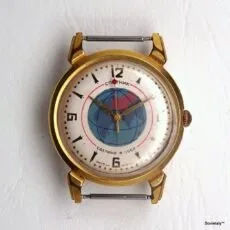
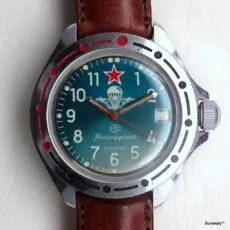
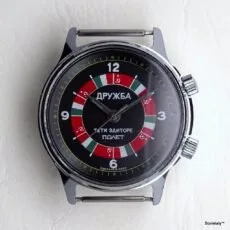
Soviet watches mirror their era – from Red Army Komandirskie military motifs to space-race commemoratives – each timepiece tells a Cold War story.
Robust & Reliable
Built under an ethos of utilitarian durability, USSR watches were engineered to work in harsh conditions. Their simple, in-house mechanical movements are famed for reliability over glamour.
Affordable Vintage
Unlike many vintage Swiss models, most Soviet watches remain very affordable (often well under $300) due to massive production and low western demand.
Recommended Starter Models
Several Soviet watch brands offer great entry points for beginners. Here are three famous brands and models to consider:
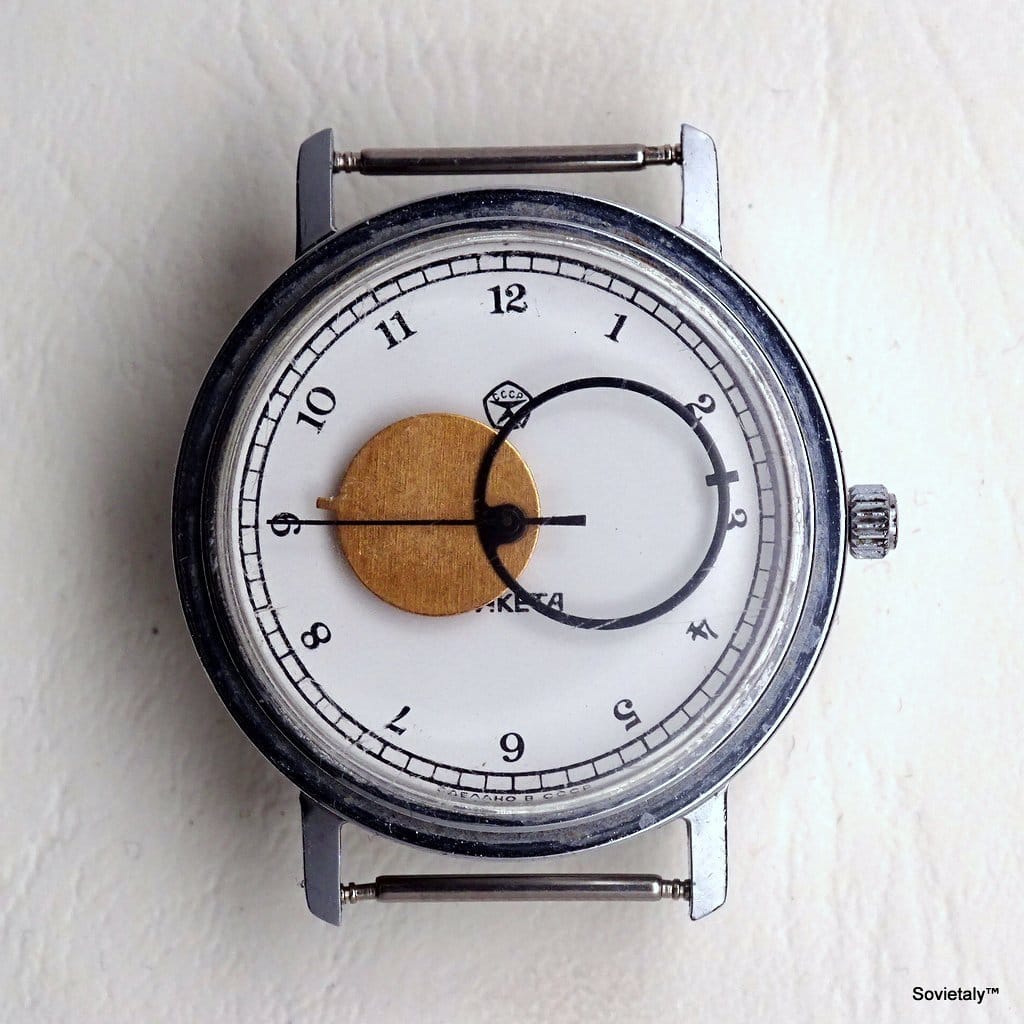
- Raketa – Affordable and Classic:Raketa (Russian for “rocket”) was produced by Russia’s oldest watch factory and became one of the USSR’s best-known brands. Millions of Raketa watches were made for both civilians and the military in the 1970s–80s, so they are common and inexpensive. Raketa is famous for clean, minimalist designs. Notable models include the Raketa “Polar” 24-hour watch made for Arctic expeditions (to distinguish day from night in polar summer) and the “Big Zero”, a classic design with a prominent 0 at the top of the dial. These watches are simple, reliable hand-wound or automatic timepieces – ideal for a first vintage Soviet watch.
- Vostok – Durable Military Watches:Vostok (meaning “East”) became the official supplier of watches to the Soviet Ministry of Defense in the 1960s, specializing in rugged military and dive watches. The Vostok Komandirskie (“Commander’s”) models, originally made for Soviet officers, feature military crests and tough manual movements. Even more famous is the Vostok Amphibia, an iconic 200m water-resistant dive watch introduced in 1967. The Amphibia’s innovative sealed case design actually improves its water-tightness under pressure, and it remains so popular that modern versions are still sold new for under $100. For collectors, vintage Vostoks offer proven durability – their mechanical movements are easy to service, and parts are plentiful.
- Poljot – Elegant & Historically Rich:Poljot (Russian for “flight”) was the USSR’s flagship watch brand, known for higher-grade watches including chronographs and pilot timepieces. Poljot originated at the First Moscow Watch Factory and produced both dressy watches and complicated models for the Soviet military. One legendary example is the Poljot Sturmanskie, the pilot’s watch worn by Yuri Gagarin during the world’s first human spaceflight in 1961. Poljot also developed its own chronograph movement (the Caliber 3133, derived from a Swiss Valjoux design) used in watches like the Poljot Okean Navy chronograph. These timepieces are a bit rarer and typically a bit pricier than Raketa or Vostok, but still very accessible. With Poljot, you get a blend of Soviet technical achievement and elegance – an excellent choice for a collector interested in cosmonaut or military history.
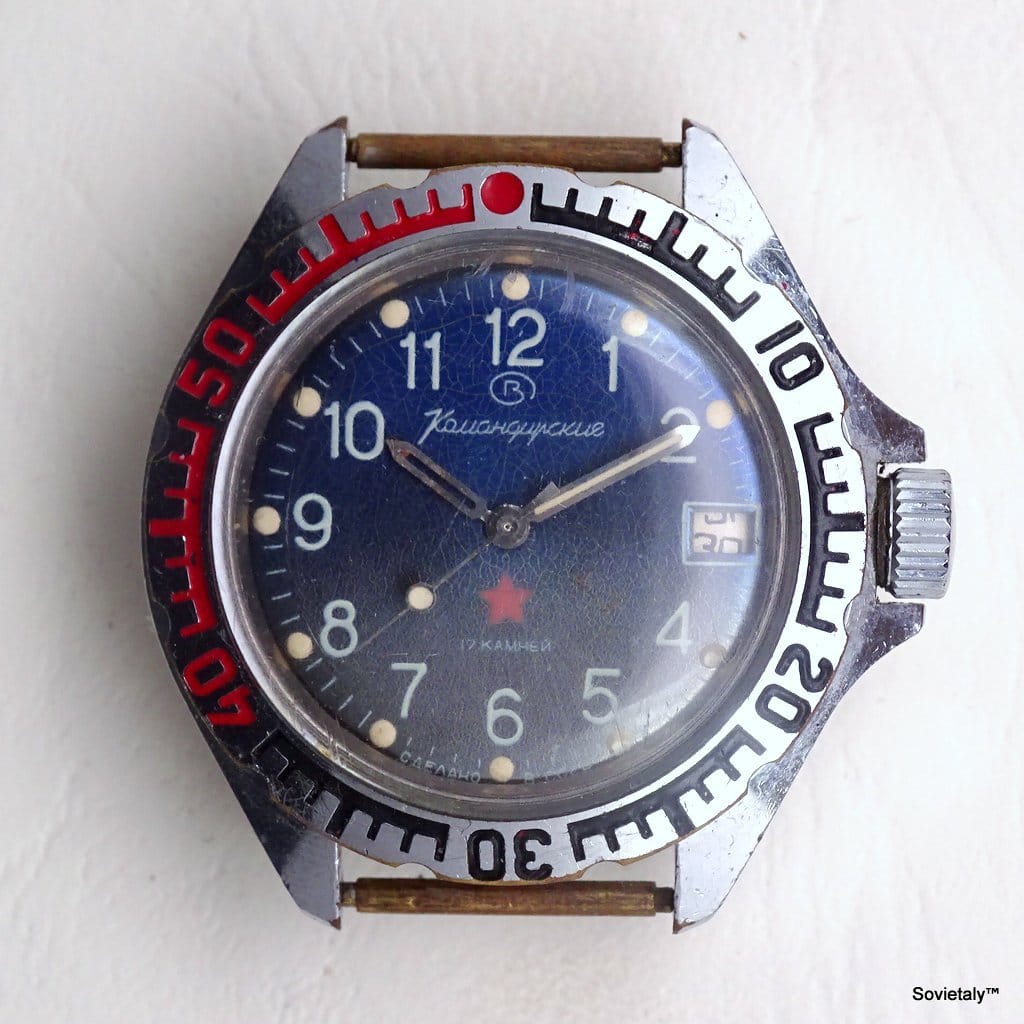
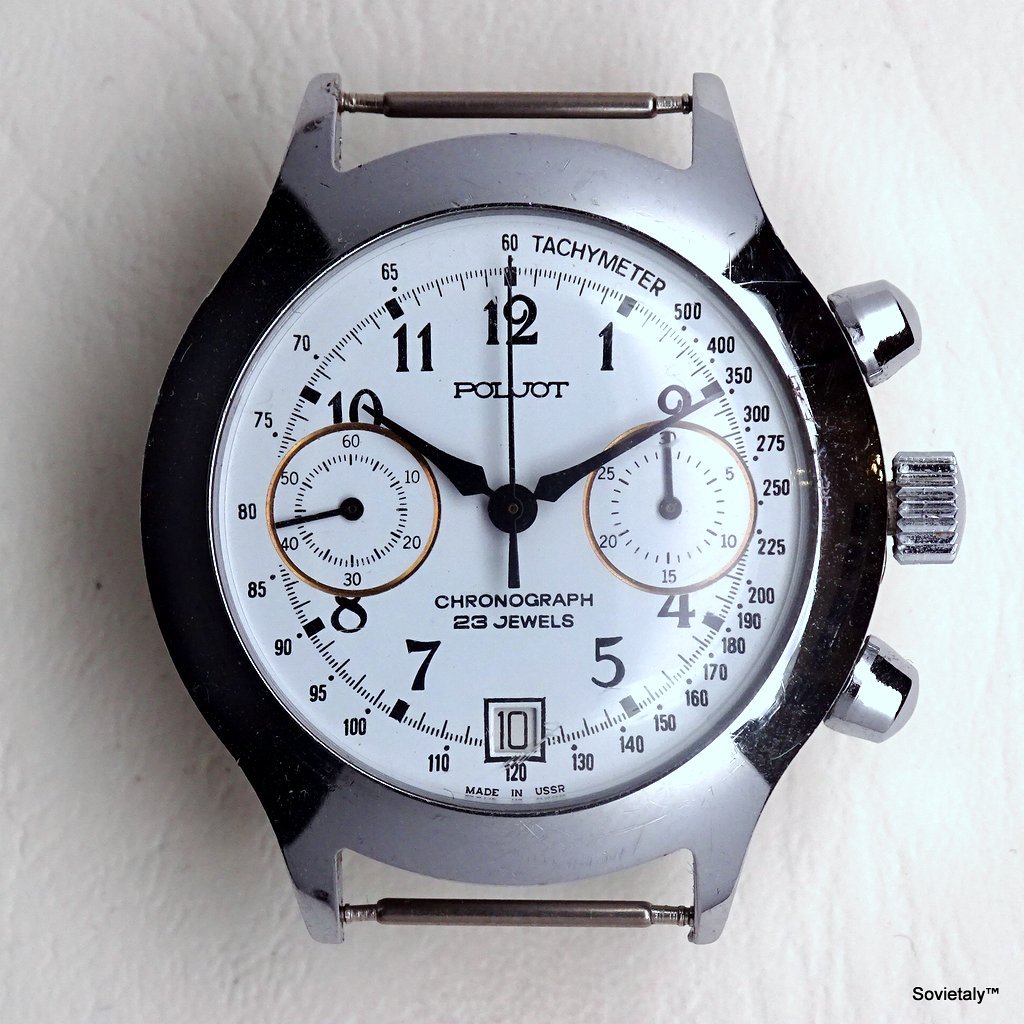
Comparison of Key Starter Models
Below is a quick comparison of the three Soviet watch brands discussed, including their key features, typical price ranges, and famous models:
| Brand | Key Features | Typical Price Range | Notable Models |
|---|---|---|---|
| Raketa | Oldest Russian factory; clean, minimalist designs; some 24-hour dials for polar use | ~$50–$150 for most vintage pieces | Big Zero, Polar 24H (expedition), Copernic (artistic) |
| Vostok | Military-grade durability; official Soviet Army supplier | ~$50–$200 for common models | Komandirskie (officer’s watch), Amphibia (1960s diver) |
| Poljot | Higher-end Soviet brand; chronographs and pilot/space watches | ~$100–$300 for many; more for rare chronographs | Sturmanskie (Gagarin’s watch) , Okean (Navy chrono) |
Table: A brief comparison of three beginner-friendly Soviet watch brands. Prices are approximate for typical examples in good condition.
Where to Buy Internationally
Thanks to global interest, it’s easy to find Soviet watches for sale worldwide. Here are some reliable avenues for international buyers:
- Online Marketplaces: Large platforms like eBay and Chrono24 host thousands of Soviet and Russian watches listings at any given time. For example, a search on eBay often yields over 30,000 results for “Soviet watches” ranging from dirt-cheap lots to collector-grade pieces. Similarly, Chrono24 (a major watch marketplace) lists hundreds of Russian/Soviet watches, with filters for brand and price; as of this writing, the UK site shows about 1,281 Soviet-era watch listings (with Poljot chronographs from ~£180, Vostoks from ~£98). These sites offer global reach and allow you to buy from sellers in Russia, Ukraine, the US, and elsewhere. Tip: When using marketplaces, favour listings from sellers with good ratings, clear photos, and detailed descriptions of the watch’s condition and authenticity.
- Specialist Dealers: A more curated option is to buy from specialist vendors or online shops dedicated to vintage Soviet watches. Some Eastern European sellers (for instance, Ukraine- or Russia-based online stores) refurbish and sell authentic USSR timepieces with warranties. An example is “Soviet Box,” a professional seller that offers fully inspected, original Soviet watches to international buyers. The prices may be a bit higher than eBay, but you get peace of mind that the watch has been vetted (and often serviced) by an expert. Always ensure any dealer is reputable – look for customer reviews or community recommendations.
- Flea Markets & Antique Fairs: For an hands-on hunting experience, consider local flea markets or antiques shops – particularly in Europe. Collectors report finding Soviet watches in markets across the UK, France, and Spain, where Cold War-era memorabilia often turns up. In cities like London and Paris, vintage watch stalls or militaria dealers may have a few Soviet pieces mixed in. Visiting big flea markets (for example, London’s Portobello Road or Paris’s Marché aux Puces) can be rewarding if you’re willing to search and negotiate. When buying in person, inspect the watch closely and don’t be shy to ask about its origin or to haggle on price, especially if the piece shows its age.
- Watch Forums and Groups: Online enthusiast communities can also be great places to find watches or get leads on trusted sellers. Forums like the WatchUSeek Russian watches board are frequented by collectors who occasionally sell or trade pieces. There are also Facebook groups and Reddit communities for buying vintage watches safely. These peer-to-peer deals can yield bargains, but exercise caution – verify the seller’s reputation in the group and use secure payment (or meet in person in a safe place if local).
Wherever you choose to buy, remember that international purchases may involve shipping costs and customs duties. Always factor those into your budget. If possible, use platforms that offer buyer protection or escrow services – for instance, Chrono24’s system holds payment in escrow until you confirm the watch arrived as described. With a bit of patience and due diligence, you can confidently source genuine Soviet timepieces from virtually anywhere in the world.
Affordable Price Ranges
One of the biggest attractions of Soviet watch collecting is its affordability. Most vintage Soviet models still sell for a fraction of the cost of comparable Western watches. As a general guide:
- Entry-Level Prices: The majority of common USSR-era watches trade in the ballpark of $50 to $500 USD on today’s market. On the lower end, simple pieces (like a basic Pobeda or Raketa) can often be found for under $100. Even more feature-rich models rarely exceed a few hundred dollars. In fact, many authentic Soviet watches – including durable automatics or even some minor complications – can be had for under $300. This low cost lowers the barrier to entry for new collectors. For UK buyers, these figures translate roughly to about £40 up to £400. By comparison, a Swiss or Japanese vintage piece of similar age and function might cost several times more.
- Higher-End and Rare Pieces: Of course, some Soviet watches do fetch higher prices. Historically important or rare models – for example, an original 1960s Sturmanskie issued to a Soviet pilot (identical to Gagarin’s watch), or a mint-condition Raketa Copernic – can command a premium. Collectible chronographs like the Poljot Okean or a military-issued 1970s dive watch can also reach the upper hundreds or into four figures if in exceptional condition. However, “high-end” Soviet watch prices are still modest compared to vintage Rolex or Omega prices. Even the most sought-after USSR pieces often remain under $1,000, unless they have extreme rarity or provenance.
- What to Expect in Condition: Given their age (most are 40–70 years old), Soviet watches typically show some wear. It’s common to find acrylic crystals with scratches, brass cases with faded plating, or dials with patina. These cosmetic signs of age are expected and often add character. Many affordable specimens will have replacement straps (original bands are rarely intact). Internally, the movements are usually robust but may require a tune-up. If a watch hasn’t been serviced in decades, it likely needs a cleaning and fresh oil to run reliably. The good news is Soviet movements were made to be serviced – parts (new old stock or donor movements) are available, and any competent watchmaker can usually get them ticking again. Always assume a vintage watch might need an immediate service unless the seller explicitly says it was recently overhauled. Even after adding a service cost, the total investment in a Soviet watch still tends to be quite low.
Overall, collecting Soviet watches offers perhaps the best value in vintage watch collecting today. You can assemble a varied collection – spanning dress, diver, military, and novelty watches – on a moderate budget. As long as you buy carefully (and budget for maintenance), you’ll find these pieces punch well above their price in both history and enjoyment.
Tips to Avoid Scams and Buy Safely
While most Soviet watches are cheap, it’s still important to buy smart. The vintage market has its pitfalls, especially online. Here are some essential tips to ensure you get a genuine watch and a fair deal:
- Do Your Homework: Before purchasing, research the specific model you’re interested in. Learn the correct dial designs, logos, and movement numbers. A little knowledge helps you spot if something is “off.” Enthusiast sites and forums are invaluable – for example, the WatchUSeek forum has an “encyclopedia” of Soviet watches and experts who can answer questions. If possible, compare the listing’s photos to reference images of an original piece.
- Verify Authenticity:Authentic Soviet watches should have Soviet signatures. Look for Cyrillic markings such as “Сделано в СССР” (“Made in USSR”) on the dial or movement. Original Soviet mechanical movements are usually stamped with a caliber number (e.g. “2414A” for a Vostok, “2609” for a Raketa) – check that these match the model and aren’t blank or replaced. Avoid watches that have modern logos or laser engravings pretending to be Soviet; those are red flags for replicas. If an emblem looks overly crisp or new for a supposed 1970s watch, be skeptical.
- Beware of Frankenwatches: A “Frankenwatch” is a watch assembled from mismatched parts, and unfortunately the Soviet watch market has plenty of them. Because so many parts exist, unscrupulous sellers may mix dials, cases, and movements from different models (or reprint a fake dial) to create a “new” variant. These hybrids can look attractive but are not original and often less valuable. Be cautious of listings with phrases like “custom dial” or watches that have unusual dial designs that you can’t verify in any reference. Unless you specifically want a project piece, stick to watches in original factory condition. Rule of thumb: if a vintage watch looks too clean or unique for its claimed age, it might be a Frankenstein or heavily refurbished piece.
- Price Reality Check: If a deal looks too good to be true, it probably is. While Soviet watches are generally inexpensive, extremely low prices (especially on rare models) should raise concern. For instance, a genuine Poljot 3133 chronograph usually fetches a few hundred dollars – if you see one listed for $20, it’s likely a scam or assembled from scrap parts. Be willing to pay a fair market price to get a real item. Scammers often lure buyers with unrealistically cheap offers, but you’ll end up with a disappointment. Check completed sales or ask in forums to gauge typical prices, so you know roughly what’s realistic.
- Use Trusted Platforms & Safe Payment: Stick to well-known marketplaces or dealers with buyer protections. eBay’s Authenticity Guarantee now covers some watches (mostly higher-end, but it’s expanding), and Chrono24’s escrow system protects your payment until you receive the watch. If you’re buying via a forum or privately, use a secure payment method – PayPal Goods & Services (which offers buyer protection) or an escrow service. Never send money via methods like Western Union or bank transfer to an unknown individual; those offer no recourse if something goes wrong. Also ensure the seller provides a tracking number for shipping and consider insurance for valuable shipments. It’s worth paying a bit extra for peace of mind on a shipment from overseas.
- Check Seller Reputation: Whether on eBay, Chrono24, or a hobby forum, vet the seller. Read their feedback and reviews. On eBay, a long history of positive feedback specifically for selling watches is a good sign. On specialist forums, see if other members vouch for them. A trustworthy seller will also communicate promptly and answer questions. If a seller is evasive or pushes you to “buy now without questions,” that’s a red flag. Patience and caution upfront can save a lot of hassle later.
By following these precautions, you can avoid most scams and pitfalls. The vast majority of Soviet watch transactions are smooth – enthusiasts are often excited to share these pieces with others. Just remember to stay vigilant, informed, and patient. A bit of care will ensure every addition to your Soviet watch collection is a source of joy, not regret.
Conclusion
Collecting Soviet watches can be an immensely rewarding hobby. You’re not just acquiring a functional timekeeper – you’re also gaining a piece of history and a conversation starter on your wrist. This beginner’s guide covered the core essentials: understanding the unique appeal of Soviet-era watches (their history and value), starting with a few iconic models (like Raketa, Vostok, and Poljot), knowing where to find them, and learning how to buy safely.
As a beginner, it’s wise to start small. Perhaps buy one inexpensive yet interesting model – say, a Vostok Amphibia or a Raketa – and see how it speaks to you. Over time, you can expand to other pieces as you discover what aspects fascinate you most (be it military history, space-themed watches, or simply the vintage aesthetic). Each watch you collect will teach you something new, whether it’s how to decipher a movement caliber or the story of a Soviet factory in 1970s Moscow.
Most importantly, enjoy the journey. The world of Soviet watch collecting is meant to be fun and accessible. Feel free to wear your vintage finds proudly – these watches were built to be used, not locked away. Join online communities to share your excitement and learn from others. With minimal investment, you can gradually build a diverse collection that reflects both your personal taste and an intriguing slice of horological history. So, set the time, wind it up, and let your Soviet watch adventure begin – start collecting, and wear a story from another era on your wrist!