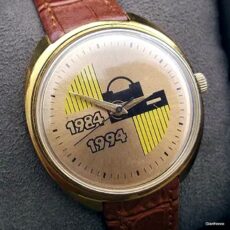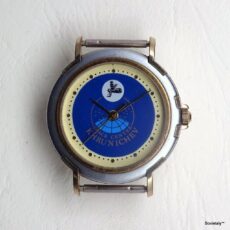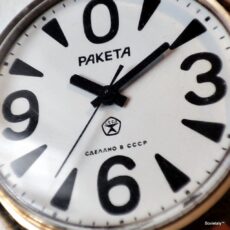
From HMT to Titan — The Evolution of India’s Watch Industry
India boasts a rich tradition in watchmaking, spanning from timepieces introduced during the colonial era to the rise of domestic manufacturing in the late 20th century. The industrial age, in particular, saw the emergence of iconic local brands—most notably HMT (Hindustan Machine Tools)—that became symbols of national pride. This report explores the full historical arc of Indian watchmaking, with a focus on local production (HMT and other Indian brands), key international collaborations, and the more recent phenomenon of counterfeit and assembled watches sold online. Sources in both English and Indian languages have been consulted to provide a comprehensive and authoritative perspective.
⏳ From Maharajas to Early Watch Imports
Even before industrialization, India had a vibrant culture of imported timepieces. As early as the 16th and 17th centuries, mechanical watches arrived via Portuguese and French traders. However, it was in the 19th century, under British colonial rule, that watches became widespread among Indian royalty and colonial officials. British pocket watches dominated the market during the mid-1800s, often featuring elaborate complications and decorative cases.
By the late 19th century, Swiss watches began to replace British ones due to their affordability and ornate designs. Swiss brands like Ferrero and Barbezat Bole gained popularity among Indian nobility, including the Maharajas of Patiala, Mysore, and Hyderabad. In fact, the demand from India and China was so significant that it played a key role in sustaining the Swiss watch industry during that era.
In 1931, Jaeger-LeCoultre even created the iconic Reverso watch specifically for British officers in India, designed to withstand the rigors of polo matches.
1953: HMT is Founded
Established by the Government of India in Bangalore to produce machine tools and industrial equipment.
1961: Partnership with Citizen
HMT partners with Japan’s Citizen Watch Co. to launch India’s first domestic watch manufacturing unit in Bangalore.
1963: First HMT Watch Released
The first HMT watch is presented to Prime Minister Jawaharlal Nehru, who calls it “The Timekeeper of the Nation.”
The first HMT watches were based on Citizen’s reliable 17-jewel mechanical movements. The initial models—HMT Citizen (for men) and HMT Sujata (for women)—were released in 1963. These watches were simple, durable, and affordable, quickly becoming a staple across Indian households.
🇮🇳 “The Timekeeper of the Nation”
When Nehru received the first HMT watch, he famously referred to it as “India’s own watch,” cementing its place in national identity and pride.
🔧 Vertical Integration
By the mid-1980s, HMT was producing nearly 100% of its watch components in-house—from steel cases to tiny springs—achieving full manufacturing autonomy.
HMT’s watches were not just timepieces—they were cultural icons. Models like the Janata, Pilot, Kanchan, and Sona became household names. The Janata, meaning “the people,” was a minimalist hand-wound watch that symbolized simplicity and reliability. The Pilot, originally designed for the Indian Air Force, featured a hacking seconds function for precise time synchronization.
HMT’s watches were often gifted during weddings, retirements, and job promotions. Wearing one was a mark of pride and status, especially in the 1960s and 1970s. The brand’s slogan, “Desh ki Dhadkan” (The Heartbeat of the Nation), reflected its deep emotional connection with the Indian public.
The Golden Age: HMT in the 1960s–1980s — “The Timekeeper of the Nation”
Between the 1960s and 1980s, HMT became synonymous with watches in India. Its simplicity, durability, and affordability made it a household name across cities and villages alike. Receiving an HMT watch as a gift—for a first salary, a promotion, or a wedding—was a rite of passage and a symbol of pride.
⌚ Iconic Models
HMT Janata (meaning “the people”) was a minimalist hand-wound watch known for its reliability. HMT Pilot, originally designed for the Indian Air Force, featured a hacking seconds function for precise time synchronization.
🎁 A Cultural Symbol
HMT watches were gifted at weddings, retirements, and job promotions. Wearing one was a mark of status and national pride.
HMT’s advertising campaigns emphasized its role in Indian life with slogans like “Desh ki Dhadkan” (The Heartbeat of the Nation). The company’s service network extended across the country, and its catalog included everything from wristwatches to pocket watches—even a rare gold-plated “G-10” model produced at the Ranibagh unit.
By the mid-1980s, HMT had achieved full vertical integration, manufacturing nearly all components in-house. This level of self-sufficiency was a major milestone in India’s industrial journey.
However, despite its dominance, HMT couldn’t meet the growing demand. By the late 1970s and early 1980s, it was estimated that up to 80% of watches sold in India were smuggled imports—mainly Swiss and Japanese quartz models. This created a paradox: while HMT was the national watchmaker, the majority of watches on Indian wrists were unofficial imports.
New Players in the 1980s: Allwyn and Titan Disrupt the Market
By the early 1980s, the Indian watch landscape began to shift. Two major developments challenged HMT’s dominance:
- The global quartz revolution, which introduced more accurate and affordable battery-powered watches.
- The entry of new domestic players—both public and private—who brought fresh design, marketing, and production strategies.
🏭 Hyderabad Allwyn – A Public Sector Challenger (1981)
In 1981, the state-run company Hyderabad Allwyn, already known for manufacturing buses and refrigerators, entered the watch industry through a joint venture with Japan’s Seiko. This collaboration brought Seiko’s precision technology into Indian manufacturing.
🤝 Allwyn + Seiko
Allwyn began producing both mechanical and quartz watches in Hyderabad, blending Japanese engineering with Indian design sensibilities.
🎬 Pop Culture Presence
Allwyn watches appeared in Indian films like Shubh Kaamna (1983) and Lucky Bhaskar (2024), becoming symbols of sincerity and middle-class pride.
Allwyn never reached HMT’s scale but carved out a niche, especially in southern India. Its watches were known for their elegance and featured subtle design elements like the Charminar logo on the dial—a nod to Hyderabad’s heritage.
🕰️ Titan – The Private Sector Revolution (1984)
The real disruption came in 1984 with the launch of Titan, a joint venture between the Tata Group and the Tamil Nadu Industrial Development Corporation (TIDCO). Titan was India’s first major private watch manufacturer and brought a radically different approach.
1984: Titan is Born
Founded as a Tata-TIDCO joint venture, Titan aimed to create a modern, design-led Indian watch brand.
100% Quartz Strategy
Unlike HMT and Allwyn, Titan focused entirely on quartz analog watches, avoiding mechanical movements altogether.
Design & Branding
Titan invested heavily in product design and marketing, launching sleek, fashionable watches with memorable ad campaigns—like the iconic “Titan Tune” based on Mozart’s Symphony No. 25.
Titan also pioneered segmentation by launching sub-brands like Sonata (affordable watches) and Fastrack (youth-oriented fashion watches). It was the first Indian brand to create a dedicated line for women’s watches, tapping into an underserved market.
🌍 Global Reach
Today, Titan exports to over 30 countries and is one of the world’s top five integrated watch manufacturers.
🧠 Design-Driven Strategy
Titan’s early success was driven by its focus on aesthetics, affordability, and lifestyle branding—something HMT and Allwyn struggled to match.
By the early 1990s, Titan had overtaken HMT in market share. As one former Titan executive put it:
“HMT was the timekeeper of the nation. Titan became the wrist stylist.”
The Decline of India’s Public Watch Industry (1990s–2000s)
The mid-1990s marked the end of an era. India’s two historic public-sector watchmakers—HMT and Allwyn—entered a period of irreversible decline, while Titan and other private players dominated the market.
📉 Allwyn’s Collapse (1995)
Hyderabad Allwyn began to suffer major financial losses in the early 1990s. By 1993, it was declared a “sick industry” under India’s Board for Industrial and Financial Reconstruction (BIFR). Despite attempts to restructure, the company couldn’t recover.
1993: Declared Financially Unviable
Allwyn’s accumulated losses exceeded ₹180 crore. The company was referred to BIFR for rehabilitation.
1995: Allwyn Watches Shuts Down
The watch division was officially closed. The brand faded from the market, remembered only by collectors and enthusiasts.
Allwyn’s closure was attributed to poor management, inability to adapt to market trends, and competition from Titan. Its legacy, however, lives on in vintage watch circles, especially for its elegant designs and cultural significance.
🕰️ HMT’s Slow Decline (1990s–2016)
Unlike Allwyn, HMT survived longer but faced a slow and painful decline. Several factors contributed to its downfall:
⚙️ Resistance to Change
HMT continued focusing on mechanical watches even as the market shifted to quartz. Its quartz offerings were limited and lacked innovation.
📉 Bureaucratic Inertia
As a government-run enterprise, HMT was slow to make decisions. Product development and marketing lagged behind private competitors.
Titan, with its sleek designs and aggressive marketing, captured the aspirations of a new, urban middle class. HMT, by contrast, relied on its legacy and failed to modernize its image or product line.
By the 2000s, HMT’s losses mounted. Several factories were shut down, and thousands of employees took voluntary retirement. Finally, in 2016, the Indian government officially closed HMT Watches and its subsidiary HMT Chinar.
2000s: Factory Closures
HMT began shutting down its watch manufacturing units due to mounting losses and declining demand.
2016: End of an Era
The government officially closed HMT Watches. A brand once synonymous with Indian timekeeping became a memory.
Meanwhile, Titan continued to thrive. It expanded into jewelry (Tanishq), eyewear, and even smartwatches. In 2011, Titan acquired the historic Swiss brand Favre-Leuba, symbolically reversing the colonial-era dynamic of importing Swiss watches into India.
Legacy, Collecting, and the Rise of “Mumbai Specials” (2010s–2020s)
Although India’s public-sector watchmaking industry has largely faded, its legacy lives on. Titan continues to thrive as a global brand, while a new generation of microbrands and collectors is rediscovering the charm of vintage Indian watches.
🧭 The Collector’s Renaissance
Even after its closure, HMT remains beloved by collectors. Vintage models like the Janata, Pilot, and Kanchan are sought after for their durability, simplicity, and cultural significance.
🕰️ Nostalgia on the Wrist
For many Indians, an HMT watch is more than a timepiece—it’s a memory of a father, a grandfather, or a milestone moment in life.
🔁 Revival Attempts
In 2019, HMT quietly resumed limited production using leftover parts and imported movements. These watches are sold online through the official HMT website.
Meanwhile, new Indian microbrands like Bangalore Watch Company, Jaipur Watch Company, and Argos are blending heritage with modern design, offering mechanical and automatic watches that appeal to a new generation of enthusiasts.
⚠️ The “Mumbai Special” Phenomenon
With the rise in demand for vintage Indian watches, a parallel market has emerged—one that’s less about heritage and more about profit. Known in collector circles as “Mumbai Specials,” these are watches assembled from mismatched or aftermarket parts and sold online, especially on platforms like eBay.
What is a “Mumbai Special”?
Typically, these are watches with vintage cases and movements, but with newly printed dials—often falsely branded as HMT, Seiko, or Citizen.
Why Are They Problematic?
They mislead buyers into thinking they’re purchasing authentic vintage pieces. In reality, they’re often “Frankenwatches” with no historical provenance.
How to Spot Them?
Collectors warn of inconsistencies in dial printing, incorrect fonts, and suspiciously low prices. Many watches are sold from India with vague or generic listings.
While some buyers knowingly purchase these watches for their aesthetic or novelty value, others are misled. The prevalence of these fakes has sparked debates in online forums and watch communities, with many urging platforms like eBay to crack down on misleading listings.
⏳ Conclusion: A Legacy Worth Preserving
India’s watchmaking journey—from colonial imports to the rise of HMT and Titan, and the current wave of microbrands and collectors—is a story of innovation, pride, and resilience. While the golden age of public-sector watchmaking may have passed, its legacy endures.
🇮🇳 “When even time felt Indian”
This phrase captures the emotional connection Indians had with HMT watches—symbols of a self-reliant, modernizing nation.
🔮 The Future
With renewed interest in heritage and craftsmanship, Indian watchmaking may yet tick again—this time with a blend of nostalgia and innovation.